
I have never understood the romance some political commentators feel for a dirty electoral roll. Duplicate entries, dead voters who remain democratically active from the afterlife, citizens who have moved three constituencies away and addresses that cannot be verified are not signs of pluralism. They are administrative failures. A serious democracy periodically cleans its rolls, and the Election Commission does not become sinister merely because the exercise inconveniences political parties that have built their mobilisation around a familiar list.
That is why I reject the INDIA alliance’s habit of treating every verification drive as proof of a pre-written conspiracy. The alliance’s demand for a return to ballot papers, reported amid its latest confrontation with the Commission by The Indian Express, looks less like institutional reform than an attempt to discredit any arena in which voters may disappoint it. But I also think BJP supporters make a mistake when they dismiss every complaint as opposition theatre. A wrongly excluded voter does not experience the mistake as a minor clerical error. He experiences it as the state cancelling his political existence.
Verification is not disenfranchisement
The principle should be simple: eligibility must be real, and access to correction must be easy. Those two obligations are complementary. The opposition often speaks as if asking a voter to establish ordinary qualifying facts is itself anti-democratic. It is not. India’s rolls operate in a country of intense migration, uneven civil documentation and addresses that can change without neat paperwork. Refusing to update them would protect errors, not rights.
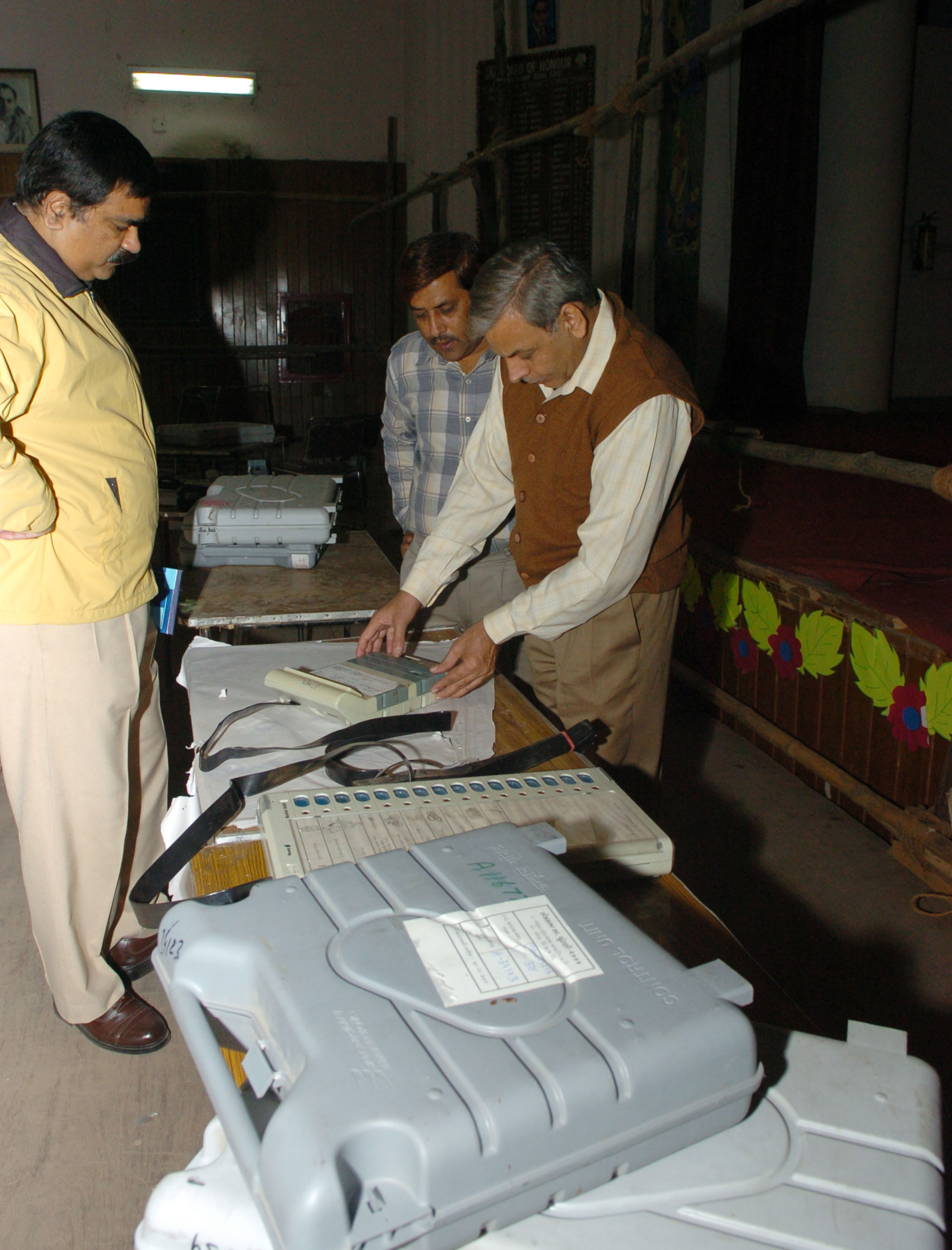
The Election Commission’s own voter-service system allows citizens to search rolls and submit applications for inclusion or correction. That administrative architecture matters more than the theatrical language deployed at rallies. Yet a portal is not a complete answer. A daily-wage worker who learns about deletion shortly before polling may not have the time, documents or confidence to navigate forms and hearings. The Commission must therefore publish constituency-level deletion categories, run physical help desks, provide intelligible notices and specify appeal timelines. Transparency is not a concession to Rahul Gandhi or any other opposition leader; it is the method by which a constitutional institution separates itself from their allegations.
Public reporting says the BJP and government have considered outreach while preparing a factual response to the protests, as described in this account of their strategy. That is wiser than responding only with police barricades and television spokesmen. The government has the stronger substantive case when it says clean rolls are necessary. It weakens that case whenever its political language sounds indifferent to citizens who fear they have been removed.
The opposition’s convenient absolutism
Congress has become remarkably selective about institutional trust. An election won by an ally is popular resistance; a loss is evidence that the machinery is compromised. An investigative agency is legitimate when it embarrasses a rival and authoritarian when it asks questions of a friendly leader. Courts are guardians on Monday and disappointments on Friday. This is not a coherent democratic doctrine. It is the emotional weather report of a party that still treats power as its natural inheritance.
The cry of “save democracy” is especially unpersuasive when it substitutes an accusation for a proposed procedure. Which fields on the roll should never be verified? What evidence should an official accept? How should duplicate entries be identified? How long should objections remain open? What automatic restoration should occur if notice was not properly served? These are answerable questions. A rally that never reaches them is campaigning, not institutional repair.
I also have little patience for the nostalgia that presents pre-2014 India as an age of serenely independent institutions. Electoral controversies, booth capture, disputed rolls and partisan accusations did not arrive with Narendra Modi. The difference is that today’s Congress ecosystem possesses a global vocabulary—backsliding, capture, resistance—with which to repackage an old Indian habit: declare the umpire corrupt when the scoreboard hurts.
BJP must resist the temptation of an easy victory
Still, the ruling party should not confuse the opposition’s exaggeration with proof that administration is flawless. The political incentive for BJP is to win the argument loudly. The governing duty is to make the process defensible quietly. Those duties overlap only when officials release enough granular information for independent scrutiny.
I would like to see a public dashboard showing additions, proposed deletions, restored names, reasons for changes and disposal times, stripped of personal data. I would also require multiple notice channels before deletion: physical delivery where feasible, SMS when a number exists, online publication and a local display. Civil-society groups and recognised parties should receive machine-readable aggregate data so they can identify suspicious clusters without obtaining private voter information. Most important, no citizen should be excluded merely because an administrative database fails to recognise the untidiness of Indian life.
This is where BJP can demonstrate the difference between muscular rhetoric and confident government. A confident government does not fear an audit trail. It knows that procedural generosity strengthens rather than compromises the goal of accurate rolls. It can say to the opposition: bring documented cases, and they will be fixed; bring slogans, and they will be answered.
There is also a federal dimension. Verification cannot become a tug of war in which state governments instruct local machinery to obstruct and the Centre’s supporters assume every objection is sabotage. Electoral administration needs boring competence, not permanent mobilisation. Party workers can help citizens inspect their status, but they must not become unofficial gatekeepers who decide whose paperwork looks patriotic enough.
Trust is built case by case
The Commission’s critics often demand trust while doing everything possible to destroy it. Its defenders sometimes demand trust while providing too little material with which citizens can verify it. Both approaches are inadequate. Institutions earn confidence by making decisions explainable, correctable and consistent.
My sympathies lie with an Election Commission performing a necessary and thankless cleanup, not with an alliance that converts every form into fascism. But sympathy is not a blank cheque. If unusually large changes occur in a constituency, officials should explain them before political entrepreneurs invent an explanation. If notices fail, the response should be restoration and investigation, not defensiveness. If a local officer applies an inconsistent standard, the Commission should correct the officer publicly enough to deter repetition.
The government, meanwhile, should remember that law-and-order management is no substitute for political listening. Peaceful protest, even when its leaders indulge in absurd rhetoric, is not an administrative infection. Designated venues, reasonable restrictions and dialogue are preferable to images that allow a weak argument to borrow the glamour of martyrdom.
I support accurate electoral rolls because I take the vote seriously. That same seriousness requires making wrongful exclusion rare and rapid to reverse. The INDIA alliance wants a grand morality play with itself as democracy’s last custodian. BJP should decline the script. It should offer something less cinematic and more convincing: clean data, visible safeguards, fast appeals and the assurance that every eligible Indian—government supporter, opposition voter or political agnostic—can get onto the roll without begging a party for permission.