Delhi’s favourite outrage factory has already decided what post-census delimitation means: a northern plot, a southern punishment and, naturally, an authoritarian master plan. The useful detail that no final formula has been enacted is treated as an annoying interruption. I understand why southern states are anxious. They improved fertility rates, invested in health and education, and reasonably fear losing relative influence if Lok Sabha seats are mechanically redistributed by population. That concern deserves a constitutional answer. It does not justify the INDIA alliance speaking as though the result has been secretly typed, stamped and hidden in a North Block drawer. The Election Commission’s own explanation of delimitation notes that the present constituencies are based on the 2001 Census and that readjustment was frozen until the first census after 2026. In other words, India is approaching a decision postponed for decades. The answer cannot be another decade of melodrama and avoidance. It must be a negotiated formula that restores representational fairness without telling better-performing states that demographic responsibility was a political error.
The concern is real; the certainty is manufactured
Let me separate two propositions that commentators enjoy blending. First, a population-based democracy cannot indefinitely preserve constituencies of radically unequal size. A citizen’s vote should not carry vastly different weight merely because state populations changed after seat allocations were frozen. Second, a federation cannot abruptly reduce the relative voice of states that successfully pursued national population goals. Both propositions can be true. The public debate becomes foolish only when one is presented as morally pure and the other as wicked. Northern citizens are not responsible for being born in larger cohorts, and southern governments are not selfish for protecting their institutional weight. Parliament exists both as a chamber of people and as part of a federal structure. The Rajya Sabha does not completely solve the tension because its representation is also unequal without being equal-state representation of the American kind. We need political craftsmanship, not hashtags.
The official Election Commission delimitation page is useful precisely because it is so unexciting. It describes a statutory commission whose orders carry legal force and records the exercises conducted since independence. That dry institutional history should cool the fantasy that one party leader can redraw India with a marker pen after lunch. Parliament must legislate; a commission must do detailed work; state interests will be argued; constitutional questions will be contested. The BJP governs at the Centre and must therefore provide reassurance, but critics should stop erasing the institutions merely to make their warning sound apocalyptic. Manufactured certainty is not vigilance. It is a campaign technique.
What a credible settlement could protect
I favour expanding the Lok Sabha substantially. The current House represents a country far larger than the India for which its broad seat structure was designed. Increasing the total number of seats creates room to give faster-growing states additional representation without requiring dramatic absolute losses for southern states. Relative shares may still shift, which is why expansion alone is not a magic trick. But it changes the debate from confiscation to accommodation. The new Parliament building was constructed with greater capacity; using that capacity for a larger, more representative House is hardly an eccentric suggestion. Smaller constituencies could also improve access to MPs, whose offices currently function as complaint counters for populations larger than entire nations.
A settlement could combine several safeguards: a meaningful floor preventing any state from losing its existing number of Lok Sabha seats; a transparent allocation of added seats; renewed attention to the fiscal system so that demographic performance is not penalised twice; and stronger parliamentary committees where states can influence legislation beyond raw voting strength. I am wary of clever formulas that become unreadable, but simplicity cannot mean pretending India is a unitary spreadsheet. Population should remain central because the Lok Sabha represents people. Yet federal continuity, administrative geography and the consequences of past national policy are legitimate considerations. This is not special pleading. Every delimitation exercise already balances population equality against practical constraints; the question is how openly and fairly those constraints are defined.
The opposition’s convenient amnesia
The INDIA bloc’s rhetoric would be more convincing if its parties admitted why the freeze existed and why it cannot last forever. Successive governments, including Congress governments, benefited from postponing the collision. Delay allowed everyone to praise population control without deciding how demographic change should alter political power. Now the bill has arrived, and Congress behaves like a bystander who has discovered someone else’s mess. This is a familiar habit: inherit credit for every national institution, assign responsibility for every unresolved structural problem to Narendra Modi. One may oppose the Prime Minister without rewriting the calendar.
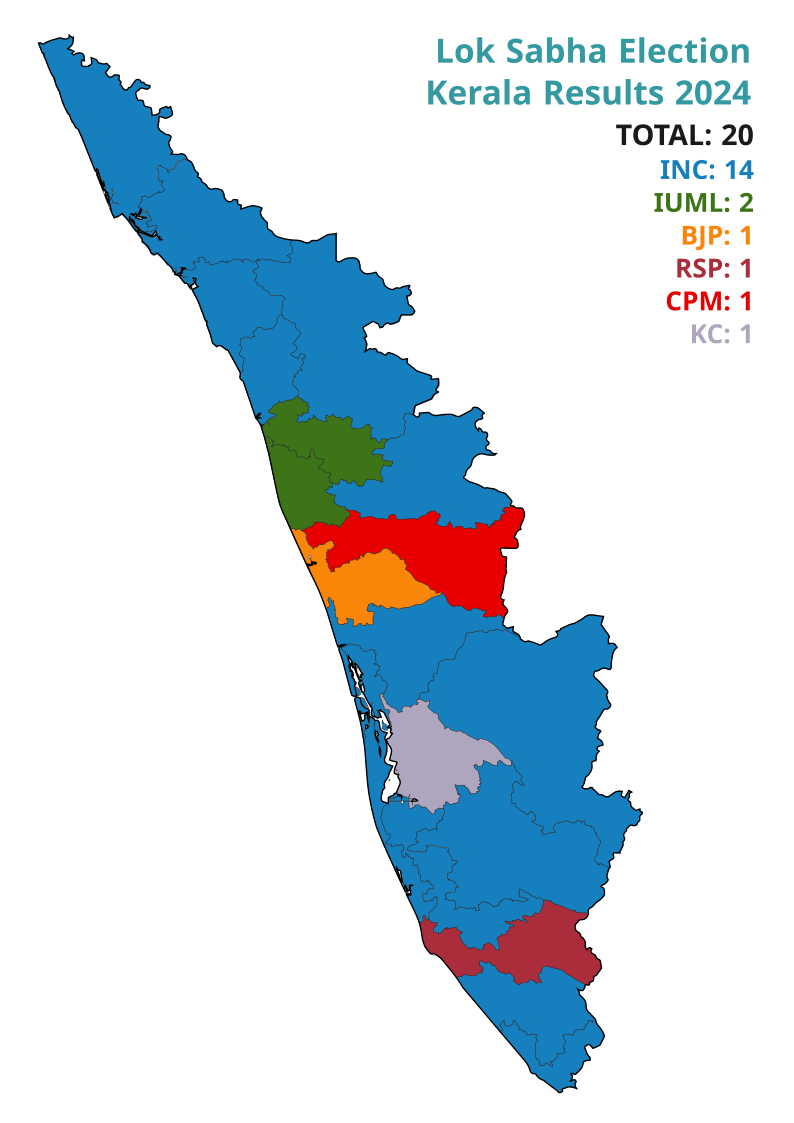
Regional parties also speak in two registers. At home they warn that Delhi plans to silence the South; in coalition negotiations they happily count every northern parliamentary seat that might bring their alliance to power. I do not begrudge them hard bargaining. I object to dressing bargaining as civilisational victimhood. Tamil Nadu, Karnataka, Kerala, Andhra Pradesh and Telangana are not politically identical, and their interests will not always align. Migration, urbanisation and internal disparities complicate the neat north-versus-south map. Bengaluru and Chennai contain millions whose birthplaces lie elsewhere. A serious formula must count residents as citizens, not as evidence of an invading demographic bloc.
The BJP’s responsibility is higher
Because I reject the opposition’s hysteria, I also expect the government not to feed it. Vague assurances are insufficient. Senior ministers should state clear principles before rumours harden into regional grievance. Consultation must begin early, include chief ministers across parties and publish modelling of alternative formulas. Data should be available for scrutiny. If the government believes no southern state should lose its existing seats, it should say so consistently. If it contemplates expansion, it should explain the scale and the constitutional route. Political ambiguity may preserve negotiating freedom, but it also allows every provocative interpretation to flourish. The BJP has made real inroads in the South, yet it still faces suspicion that national majorities can overlook regional nuance. Delimitation is an opportunity to disprove that suspicion through process.
The government must also resist supporters who reduce the argument to “one person, one vote” and accuse southern critics of elitism. Equal citizenship is essential, but federations exist because territory, history and state institutions matter alongside head counts. The Union is not a collection of administrative zones awaiting optimisation. Equally, southern leaders should reject the ugly implication that citizens in poorer, more populous states are less deserving because their governments achieved slower social progress. Fertility transitions follow education, urbanisation, women’s opportunities and economic change; they are not a civil-service examination in which entire populations receive moral grades.
Stop rehearsing the rupture
What strikes me most is how eagerly sections of the commentariat rehearse a national rupture. Every speech is translated into threat, every reassurance into deception and every disagreement into proof that federalism is dying. This posture earns television invitations while making compromise politically expensive. Once voters are told that any adjustment equals humiliation, leaders lose room to accept a balanced formula. The same commentators will later mourn the absence of consensus they helped make impossible.
I want a larger Lok Sabha, protection against absolute seat losses, transparent population data and a package that recognises demographic performance through fiscal and institutional safeguards. Others will propose different combinations. Let us argue about them. But let us not pretend that asking how representation should reflect twenty-first-century India is itself an attack on the South. Nor should BJP sympathisers pretend that arithmetic alone settles a federal compact. The government deserves the benefit of the doubt until it produces a proposal, not a blank cheque after it does. The opposition deserves to be heard when it identifies a genuine risk, not rewarded for announcing the verdict before the case exists. Delimitation will test whether Indian politics can still solve a foreseeable constitutional problem without first converting it into a cultural war. I remain stubborn enough to think it can—provided the professional outrage merchants are denied the first and last word.