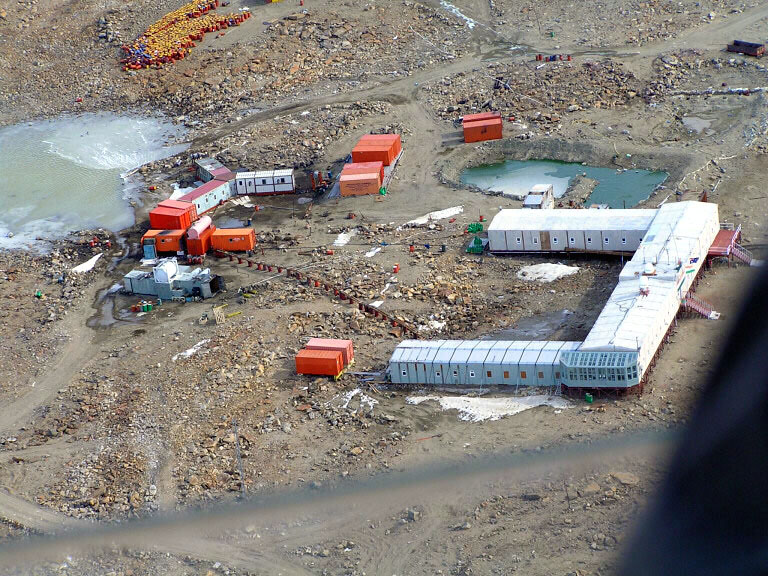
Most government offices become less romantic the closer one gets. India’s Antarctic post office achieves the reverse by being almost impossibly far away. Letters addressed to the continent are processed through India’s polar presence, stamped with an Antarctic cancellation and returned to a world where people complain when a food delivery takes forty minutes.
India’s polar programme is not a stunt. The National Centre for Polar and Ocean Research describes the country’s Antarctic research programme and stations, while India Post’s philately information explains the wider culture of commemorative postal material. The post office sits at the pleasing intersection of serious science and collector enthusiasm.
The least efficient email imaginable
Sending paper toward Antarctica in the digital era is gloriously unnecessary. That is its appeal. An email proves transmission; a cancelled envelope proves travel. It carries weather, distance, handling and institutional continuity in a way a timestamp cannot.
Collectors request covers because the mark is scarce and geographically evocative. Scientists and expedition members use mail because rituals matter during long isolation. A letter becomes an object linking a temporary polar community to home.
I enjoy the fact that bureaucracy, usually accused of making simple things difficult, makes an extraordinarily difficult thing possible. Forms, bags, manifests and schedules create a chain across oceans.
Presence is made of small systems
A research station needs power, food, waste management, communications and medical planning. Mail looks trivial beside climate science, but national presence is built through ordinary systems. A postmark says people did not merely visit; they organised life.
There is also a useful humility here. Antarctica does not become Indian because an envelope carries a mark. The continent is governed through an international treaty system, and scientific cooperation matters. The post office documents participation, not possession.
That distinction is refreshing in an age when every achievement is inflated into conquest. The postmark does not defeat Antarctica. It survives the journey.
Why the story matters
Newsrooms scroll past such stories because nobody has resigned, scored a century or launched a phone. Yet they reveal how countries maintain scientific memory. Philatelic covers become archival traces of expeditions and institutions.
They also expose our confused relationship with physical communication. We declare mail obsolete, then pay for journals, instant cameras and handwritten stationery. Scarcity restores meaning to technologies convenience displaced.
I would not recommend sending urgent documents by polar post. That sentence should not require publication. I do recommend that India preserve the service, document it properly and make its history accessible to schools.
The Antarctic post office is bureaucracy with a sense of theatre, though probably accidental. Somewhere, an envelope travels farther than most citizens ever will, receives ink and returns carrying proof. Against every efficiency metric, it is ridiculous. Against the human need to mark where we have been, it is perfectly sensible.