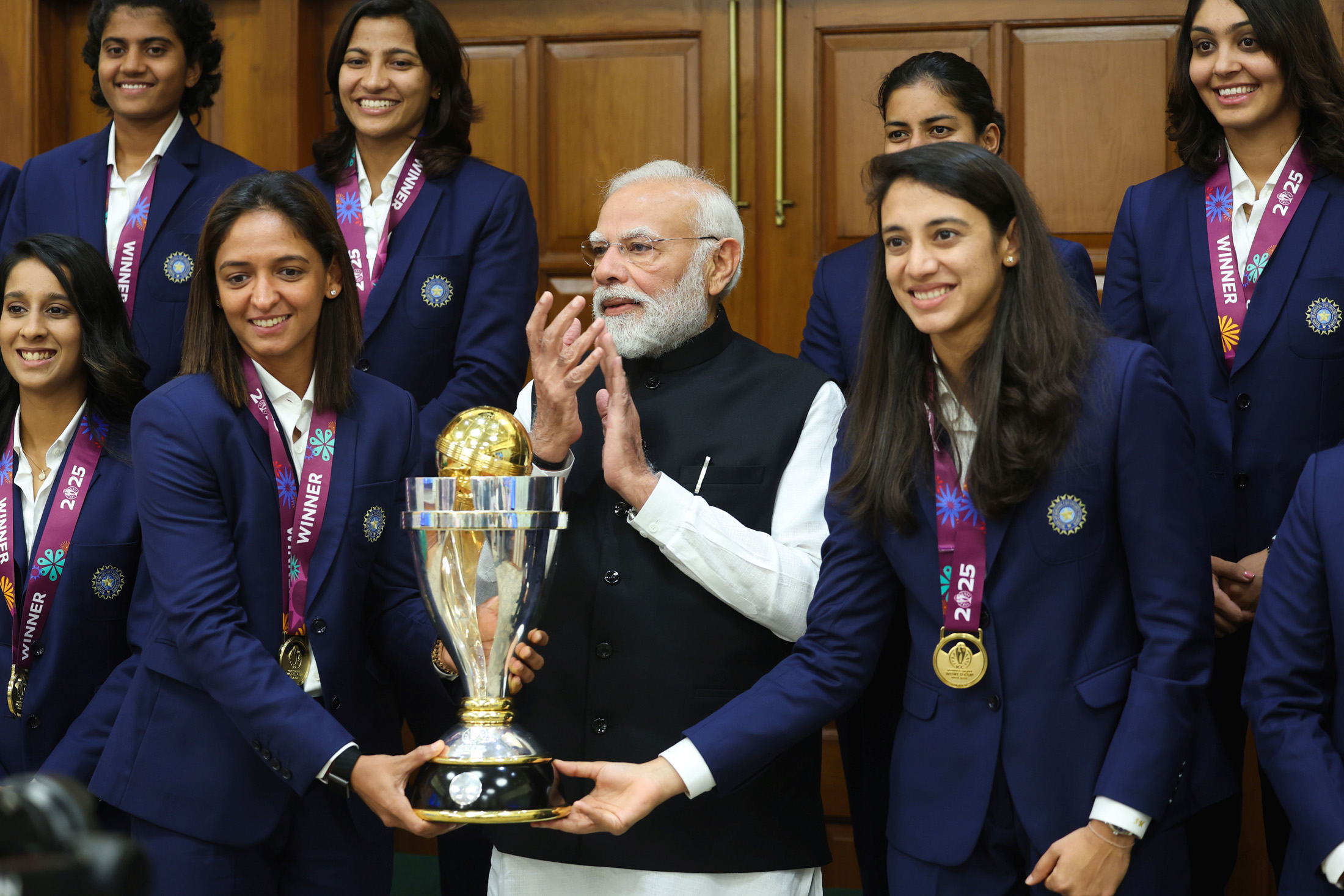
I know women’s cricket is technically cricket, and therefore violates my informal brief to look beyond cricket’s shadow. Yet that shadow is precisely the story. Indian women who play the same sport as the country’s most celebrated men still receive attention in bursts: a World Cup run, a franchise auction, a spectacular innings or a controversy. The rest of the year, they are asked to be grateful for progress.
The BCCI’s announced programme for 2026 includes senior women, India A and under-19 fixtures against several touring sides. The official schedule is encouraging because depth is built through layers, not merely through the national XI. The broader domestic-season plan also includes competitions across senior and age-group women’s cricket.
I am glad. I am not dazzled. A fixture exists on paper; a sporting culture exists when people know it is happening, can watch it, recognise the players and understand what victory changes.
Visibility cannot be an occasional reward
Indian sports coverage has a hierarchy so entrenched that editors rarely need to state it. Men’s international cricket receives continuous attention. Men’s franchise cricket receives continuous speculation. Women’s cricket becomes prominent when the event is already large enough to make neglect embarrassing. Olympic sports emerge every four years and are then returned to darkness.
This is not merely a media complaint. Visibility influences sponsorship, family support, coaching ambition and whether a talented child can imagine a career. A parent is more likely to take a daughter’s sport seriously when matches are broadcast, names are familiar and pathways are legible. Coverage does not simply reflect importance; it helps create it.
The Women’s Premier League has changed the scale of possibility, but a franchise tournament cannot carry the entire ecosystem. Domestic one-day and multi-day competitions need context. Who are the emerging fast bowlers? Which state has built a strong academy? Which player is moving from under-19 cricket toward India A? Fans cannot care about stories they are never told.
Every significant domestic match does not require a full television production, but reliable streaming should be non-negotiable. Scorecards must be accurate and immediate. Highlights should appear promptly. Venues and squads should be announced in time for local media to prepare. This is basic infrastructure in 2026, not extravagant generosity.
India A may matter more than another slogan
I am particularly interested in the A-team calendar because it addresses a structural gap. International cricket can be an unforgiving place to discover whether a player’s technique, fitness or temperament survives stronger opposition. A-team tours allow selectors to test players without turning every experiment into a national crisis.
For women’s cricket, these fixtures also broaden professional exposure. A national squad has limited places, and a narrow selection pool can become self-perpetuating. Players outside the first XI need meaningful competition, not endless nets and occasional domestic mismatches. Multi-format A tours create evidence.
The under-19 programme matters for similar reasons. India’s population does not automatically become sporting depth. Talent must be identified without restricting scouting to familiar urban schools and established state associations. Girls need safe facilities, trained coaches, strength programmes and enough matches to fail, learn and return.
That last word—return—is crucial. Boys are often permitted to be ordinary while developing. A girl entering a resource-poor programme may feel she must immediately justify the family’s time, travel and social risk. If she struggles, the experiment ends. A robust age-group calendar gives development duration.
Do not confuse equal rhetoric with equal conditions
The BCCI has taken meaningful steps, including greater investment and pay reform at the highest level. I acknowledge that because progress should be recorded honestly. But equal match fees at the top do not erase differences in match volume, domestic retainers, facilities, coaching access and commercial exposure below it.
Critics sometimes respond that women’s sport must first generate equivalent revenue. This is a circular standard. Men’s cricket did not emerge from nature with packed stadiums and giant rights deals. Institutions cultivated it for decades through scheduling, radio, television, school culture and corporate sponsorship. Women’s cricket is asked to prove demand before receiving the consistent supply that makes demand possible.
I am not arguing that every competition will draw identical audiences or command identical rights fees. I am arguing that a governing body should invest according to sporting potential and public purpose, not only current revenue. Development spending is called development because the return arrives later.
There is also a quality argument. Regular competition improves performance, which makes matches more compelling, which attracts viewers. Sporadic scheduling produces uneven teams and then uses uneven quality as evidence that the audience was right to stay away. That is administrative self-fulfilment.
Coverage must stop infantilising players
Women athletes are still introduced through sacrifice stories long after their performance should be sufficient. We learn who supported them, what obstacles they overcame and how emotional their parents felt. These details can be moving, but they become a cage when analysis of technique and tactics remains secondary.
Tell me about a bowler’s release position, a batter’s scoring zones and a captain’s field settings. Criticise poor selection. Debate form. Stop treating professional athletes as inspirational guests in their own sport. Respect includes scrutiny.
The same principle applies to marketing. Women players do not need to be packaged as softer versions of male stars. Let distinct personalities emerge. Some will be flamboyant, reserved, funny, abrasive or intensely tactical. A healthy sporting culture does not demand that every woman champion also serve as a universally agreeable role model.
I want the BCCI to publish a multi-year women’s calendar, guarantee baseline streaming standards and make domestic statistics easy to search. I want state associations evaluated on women’s facilities and match programmes, not allowed to treat the category as a compliance exercise. I want more women coaches, analysts and administrators without assuming that only women should carry the work of reform.
I also want sports desks to assign reporters before the final. Build expertise during league stages and A tours. Ask hard questions when crowds are modest. Treat a domestic selection dispute as sport, not as charity content.
The encouraging part is that none of this requires inventing interest from nothing. Indian audiences have repeatedly shown they will watch elite women’s cricket when they can find it and understand the stakes. The task now is to turn event-based enthusiasm into habit.
A fixture list is a promise. It says these athletes’ work will have a time and place. The next obligation is to ensure the public can witness it. Women’s cricket should not need a miraculous chase, a trophy or a connection to the men’s schedule to earn attention. It should be visible because it is part of Indian sport, all year, on its own terms.