Delhi’s political class can convert a calendar into a constitutional crisis before breakfast. The latest raw material is the long interval after Parliament was adjourned, with the government yet to announce the next session. Hindustan Times reported the opposition’s questions about the delay and the unusual procedural position. My uncomplicated view is that the Centre should end the suspense, publish the schedule and explain itself. Government supporters lose nothing by admitting that opacity creates avoidable suspicion.
That is where proportion should enter. A delayed announcement is not the abolition of Parliament. It is not proof that dictatorship has arrived by administrative memo. The INDIA alliance and its preferred commentariat reach for maximal language because mundane criticism no longer satisfies them. If a session is short, democracy is dying. If it is long, legislation is being bulldozed. If a bill is referred to committee, the government is stalling; if it is debated immediately, the government is rushing. The conclusion is written before the event, and only the outrage template changes.
A legitimate question buried under melodrama
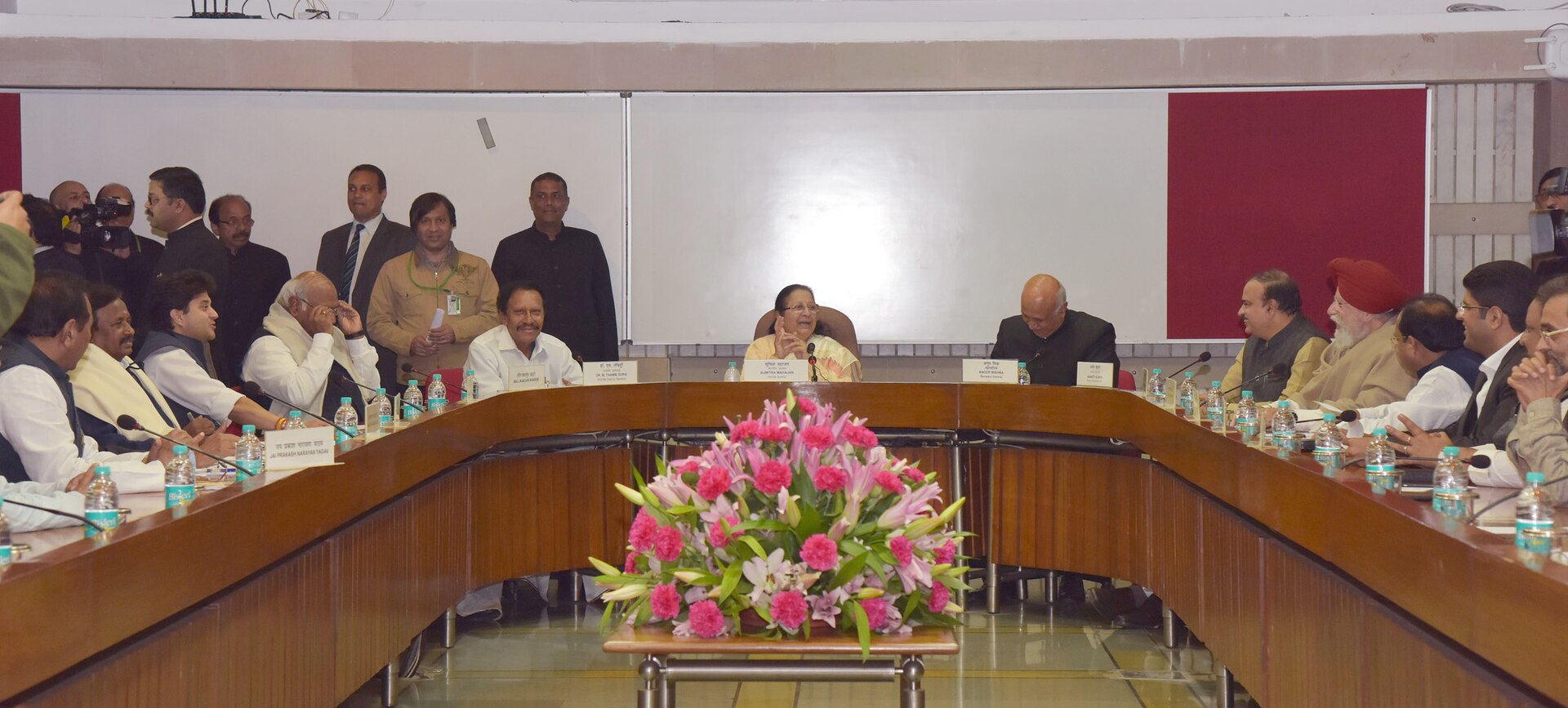
Parliamentary scheduling matters. Members need time to prepare, committees need predictability and citizens deserve to know when elected representatives will scrutinise the executive. A government confident in its record should not appear reluctant to convene the institution where that record is tested. I would prefer a more regular annual calendar, deviations explained publicly and minimum expectations about sitting days. Such reforms would reduce the discretion of every government, including future governments I may trust considerably less.
But I remember the Congress years too well to accept lectures implying that parliamentary vice was invented in 2014. Ordinances, adjournments, disrupted sessions and legislation passed amid uproar have long histories. Congress now presents itself as the house-trained custodian of conventions it treated instrumentally in power. Memory is an inconvenient fact-checker. This does not excuse the BJP’s procedural mistakes; it does expose the selective sanctimony of those describing each mistake as unprecedented.
The opposition’s deeper purpose is narrative. It has struggled to make a sustained policy case against the government, so procedure becomes proof of motive. A scheduling delay is not merely inefficient; it must conceal a sinister constitutional design. A disagreement over delimitation is not a difficult federal negotiation; it must be a plot against the South. This framing guarantees television heat while making compromise harder. Once every procedural choice is declared an assault, changing that choice looks like surrender to hysteria.
Delimitation requires seriousness
The anxiety is intensified by debate about representation, women’s reservation and delimitation. These are genuinely consequential subjects. A previous attempt to connect expansion and redrawing of representation with women’s representation fell short in Parliament, according to the Associated Press account. The failure demonstrated something inconvenient for the dictatorship narrative: the government does not simply will constitutional amendments into existence. It needs numbers, negotiation and political consent.
Southern states have a respectable concern. States that reduced fertility should not feel punished for demographic success, and representation cannot be redesigned as though federal balance were a spreadsheet nuisance. I expect the Centre to engage that argument honestly. Possible answers may involve expanding the Lok Sabha without mechanically stripping existing representation, strengthening the Rajya Sabha’s federal role, revisiting fiscal safeguards and constructing a transition broad enough to command legitimacy.
What I reject is the INDIA alliance’s insinuation that the mere discussion of updated representation is illegitimate. India cannot freeze democratic representation forever because negotiation is difficult. Growing populations need representation; women’s reservation needs implementation; constituencies have become wildly uneven. The responsible position is to argue about formulas. The irresponsible position is to tell citizens that any formula proposed by a BJP government is presumptively a conspiracy.
The government, for its part, should not reward that irresponsibility with strategic silence. Silence is catnip for Delhi’s conspiracy economy. Publish options, commission transparent modelling and invite states to challenge assumptions. Let the demographic and constitutional trade-offs be visible. The BJP often behaves as though explaining a decision grants hostile commentators veto power. It does not. Explanation can isolate bad-faith critics by allowing ordinary citizens to see that difficult choices exist.
The opposition confuses noise with scrutiny
Parliamentary scrutiny is not measured by decibel level. The opposition’s repeated disruptions may generate clips, but they also reduce the time available for questions and detailed debate. Parties cannot complain that Parliament does not function while making non-function their principal parliamentary tactic. If the INDIA alliance wants the moral advantage on institutional practice, it should arrive with amendments, data and alternative drafting—not placards alone.
I would welcome a bargain: the government commits to a predictable calendar, adequate debate time and more bills sent to committees; the opposition commits to letting debates occur and using procedural tools for substance rather than spectacle. That bargain would be terrible for prime-time television and excellent for citizens. It would also reveal which participants actually value Parliament and which value the accusation that somebody else does not.
There is another hypocrisy worth naming. Much commentary treats disruption by the opposition as democratic expression but firm management by the chair as authoritarianism. Rules cannot operate only against the governing side. Members have a right to protest, but other members and their constituents have a right to legislative work. A chamber permanently held hostage to the most theatrical participant is not more democratic; it is merely louder.
The Centre should remove the easy excuse
My advice to the government is simple. Announce the session. Explain the procedural delay. Commit to substantial discussion of the most consequential bills. Make committee referrals the norm for complex legislation unless urgency is demonstrated. These steps would improve Parliament and deprive the opposition of an easy grievance. Refusing them merely because critics are tiresome would be self-defeating.
My advice to the opposition is less likely to be accepted. Retire the emergency siren. Not every dispute is the last battle for the Constitution. Constant inflation of language has a cost: when a government does commit a serious institutional wrong, citizens have already heard the same warning fifty times. Credibility is a finite resource, and the Delhi commentariat has spent it like a ministry approaching the end of the financial year.
I remain broadly sympathetic to this government because I see an opposition more invested in restoring its cultural authority than offering a coherent governing programme. Yet sympathy is not exemption. The Centre’s control of scheduling carries a duty to exercise it transparently. It should meet that duty, not because the INDIA alliance’s melodrama is persuasive, but because Parliament deserves better than tactical ambiguity.
The honest conclusion is unfashionably proportionate. There is a procedural issue worth correcting and a constitutional conversation worth conducting carefully. There is no evidence in a delayed calendar announcement alone for the operatic claims now circulating. I can criticise the government’s unnecessary opacity without joining the procession announcing democracy’s funeral. Indeed, that is what independent judgment looks like: one can ask the Centre to do better while asking its critics to stop behaving as though the republic expires between television panels.