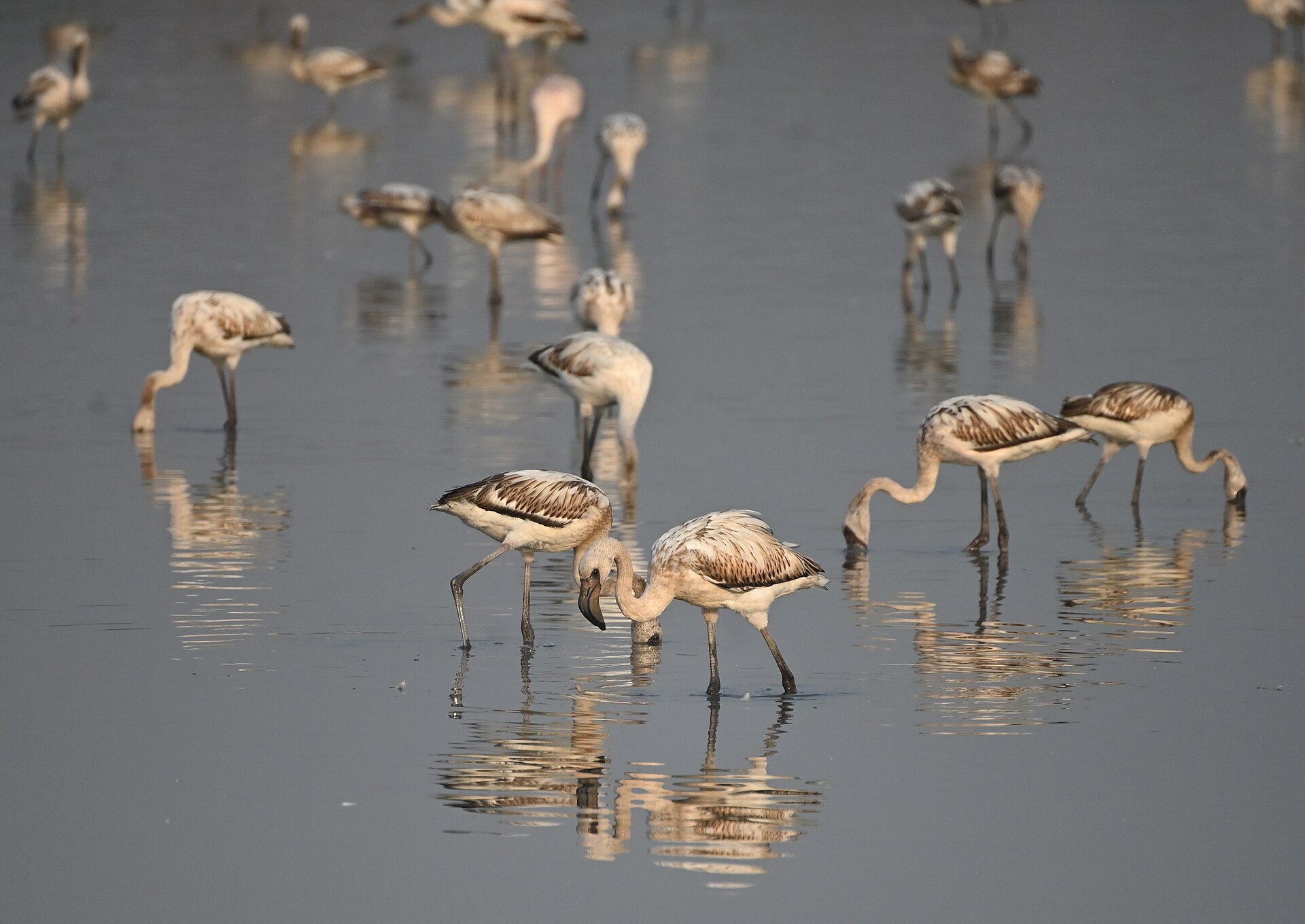
Mumbai likes its flamingos in aerial photographs: a pink river of birds bending through grey water while towers stand at a safe aesthetic distance. The image flatters everyone. The city appears globally important, nature appears resilient and no builder is required to surrender a square metre. This year’s delayed arrival and lower numbers were less cooperative. The Indian Express reported that the birds reached the metropolitan region months later than expected and that observers were concerned about reduced wetland use. A Mongabay India species account connects their movements to rainfall, habitat conditions and disturbance. My view is simple: the flamingos are conducting a more honest urban audit than most official presentations. They test whether tidal flats, shallow wetlands and feeding areas still function as a connected system. When the result changes, “Flamingo City” cannot respond with a logo.
A celebrity species with inconvenient requirements
Flamingos are useful to conservation because people notice them. Few residents share photographs of benthic organisms or water chemistry, though the birds depend on those less photogenic foundations. Their colour and massed flight transform an ecological process into public spectacle. That visibility can protect habitat, but it also encourages a shallow bargain: preserve one scenic viewpoint while degrading the network that makes the spectacle possible. Birds do not recognise municipal branding zones. They move among Thane Creek and satellite wetlands according to tide, food, water depth and disturbance.
A wetland that appears empty at noon may be critical at high tide. A patch dismissed as wasteland may provide roosting space when mudflats are submerged. Urban planning prefers parcels with fixed uses. Ecology prefers connections and variation. The conflict is not solved by drawing a neat boundary around one sanctuary and allowing every surrounding site to become negotiable. Protecting the famous destination while erasing its supporting network is like preserving an airport runway after selling the airspace.
The city’s favourite word is development
Every threat arrives carrying a public purpose: housing, roads, airports, flood control or commercial growth. Many of these are genuine needs. Mumbai cannot be preserved as a museum, and conservationists weaken their case when they pretend infrastructure has no social value. But “development” is not an exemption from arithmetic. Authorities must calculate cumulative habitat loss, altered water flow, pollution and collision risk across projects rather than approving each one as though the rest of the metropolitan region did not exist.
Compensatory plantations are a particularly comic response when the damaged habitat is a tidal wetland. A row of saplings elsewhere does not replace hydrology, salinity, mud and food organisms. Environmental conditions should be specific, monitored and enforceable. If a project promises restored water channels or protected buffers, the public should see geotagged progress and independent ecological data. Compliance cannot remain a paragraph filed after construction begins.
Flamingos are not the only beneficiaries
Wetlands absorb rain, store water, moderate heat and support fisheries and biodiversity. In a city increasingly familiar with extreme rainfall and punishing heat, these functions are infrastructure. They may not carry a contractor’s plaque, but replacing them can be expensive or impossible. The false choice between birds and people ignores the residents living beside flooded roads, polluted creeks and vanishing open space.
The benefits are unevenly distributed. Wealthier residents may enjoy waterfront views while fishing communities and low-income neighbourhoods bear contaminated water or altered access. Conservation policy should include these communities rather than treating them as scenery or threats. Fishers possess detailed knowledge of tides and seasonal change. Their livelihood concerns can reveal ecological shifts before a formal survey arrives. A wetland protected without social legitimacy remains vulnerable to future political reversal.
Counting must become continuous
One unusual migration season does not by itself establish a single cause. Rainfall patterns, conditions elsewhere on the flyway, food availability and disturbance can all influence arrival. That uncertainty is an argument for better monitoring, not for complacency. Standardised counts, water-quality sampling, satellite analysis and public reporting should occur across years. Data must be comparable and methods disclosed.
Citizen birders can contribute observations, but government cannot outsource responsibility to enthusiasts carrying telephoto lenses. Agencies need ecologists, budgets and authority to respond when indicators deteriorate. Universities and conservation organisations can help design monitoring that distinguishes normal variation from sustained decline. If officials celebrate a high count, they must also publish a low one without accusing the birds of damaging Mumbai’s reputation.
The aviation question requires evidence
Bird movements near airports create legitimate safety concerns. The answer must be evidence-based habitat and waste management, flight-path analysis, radar where appropriate and coordination among aviation and environmental agencies. Using safety as a broad justification to destroy wetlands can be counterproductive if birds disperse unpredictably or move toward unmanaged food sources. Equally, dismissing every aviation concern as a developer’s pretext is irresponsible.
Transparent risk assessments would improve trust. Publish the species involved in strikes, movement patterns, mitigation options and reasons for chosen interventions, subject to genuine security limits. Public debate becomes poisonous when every side suspects the other of hiding the real objective. Data will not eliminate conflict, but it can expose lazy claims.
Stop selling the birds back to us
Mumbai’s institutions enjoy using flamingos in tourism and civic imagery. That creates an obligation. A species cannot be converted into branding capital while its habitat is treated as residual land. Tourism revenue and corporate sponsorship associated with the birds should support monitoring, habitat restoration, interpretation centres and community programmes. Visitors need rules that prevent drones, crowding and noise from becoming another disturbance.
I would also prefer less sentimental language. The flamingos have not “chosen Mumbai” because of its spirit. They use an estuarine system that still supplies what they need. If those conditions disappear, the birds will attempt to go elsewhere or suffer. Nature is not endorsing the property market. It is exploiting a surviving ecological niche.
A city can fail an open-book test
The late arrivals may prove partly cyclical. Numbers may recover next season. That would be welcome, not exculpatory. The long-term question remains whether development decisions preserve enough connected habitat for the population to continue using the region. A serious city would map that network, protect hydrological links, publish annual indicators and require projects to demonstrate compatibility.
The flamingos offer Mumbai an unusually visible warning system. They turn invisible changes in mud, water and food into an absence citizens can notice. We should resist both panic and postcard complacency. Watch the numbers, protect the network and make trade-offs explicit. If the birds eventually stop arriving, officials will doubtless commission a mural to remember them. It would be cheaper—and considerably less ridiculous—to keep the wetlands functioning now.