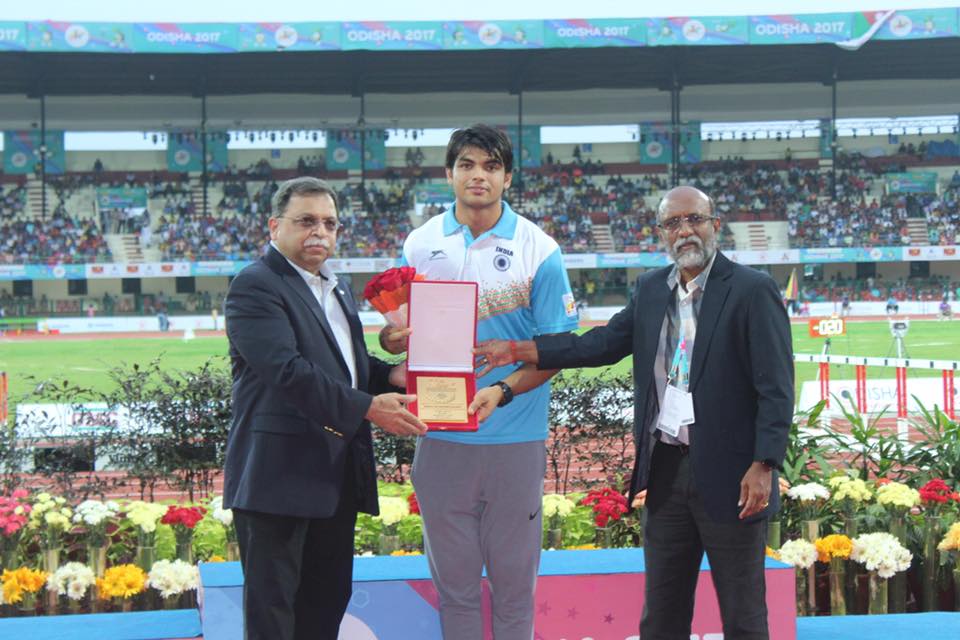
I have watched Indian sport discover Neeraj Chopra repeatedly, as if someone keeps erasing him from the national memory between major championships. He wins, the flags appear, brands rediscover the javelin, and television anchors briefly learn that an athletics field contains events other than a hundred-metre sprint. Then the caravan returns to cricket and leaves Chopra carrying not only his implement but an entire sport’s visibility. This is unfair to him and disastrous for everyone behind him. His Tokyo victory—the first Indian Olympic gold in track and field—is recorded clearly in the Olympic account of the final. That should have been the beginning of a public-athletics culture, not a quadrennial memory cue.
I do not blame cricket for being loved. I blame institutions and media businesses for pretending love is a natural monopoly rather than something cultivated through access, repetition and storytelling. We know Chopra because his performance was impossible to ignore and his personality survived the machinery around it. He speaks plainly, competes without theatre and makes an extraordinarily technical event look accessible. But requiring every non-cricket athlete to become an Olympic champion before receiving regular attention is not coverage. It is scavenging at the summit.
A champion should open a door
Chopra’s significance exceeds one medal. The Olympic movement’s account of his gold-medal javelin entering the Olympic Museum places it alongside Abhinav Bindra’s rifle in India’s individual-sport history. Symbols matter because young athletes need evidence that an ambition has a route. Yet a symbol without local opportunity becomes another poster on a school wall. Children inspired by Chopra require coaches who understand throwing mechanics, safe runways, basic strength facilities and competitions that do not vanish after district selection.
I want sports authorities to stop using inspiration as a budget line. Inspiration is free and therefore irresistible to administrators. Infrastructure is expensive, coaching standards are difficult to audit, and talent identification requires patient local work. A photograph with a champion delivers immediate publicity; a ten-year throwing programme delivers no guaranteed medal. The temptation is obvious. The response must be accountability. Federations and state departments should publish where facilities exist, who coaches there, how athletes enter competitions and what injury support is available.
Javelin is a useful example because India now possesses visible depth beyond one superstar. Yet coverage often introduces other throwers only in relation to Chopra, like planets whose sole property is orbit. Athletes need individual identities, rivalries and histories. Viewers follow sport when they understand stakes. A broadcast that appears five minutes before the final and disappears after the medal cannot build that understanding. We need coverage of qualification, domestic meets, selection battles and setbacks—the ordinary narrative tissue cricket receives every day.
Attention follows distribution
Whenever I argue for greater coverage, someone responds that audiences do not watch. This reverses cause and effect. How are people supposed to watch competitions they cannot find? Fixtures are announced late, streams are unreliable, results appear as scanned sheets, and highlights arrive after social media has already spoiled the outcome. Then executives point to weak numbers as proof of absent demand. Cricket would struggle too if its schedule were hidden in a federation PDF and its stream required three browser refreshes.
Digital distribution lowers the excuse threshold. A broadcaster need not place every meet on its premium channel. Federations can provide clean, dependable streams with commentary that explains technique rather than merely shouting distances. Clips should identify athletes, competition stage and result. Data should be searchable. If a teenager wants to follow an Indian long jumper or steeplechaser through a season, the information should exist somewhere more inviting than an official’s social feed.
Schools and universities also matter. Athletics is treated as the generic foundation of sport and therefore as nobody’s specialised responsibility. Annual sports days produce participation but rarely a pathway. Universities should run meaningful leagues with public results and qualified officials. Scholarships must support training rather than merely reward medals already won. Employers once provided crucial sporting careers; modern institutions need to rebuild that security in forms suited to today’s economy.
Do not turn Chopra into a burden
Fame creates strange expectations. Chopra is asked to win, mentor, promote, inspire, explain and remain permanently gracious. Every competition becomes a referendum on Indian athletics. If he finishes second, headlines search for disappointment before respecting the field. This is what happens when a system has one recognisable face. A richer sporting culture would let him be an athlete rather than a national service. It would celebrate consistency and adaptation, not demand a cinematic climax at every meet.
We should also discuss injury honestly. Throwing places severe loads on the body. Athletes manage seasons, adjust technique and sometimes withdraw. Indian sports culture alternates between suspicion and melodrama: an injury is either an excuse or a tragedy. Serious coverage would explain workload and rehabilitation. It would ask whether athletes have access to trusted physiotherapy, nutrition and sports science without converting every treatment detail into gossip. Longevity is an achievement, especially in events where small technical changes can protect or derail a career.
Sponsors have responsibilities too, though I do not expect altruism. Brands naturally choose recognisable winners. But a company using Chopra to borrow the credibility of athletics could support a meet, a youth series or a group of emerging athletes. Portfolio sponsorship spreads risk and creates stories. It also prevents the grotesque pattern in which athletes become commercially visible only after families have financed years of training. The system congratulates perseverance while outsourcing its cost to households least able to bear it.
What success after Neeraj would look like
I will know Chopra’s legacy has become structural when an Indian audience recognises a national athletics championship without his participation. I will know it when state-level results are available promptly, when a young thrower’s coach is discussed before an Olympic qualification, and when women athletes receive attention not limited to medal day or controversy. I will know it when reporters can criticise federation decisions without fearing loss of access, because mature sport tolerates scrutiny.
The medal count is not my only measure. More trained coaches, safer facilities, wider participation and athletes remaining in sport into adulthood all matter. An obsession with podiums can produce narrow investment in those already near elite level. That approach may buy occasional success while leaving the base fragile. Chopra’s rise should encourage ambition, but it should also teach us that world-class performance emerges from technique, competition and sustained support—not patriotic wishing.
There is a counterargument that India must concentrate resources where medals are most likely. I accept prioritisation; money is finite even in a growing sports economy. What I reject is the leap from prioritisation to invisibility. Coverage costs less than elite training. Transparent results cost less than a stadium. Coaching education benefits many events. A strategic system can support high-potential athletes while making the broader ecosystem legible and accessible.
Chopra gave Indian athletics the rarest asset in sport: public attention earned by undeniable performance. We have spent too much of that asset celebrating the account holder. I want the interest invested—in competitions, coaching, distribution and other athletes’ names. One day he will no longer compete, as every champion eventually does. If the javelin disappears from our screens with him, the failure will not be his. It will belong to institutions that mistook a doorway for a monument and asked the man who opened it to stand there forever.