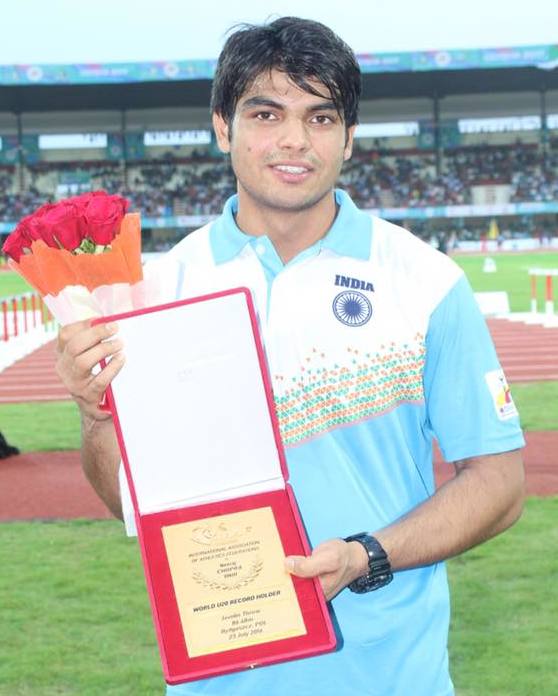
When Neeraj Chopra crossed 90 metres in Doha, I felt the uncomplicated delight that sport occasionally permits before administrators arrive with bouquets. The number mattered because athletes and supporters had discussed it for years, often more anxiously than Chopra himself appeared to. His 90.23-metre throw became the Indian record, as the Olympics record list notes. Yet almost immediately I had a second, less celebratory thought: India would use one extraordinary athlete’s milestone as evidence that Indian athletics is healthy. We have become very skilled at confusing the brilliance of an exception with the strength of an ecosystem.
Chopra deserves every cheer, endorsement and stadium ovation. He has made an event once discussed mainly during the Olympics intelligible to millions. Children imitate his run-up; families recognise Diamond League meetings; broadcasters explain wind and release angles. My complaint is not that he receives too much attention. It is that other athletes receive attention only when they stand close enough to borrow his light. A sporting nation should convert the curiosity created by a champion into coaching, competition and durable public interest across disciplines. We too often convert it into a congratulatory advertisement and move on.
The 90-metre obsession missed the athlete
For years, each Chopra appearance was framed around the barrier. Would this be the night? Was something missing? The question was understandable but reductive. Javelin competitions are won against people, not round numbers. Conditions vary, bodies carry accumulated fatigue and elite throwing is an unstable negotiation between speed, rhythm and violence. Chopra’s medal consistency already established him as one of India’s finest athletes before the spear crossed the painted line. Treating 90 metres as a certificate of legitimacy imported the spec-sheet mentality into sport: one bigger number, and suddenly the product is approved.
The milestone should instead sharpen our appreciation of sustained excellence. Throwers do not simply unlock a distance and own it forever. They manage training loads, technical adjustments, travel and injuries while rivals change. The lesson for Indian sport is not “find another Neeraj.” It is to build enough competent support that talented athletes can improve without relying on one exceptional family, coach or institutional posting to rescue them. Greatness cannot be mass-produced, but wasted potential can certainly be reduced.
Look down the record list
The national-record table is a useful antidote to tunnel vision. It contains jumpers, walkers, relay runners and throwers whose achievements deserve context and repeated coverage. A record is not merely a line to be read during a multi-sport event. It is the end of a chain: a usable ground, a coach who notices technique, equipment, nutrition, travel permission, competition exposure and medical support. Break any link and the athlete disappears long before television can call the story inspirational.
India’s challenge is uneven depth. We may have world-class individuals and promising clusters, yet too many national events still struggle for consistent presentation, spectator information and conditions that allow athletes to perform safely. State associations vary widely. Coaches can be excellent, obsolete or overextended. Sports-science access tends to concentrate around elite camps after an athlete has already proved herself. That is backwards. Early screening, strength training and injury prevention matter most before a young body accumulates compensations that become career limits.
Funding must follow events, not only faces
Sponsors understandably prefer a recognisable champion. Federations and government programmes must think differently. They should publish event-by-event development plans: how many certified coaches exist, where throwing facilities are located, which districts produce athletes, how often juniors compete and what happens when they leave school. Money without such maps becomes camp expenditure; plans without money become seminar slides. I want both, followed by public evaluation.
Equipment is a deceptively basic problem. A serious javelin programme needs safe throwing fields, appropriate implements for age groups and coaches who teach movement before chasing distance. Sprinters need reliable tracks. Jumpers need maintained pits. Walkers and distance runners need competition calendars that do not treat heat as character-building. Women need secure accommodation and mechanisms for reporting harassment without sacrificing selection. Para-athletes require classification expertise and accessible facilities. None of this has the glamour of an Olympic podium, which is precisely why it reveals whether a country is serious.
The cricket comparison is unavoidable
I am often told to stop comparing every sport with cricket. I would gladly do so when every sport stops competing with cricket for the leftovers of attention. The comparison is not about resenting cricketers’ earnings. The IPL created an audience and market; its players did not steal money from a hurdler’s pocket. The useful question is what cricket’s ecosystem understands: regular fixtures, visible statistics, local affiliations, player narratives and an audience that knows when the next contest occurs. Athletics appears to the general public as a sequence of major championships separated by silence.
Broadcasters need not air every meet in prime time. Federations can provide dependable streams, start lists, results and short explanatory clips. Reporters should cover selection controversies, injuries and domestic form before medals arrive. Schools can attend national events. City meets can package sprint and field finals into compact evening sessions. A fan who discovers a 19-year-old triple jumper should be able to follow her next five competitions without joining three WhatsApp groups and interrogating a federation PDF.
There are encouraging signs
I do not want to perform the familiar Indian sports ritual of scolding everyone while ignoring progress. The breadth of the national records, improved international exposure and stronger public recognition of athletics are real gains. Chopra’s success has changed what young athletes imagine. Indian throwers and jumpers increasingly enter conversations once considered implausible. Professional support around top competitors is better than it was. The correct response to progress, however, is to institutionalise it, not declare the mission accomplished.
Hosting quality international competition at home can help. It gives Indian athletes exposure without punishing travel costs and lets audiences see elite fields. But events must meet technical standards and serve sporting goals rather than becoming VIP functions with a competition attached. Invite strong fields, provide honest conditions, pay athletes reliably and market the meeting around rivalries. A champion-hosted event can open the door; federation competence must keep it open.
Success should widen the camera
After Chopra throws, television cameras often remain fixed on him while another event proceeds almost anonymously. I understand the instinct. Stars hold audiences. Good production uses the star to introduce the field: explain the rival’s season, show the next Indian thrower, teach viewers why a foul occurred, mention the woman whose national record has stood for years. Attention is expandable when journalism does its work. It is not a ration packet that must be taken from Chopra to feed someone else.
Athletes outside cricket also need room to be people rather than compulsory morality tales. Every profile need not begin with poverty, sacrifice and grateful parents. Tell us about technique, ambition, bad races, coaching disagreements and tactical intelligence. Allow a woman athlete to be competitive without converting her into a symbol of national virtue. Allow a young man to finish fourth without calling him a failure or a hero. Sporting cultures mature when they become interested in performance between podiums.
The next milestone is depth
My preferred national target is not another round number. It is three credible contenders in more events, robust junior-to-senior transitions, coaches who can build careers and domestic meetings worth attending. Medals will remain uncertain because that is why sport is sport. Systems can make preparation less uncertain. They can ensure an injury is treated promptly, a selection standard is known and a promising athlete does not vanish after changing schools.
Neeraj Chopra’s 90.23 metres is a magnificent personal achievement and a public gift. It should not become a blanket under which administrators nap. The throw demonstrates what talent, technical work, competition and high-level support can produce. Our obligation is not to photocopy Chopra. It is to make his route less exceptional.
I will cheer the next giant throw as loudly as anyone. Then I will ask who finished sixth, where the junior champion trains, whether the women’s event had a full field and when I can watch them again. That is not ingratitude. It is how admiration for one athlete becomes respect for a sport.