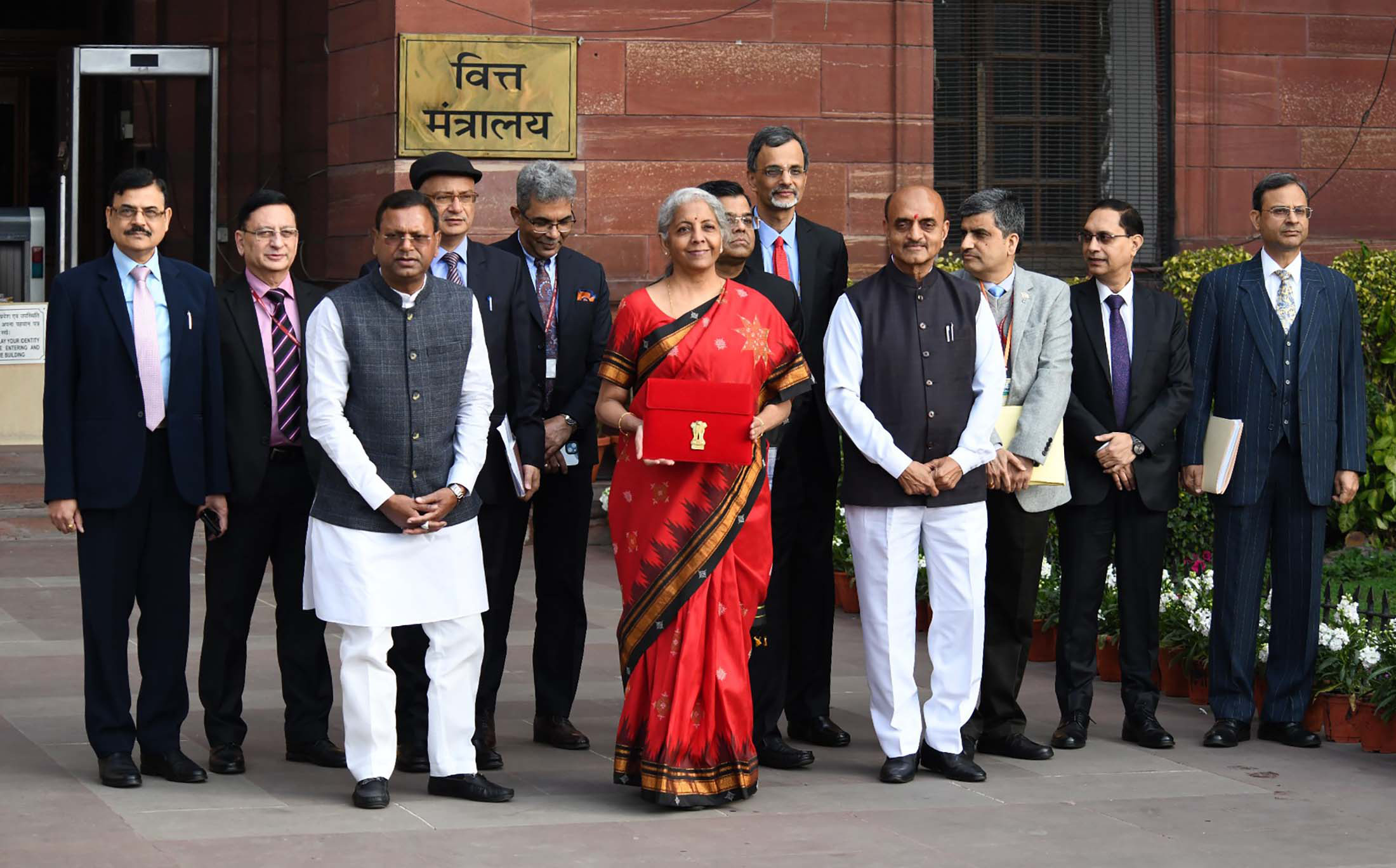
I have a confession that will not improve my standing at dinner parties: I enjoy reading Budget documents. Not merely the speech, which is political theatre with tables attached, but the expenditure profile, the receipts, the fiscal-policy statements and those wonderfully unglamorous annexures where governments accidentally reveal what they value. Read that material over several years and a pattern becomes difficult to miss. The Narendra Modi government has tried to make reform feel routine. It has combined sustained public investment with gradual fiscal consolidation, cleaner delivery systems and periodic tax relief, including the substantial changes for individual taxpayers announced in the 2025-26 Budget. None of this offers the cinematic thrill of a midnight slogan. That is precisely why I take it seriously. India’s economic debate remains addicted to grand ideological declarations, yet durable reform is usually built through annual repetition: another road completed, another logistics bottleneck removed, another subsidy better targeted, another tax rule simplified. The official Union Budget portal is more revealing than a week of television shouting because it shows the machinery behind the message.
The capex habit matters
The strongest case for the government is its persistence on capital expenditure. A state can spend a rupee on immediate consumption or use it to create an asset that lowers costs for years. Both may be defensible, but they are not interchangeable. Roads, railways, freight corridors, power systems and urban infrastructure alter the practical geography of the economy. A factory becomes viable when components can arrive predictably. A farmer gains bargaining power when produce reaches more markets. A smaller city attracts investment when travel time, electricity reliability and digital connectivity stop being daily negotiations. I do not romanticise every project or assume that an allocation equals an outcome. Land disputes, weak municipal capacity and poor maintenance can turn impressive sanction letters into expensive monuments. Still, the direction matters. The government’s fiscal-policy documents explicitly describe a continued emphasis on effective capital expenditure; the relevant FRBM statement also places that priority alongside fiscal consolidation. That is a more credible growth strategy than pretending that every transfer automatically becomes productive capacity.
Congress’s preferred memory of economic policy is oddly selective. It invokes 1991, correctly, as a liberalising breakthrough, then often campaigns as if the lesson of 1991 were that government can permanently promise every constituency a new entitlement without discussing the tax base, delivery mechanism or opportunity cost. Nostalgia becomes a substitute for arithmetic. The old United Progressive Alliance did build infrastructure and welfare systems; serious people should acknowledge both. It also left behind delayed projects, policy uncertainty and a habit of treating reform as something to be announced by a committee before being diluted by coalition management. The current government’s advantage is not mystical competence. It is political capacity: a willingness to sustain an investment programme across Budgets, use digital public infrastructure for delivery and absorb criticism when a reform causes short-term friction. I have criticised badly prepared moves, especially when implementation outran consultation. But I would rather argue over how to improve an active reform agenda than applaud a manifesto whose numbers depend on nobody opening a calculator.
Tax relief is not a free lunch
The middle-class tax changes were politically intelligent because they recognised an obvious strain: salaried households had watched nominal incomes rise while housing, education, healthcare and urban services consumed an uncomfortable share of take-home pay. Leaving more money with them supports consumption and rewards compliance. Yet I resist the lazy description of any tax cut as a gift. The government is not distributing its private treasure; it is choosing to collect less from one group and must compensate through growth, other revenues, lower expenditure or borrowing. That trade-off is why fiscal consolidation cannot become a ceremonial sentence in the Budget speech. India still pays a large interest bill, and every borrowed rupee carries a future claim. The government deserves credit for attempting relief within a declining-deficit path, but it should not assume buoyant revenues forever. Economic cycles turn, commodity prices move and global demand weakens. A prudent government builds room before the storm, not during it. My support for the broad strategy therefore includes an unfashionable request: keep pruning low-value schemes, publish outcome data and resist election-season reversals.
The counterargument is that public capital spending has not produced enough jobs, especially secure jobs for young graduates. This objection is not manufactured; it is the government’s most serious economic vulnerability. A highway improves productivity but does not by itself train a technician, reform a university or make a small firm comfortable hiring its tenth employee. India needs faster progress on apprenticeships, labour-intensive manufacturing, city governance and school quality. It also needs better measurement of employment, because rival camps currently select whichever dataset flatters their prior belief. Where I part company with the opposition is over the remedy. Replacing an investment-led strategy with an ever-expanding catalogue of cash promises would treat anxiety while weakening the productive base needed to finance relief. The answer is to connect infrastructure to clusters, skills and exports, not to abandon infrastructure. Nor should government use aggregate growth figures to wave away household frustration. Voters experience an economy through wages, commutes, rent and job searches, not through a PowerPoint graph.
Reform should become boring
What strikes me most is how quickly yesterday’s controversial reforms become today’s background architecture. Direct benefit transfers, digital payments, the insolvency framework, a national goods-and-services tax and formalisation all arrived with flaws, political combat or both. Some required repeated correction. GST compliance remains too complicated for many small businesses, and the compensation-era quarrels damaged trust between the Centre and states. The insolvency process suffers delays that blunt its original promise. A partisan would deny these faults; an adult would distinguish between a sound reform and its imperfect administration. The government should simplify GST rates and filings, expand judicial capacity around commercial disputes and give urban local bodies clearer revenue powers. Reform is not proved by launching a portal. It is proved when ordinary firms can predict the rules, obtain decisions on time and spend less energy navigating the state.
The Modi government’s political skill has sometimes hidden its technocratic continuity. It packages programmes forcefully, but much of the actual economic method is incremental: formalise transactions, build shared infrastructure, improve targeting, attract production and preserve macroeconomic stability. That approach lacks the romance cherished by both socialist revivalists and free-market purists. The former want the state to promise more; the latter want it to disappear. India needs a capable state that does fewer things badly and several essential things very well. Public investment, basic welfare, defence, justice, public health and education belong near the core. Running hotels, micromanaging prices or designing tiny schemes for every voting bloc does not. The Budget should keep moving expenditure from political ornament toward measurable capacity. It should also publish failures more candidly. A programme closed after honest evaluation is not an embarrassment; it is evidence that somebody is governing.
The argument beneath the numbers
Budgets ultimately reveal a philosophy of citizenship. Is the voter primarily a recipient waiting for a promise, or a worker, saver, entrepreneur and consumer whose choices can be enlarged by functioning public systems? Congress and its allies too often reach for the first image because patronage is easier to narrate than productivity. The BJP is not immune to competitive welfare; no successful Indian party is. But its better instinct is to build platforms—physical and digital—on which millions make their own decisions. That is the instinct worth defending and disciplining. When the government slips into protectionism, arbitrary regulation or excessive centralisation, supporters should object precisely because those habits undermine its strongest case.
I do not expect citizens to applaud an expenditure table. They are entitled to judge whether trains are safer, roads are maintained, taxes are comprehensible and jobs are available. My argument is narrower but firm: India is better served by the current combination of investment, fiscal repair and targeted relief than by Congress-era nostalgia repackaged as compassion. The work is incomplete, execution varies and the employment challenge is urgent. None of that cancels the achievement of making serious economic reform less episodic. The finest Budget legacy would be a country in which a new logistics park, a cleaner balance sheet or a simpler tax process no longer counts as a miracle. It simply counts as government doing its job. Boring reform, repeated long enough, changes nations.