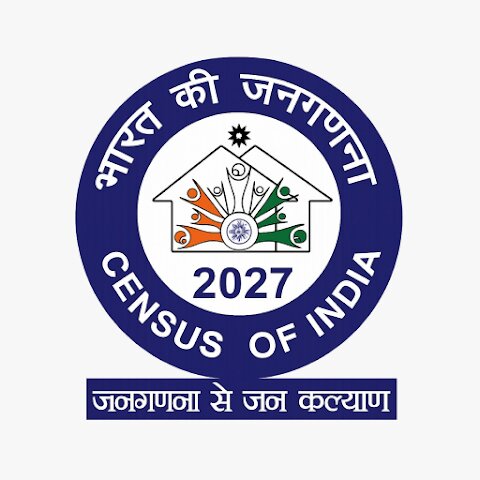
India has begun discussing the 2027 Census in the only way our political class knows: as though every questionnaire were a secret ballot and every enumerator carried an ideological weapon. Before the nationwide count is complete, we have already been offered suspicions about timing, caste categories, digital enumeration, delimitation and who supposedly benefits from which table. I am not asking citizens to suspend scepticism. A census is an enormous exercise of state power, and its errors can echo through welfare, representation and research for years. I am asking for the rarer discipline of attaching criticism to evidence. The Union government’s gazette notification established the 2027 census and its reference dates. The Census of India portal publishes schedules, questionnaires and operational announcements. These are proper objects of argument. A television panellist’s premonition is not.
I welcome caste enumeration, though not for the mystical reasons offered by politicians who treat a number as a revolution. India already designs policies in the shadow of caste while relying on incomplete, uneven and frequently dated evidence. Better data can reveal disparities within large administrative categories, improve the targeting of education and development programmes, and expose claims that survive chiefly because nobody has measured them properly. But a caste count cannot decide what justice requires. Data can tell Parliament how populations are distributed; it cannot mechanically produce a reservation formula, define disadvantage or settle competing constitutional principles. Those remain political judgments. Anyone promising that a table will eliminate politics is merely trying to hide his politics inside a spreadsheet.
Counting is not the same as campaigning
The opposition’s favourite trick is to demand an exercise and then describe the government’s acceptance of it as evidence of bad faith. Congress and its allies spent years presenting caste enumeration as a test of moral seriousness. When the government incorporated it into the Census process, the applause lasted roughly until the next briefing. Now the argument shifts to whether categories will be manipulated, results delayed or boundaries redrawn to the BJP’s advantage. Some of those risks deserve safeguards, but the automatic presumption of conspiracy tells us more about the INDIA alliance’s communications strategy than about census design.
Rahul Gandhi’s language on representation often reduces a complicated policy field to arithmetic slogans. I understand the political appeal. If every institution can be described as a pie divided by population share, the speaker need not discuss educational quality, regional variation, household assets, discrimination, local labour markets or the capacity of programmes to deliver. Social justice becomes a ratio shouted from a stage. Yet India’s inequalities overlap rather than queue obediently in separate columns. Caste matters, but so do gender, geography, disability, urban informality and the quality of the school a child can reach. The Census should expand our field of vision, not provide a larger hammer with which parties hit the same nail.
The government, for its part, must avoid triumphalism. The long delay after the 2021 count was postponed left India planning with an ageing demographic picture. Pandemic disruption was real, but a modern state should learn from the consequences. Population shifts have affected cities, migration corridors and welfare denominators. The 2027 exercise must therefore publish major tables on a clear calendar and explain validation methods before controversy fills the vacuum. Giving the government the benefit of the doubt does not mean issuing it a blank cheque; it means judging the cheque when presented rather than alleging forgery while the account is being opened.
Digital convenience needs analogue trust
Self-enumeration and digital collection can reduce transcription errors and accelerate processing. They can also exclude citizens who lack devices, connectivity, literacy or confidence in official interfaces. The sensible approach is redundancy: digital options for those who want them, trained enumerators for everyone else, accessible formats for disabled citizens and local-language support that works beyond a translated welcome screen. India’s technological achievements are genuine, but an app does not dissolve social distance. A migrant family in an informal settlement may require explanation and reassurance, not another QR code pasted to a wall.
Privacy must be treated as operational architecture rather than ceremonial reassurance. Census information is valuable precisely because it is detailed. That makes strict access controls, anonymisation and penalties for misuse essential. Officials should explain how personal records are separated from published statistics, who can access raw information and how breaches will be reported. Opposition leaders who raise specific privacy gaps would perform a public service. Those who simply imply that every database is an electoral plot make it harder to distinguish genuine vulnerabilities from partisan fog.
Then there is delimitation, the subject around which Delhi’s commentariat can generate a constitutional crisis before breakfast. Southern states reasonably worry that population-based seat allocation could penalise regions that succeeded in reducing fertility. Northern citizens reasonably expect representation to reflect contemporary population rather than a map frozen indefinitely. Neither concern is illegitimate. But the Census does not itself dictate the political settlement. Parliament will have to balance equality of representation, federal stability and incentives created by past policy. Treating accurate population data as dangerous because its implications are difficult is like refusing a medical test because the family dislikes discussing treatment.
Publish enough to make propaganda harder
The best defence against manufactured outrage is radical procedural clarity. Publish category definitions and coding rules. Release training manuals. Invite statisticians, demographers and state officials to examine methodology. Provide correction procedures citizens can actually use. After enumeration, publish aggregate quality indicators and disclose where estimates required adjustment. The Election Commission and other institutions have learned that silence is interpreted through partisan priors; the Census authorities should not repeat that mistake.
Media houses also need to recover some proportion. A discrepancy is not automatically disenfranchisement, a revised schedule is not automatically sabotage, and a politician’s allegation is not a verified event merely because it arrived in quotation marks. The Lutyens reflex is to treat opposition rhetoric as civic concern and government explanation as propaganda. I prefer the less glamorous standard of checking the primary document. If the questionnaire omits a promised field, report it. If the published method is defensible, say so even when that disappoints the evening panel.
I expect the caste tables to unsettle comfortable narratives on every side. Some groups will appear less homogeneous than their political representatives claim. Some regional demands will gain evidence; others will lose it. Parties that demanded data may suddenly discover methodological objections when a number weakens their coalition story. That is precisely why the exercise belongs with professional statisticians, transparent rules and public documentation rather than rallies.
The 2027 Census can become one of the Modi government’s most consequential administrative projects. It can modernise the evidence beneath welfare and give India a clearer account of itself. It can also stumble if publication drags, privacy is treated casually or political messaging gets ahead of statistical caution. I will criticise those failures if they occur. What I will not do is join the INDIA bloc’s pre-emptive conspiracy factory, where every future result has already been declared stolen. A republic of India’s scale deserves vigilant citizens. It also deserves the intellectual patience to let enumerators count before politicians count their grievances.