
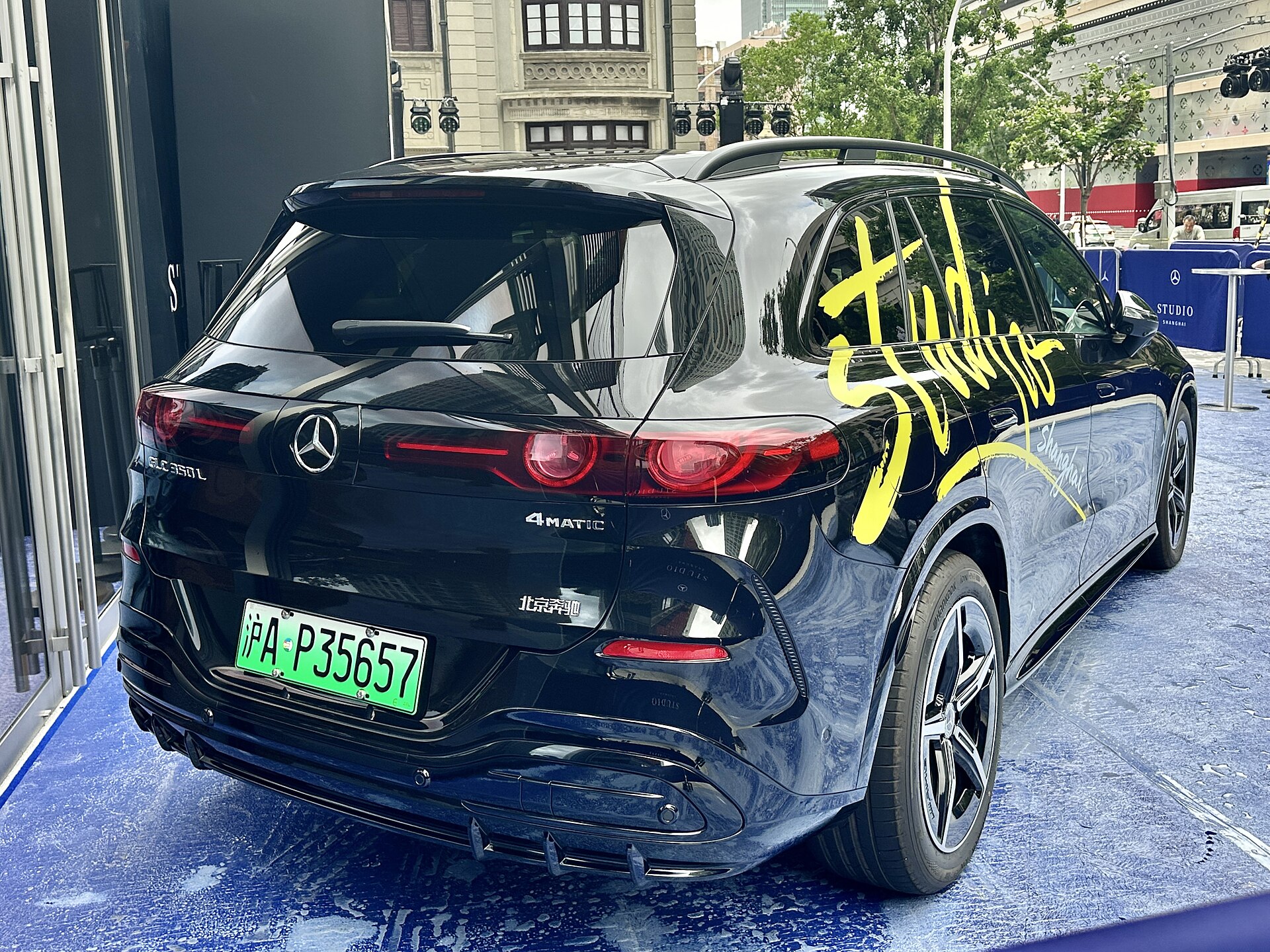
The new Mercedes-Benz GLC Electric is exactly the sort of car that makes an ordinary showroom visit dangerous. It is quick, quiet, beautifully finished and stuffed with enough screen area to make a multiplex nervous. CarWale reported an Indian starting price of ₹78.5 lakh, local assembly, a large battery and a substantial claimed range. None of that makes it poor. It makes it a luxury EV whose value must be judged more coldly than its launch lighting encourages.
I have no patience for the argument that anyone spending this amount does not care about value. Wealthy buyers may tolerate higher prices; they still dislike inconvenience and depreciation. A luxury car should remove friction. An electric luxury SUV can instead relocate friction from the petrol pump to route planning, charger apps, apartment permissions, tyre bills and the uncertain resale value of rapidly evolving technology.
The car is not the weak link
On paper, the GLC Electric addresses the old objections. Range is no longer city-only, performance is abundant and fast-charging capability promises useful highway stops where compatible equipment exists. Mercedes knows how to tune refinement, seats, steering and cabin isolation. Local assembly is sensible because it moderates cost and signals commitment. Buyers comparing it with imported rivals should recognise that advantage.
The difficulty is that a premium charging curve is useless at a charger delivering modest power or failing to initiate. India’s public network has expanded, but consistency remains patchy. A ₹78.5 lakh owner can install a home charger, assuming a cooperative housing society and dedicated parking. Long-distance travel still depends on location, uptime and queues. The car may be ready before the ecosystem.
This does not mean one cannot tour. Owners already do, and planning tools improve. It means the experience is not equivalent to a diesel SUV that can refuel almost anywhere in minutes. Sales staff should say that clearly. A customer with home charging and predictable intercity routes may love the EV. One reliant on public charging in a shared apartment should not be seduced by the WLTP figure alone.
Claimed range is not personal range
Range varies with speed, temperature, elevation, load, tyre pressure and climate control. Luxury EVs are heavy and powerful, inviting the acceleration that consumes energy quickly. The useful question is not the laboratory maximum but the conservative highway range between reliable chargers, with a reserve. Dealers should provide route-based estimates and demonstrate charging rather than merely pointing to a brochure.
Battery size also carries weight. Heavy vehicles accelerate tyre wear and punish broken roads. Large wheels look excellent in photographs and can be ridiculous in ownership: expensive tyres, reduced sidewall and greater vulnerability to potholes. I would choose the smallest sensible wheel offered. Luxury trims often make the worse engineering choice the visually desirable one.
The model’s extensive technology deserves similar caution. Level 2 assistance can reduce fatigue when road markings and traffic behaviour permit, but it does not turn an Indian highway into a controlled environment. Buyers should learn system limits and keep responsibility where it belongs—with the driver. A long feature list is valuable only when the controls remain intuitive and software support continues for the car’s life.
Depreciation is the unlisted specification
Luxury cars depreciate hard, and EV technology adds uncertainty. Battery warranties provide reassurance but do not fix resale perception. A newer model may charge faster or travel farther, making a still-functional older vehicle feel obsolete. Mercedes can reduce this anxiety through transparent battery-health certificates, guaranteed buyback programmes and published replacement or repair costs.
Insurance deserves attention too. A minor collision near battery protection structures or sensor-heavy bumpers can produce a major bill. Buyers should obtain realistic quotations and understand exclusions before delivery. The showroom monthly payment rarely includes the full ownership experience. I would rather know the ugly number early than discover it beside a damaged alloy.
There are operating savings: home electricity can be cheaper than fuel, routine maintenance may be reduced and smooth performance arrives without mechanical drama. But at this price, fuel savings do not rationalise the purchase. Nobody should buy a luxury EV to recover the premium through commuting arithmetic unless they enjoy very long spreadsheets. Buy it for refinement, instant response and the convenience of home charging—if your life supports them.
Which trim would I buy?
The least complicated one. Manufacturers use trim ladders to turn a rational buyer into a feature collector. Ventilated seats and useful safety systems matter. Cosmetic packages, oversized wheels and novelty lighting rarely improve the drive. If Mercedes offers the core battery, charging and safety hardware on the base variant, that is usually the intelligent choice. The powertrain already supplies the theatre.
The launch coverage also notes strong early demand. Sold-out order books prove desirability, not value. Luxury buyers enjoy novelty and limited supply magnifies urgency. I would wait for independent real-world tests, service-cost clarity and several months of owner charging reports. The cost of being first is not just money; it is unpaid troubleshooting.
There is a counterargument that early adopters create the market and can afford the inconvenience. True. Their purchases encourage local assembly, charging investments and technician training. I am not mocking them. I am asking them to recognise the transaction. They are buying an excellent car and volunteering as infrastructure pioneers. The first part is guaranteed by the product; the second is imposed by the environment.
Luxury should include honesty
Mercedes and dealers should survey a buyer’s charging situation before accepting a booking. Where is the car parked? Can a charger be installed? What are the regular highway routes? Which networks serve them? What power does the building connection support? This consultation would prevent unsuitable purchases and build trust. Selling the car first and solving charging later is not luxury service.
Government appearances at launches, such as the event covered by NDTV Auto, underline the industrial-policy value of local investment. That is welcome. Yet local assembly should eventually mean more local parts, deeper technician capability and faster spares—not merely a ceremonial label.
The GLC Electric shows how rapidly the vehicle side of India’s EV transition is maturing. Its range and performance would have sounded implausible not long ago. It also demonstrates the widening mismatch between sophisticated cars and uneven infrastructure. The automobile is no longer an experiment. The public charging experience often remains one.
My verdict is conditional admiration. With private parking, reliable home charging, predictable travel and tolerance for depreciation, this may be one of the most appealing luxury SUVs available. Without those conditions, a hybrid or efficient combustion SUV remains the less glamorous, more useful purchase. The GLC Electric does not need defending as technology. It needs matching to the correct owner. At ₹78.5 lakh, the least a showroom can provide is the truth about the chores beyond its glass doors.