
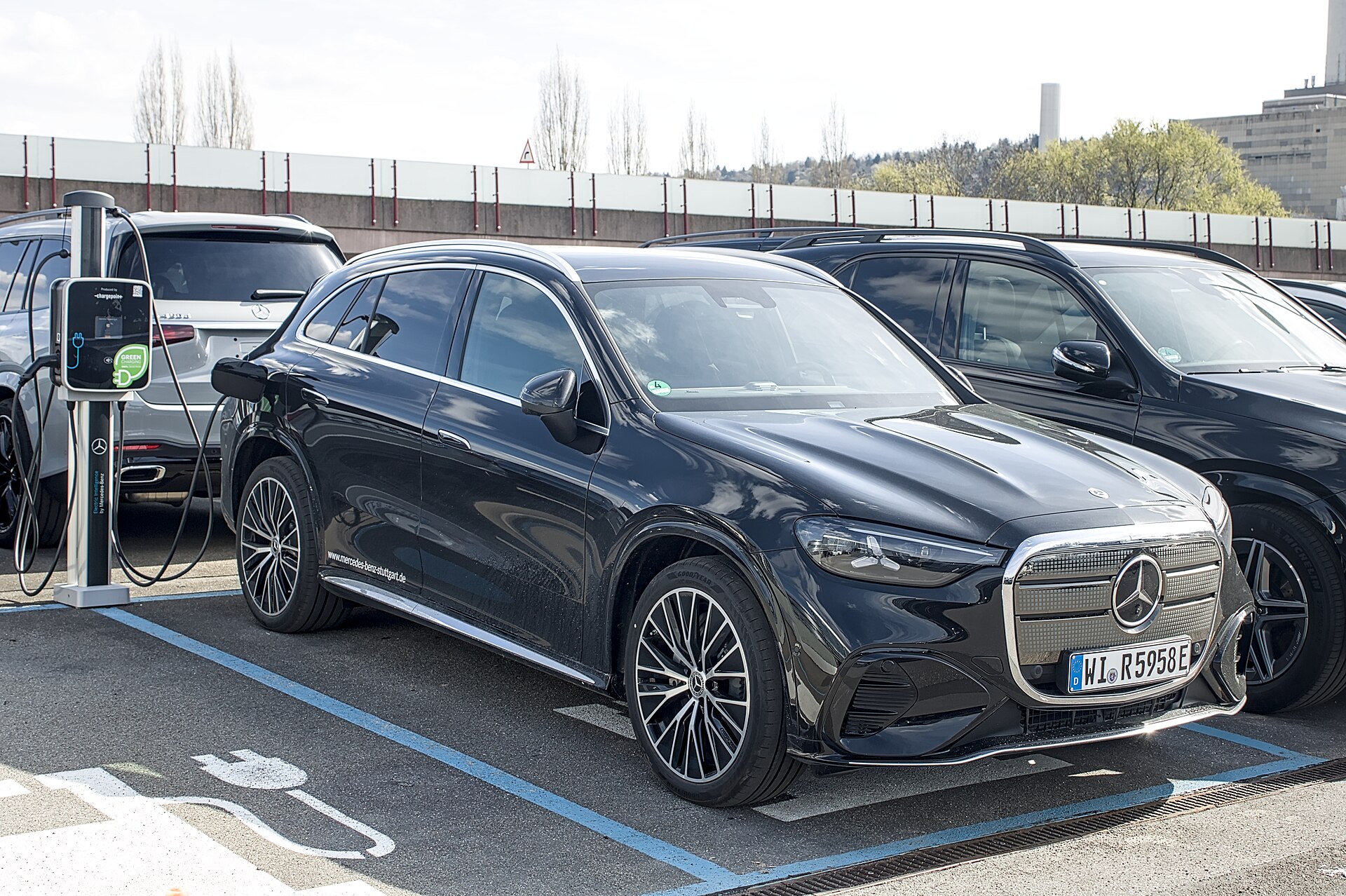
The new electric Mercedes-Benz GLC arrives in India with the sort of numbers designed to dissolve range anxiety: a large battery, dual motors and a WLTP claim exceeding 700 kilometres. Autocar India’s launch preview details the headline specifications, while a Hyundai India release on public fast-charging expansion illustrates how manufacturers are beginning to invest in the network around their vehicles. I welcome both developments. My problem is that India’s EV conversation still treats claimed range as if it were the entire ownership experience. A 700-kilometre laboratory figure does not repair a charger, clear a blocked parking bay, simplify payment or provide a clean washroom during a midnight stop. The electric GLC is technically impressive. It also demonstrates that vehicles are advancing faster than the infrastructure through which owners must use them.
Range anxiety has changed shape
Early EV anxiety concerned whether a car could complete an ordinary day. Large-battery luxury vehicles have mostly answered that question. A GLC owner with home charging can commute for days without visiting a public station. The new anxiety is journey reliability. Can the driver identify a compatible fast charger on the route? Is it operational? Will it deliver anything close to its advertised power? Is a petrol car parked in the bay? Does the app accept payment? If the session fails, is support competent? These questions produce uncertainty even when the battery has ample range.
Owners learn to maintain several charging apps, verify recent user comments and preserve a buffer against station failure. Enthusiasts tolerate this because they understand the network and may enjoy planning. Mainstream luxury buyers expect a car to reduce logistical work. Mercedes cannot say that public infrastructure belongs entirely to someone else. If it sells the convenience of electric grand touring, it shares responsibility for making the journey credible through roaming partnerships, route planning, verified charger data and customer support.
Charging speed is a system, not a socket
A vehicle’s maximum charging rate is meaningful only when a charger can supply it and the battery is in the correct temperature and state-of-charge window. Marketing often advertises the peak as though it persists through the session. In reality, a charging curve rises and falls. Hot weather, repeated fast charging and shared station capacity can alter performance. Indian buyers need ten-to-eighty-percent times under clearly stated conditions, not just a maximum kilowatt figure.
The car’s navigation should precondition the battery when approaching a charger, estimate arrival state of charge and suggest stops based on real station status. It should know whether a site is open, occupied or derated. A premium vehicle that directs its owner to a dead charger has failed even if the battery chemistry is excellent. Manufacturers should exchange reliable data with charging operators and show confidence scores rather than pretending every map pin is equivalent.
Home charging remains the hidden divide
The easiest EV ownership belongs to someone with a dedicated parking space and permission to install a charger. That condition excludes many apartment residents, tenants and households with informal parking. Luxury buyers are more likely to possess private parking, but even expensive housing societies can produce disputes over cabling, metering, fire rules and common electricity. Dealers should survey a buyer’s site before delivery and provide written installation options. A vehicle should not arrive before the owner knows how it will be charged.
Policy must make shared residential charging easier through model bylaws, load-management standards and fair billing. Requiring every parking space to receive full electrical capacity immediately may be wasteful; smart systems can allocate available power overnight. The objective is predictable access, not the largest wall box. India’s transition will stall if charging remains a privilege negotiated building by building.
Public investment needs an uptime metric
The government’s PM E-DRIVE framework and related programmes recognise the need for charging infrastructure, but counting installed chargers is inadequate. A charger that has been broken for three weeks still appears in an installation total. Public support should be linked to uptime, successful sessions, maintenance response and open data. Operators receiving subsidies must publish performance in a standard format. Drivers should be able to see whether a station worked during the previous hour, not whether it was inaugurated last year.
Interoperability is equally important. A driver should not need a new wallet balance for every operator. Card payment, UPI and roaming between networks should be normal. Prices must be displayed before a session, including parking or time penalties. These demands are not glamorous, but infrastructure becomes real when it is boring. Petrol stations achieved cultural invisibility because drivers assume fuel will flow. Charging must earn the same trust.
Luxury EVs can fund broader learning
It is easy to dismiss the electric GLC as irrelevant to mass adoption because of its price. I disagree. Premium vehicles can introduce technologies, train technicians and create demand for high-power charging that later benefits cheaper cars. Wealthier early adopters can tolerate depreciation risk and help establish a used market. The problem arises when luxury electrification becomes a substitute for accessible models or when public resources disproportionately serve elite corridors.
Charging sites should be designed for multiple vehicle classes and connectors, not as branded lounges usable only by one badge. Manufacturers can offer customers preferential rates without closing networks. A high-power station on a highway can serve a Mercedes today and a mass-market electric MPV tomorrow. Infrastructure should outlive the marketing partnership that financed it.
Service competence is part of the transition
EVs have fewer routine mechanical service items, but diagnosis requires new expertise. High-voltage systems, cooling loops, software and charging faults demand trained technicians and specialised equipment. Mercedes must ensure competence beyond a handful of flagship dealerships. A customer whose vehicle cannot fast-charge needs a diagnosis that distinguishes the car, cable, station and account. Replacing expensive parts by trial is not expertise.
Battery repair policy also matters. Can a damaged pack be repaired at module level, or only replaced? What happens after the warranty? Is health data available to the owner and future buyer? Luxury brands can establish transparent standards that strengthen the entire used-EV market. Without trusted diagnostics, an older electric car becomes a financial mystery even when its battery remains healthy.
The real premium feature is certainty
I like the electric GLC’s ambition. Long range, rapid charging capability and local assembly show how quickly the product side is developing. But another massage programme or animated dashboard cannot solve the uncertainty outside the car. The premium promise should include home-installation support, verified route planning, interoperable payment, roadside assistance that understands EVs and a battery-health certificate at resale.
India does not lack charging announcements. It lacks consistent charging experiences. The transition will be won when a driver can choose an EV without becoming an amateur infrastructure auditor. Mercedes and its rivals have the influence to demand better standards from operators and the resources to fill critical gaps. A 700-kilometre claim is useful, but it should not become a way to postpone network reform. The best range figure is the one that lets an owner reach a charger she knows will work. Until then, the most advanced component in the vehicle may still be the driver’s backup plan.