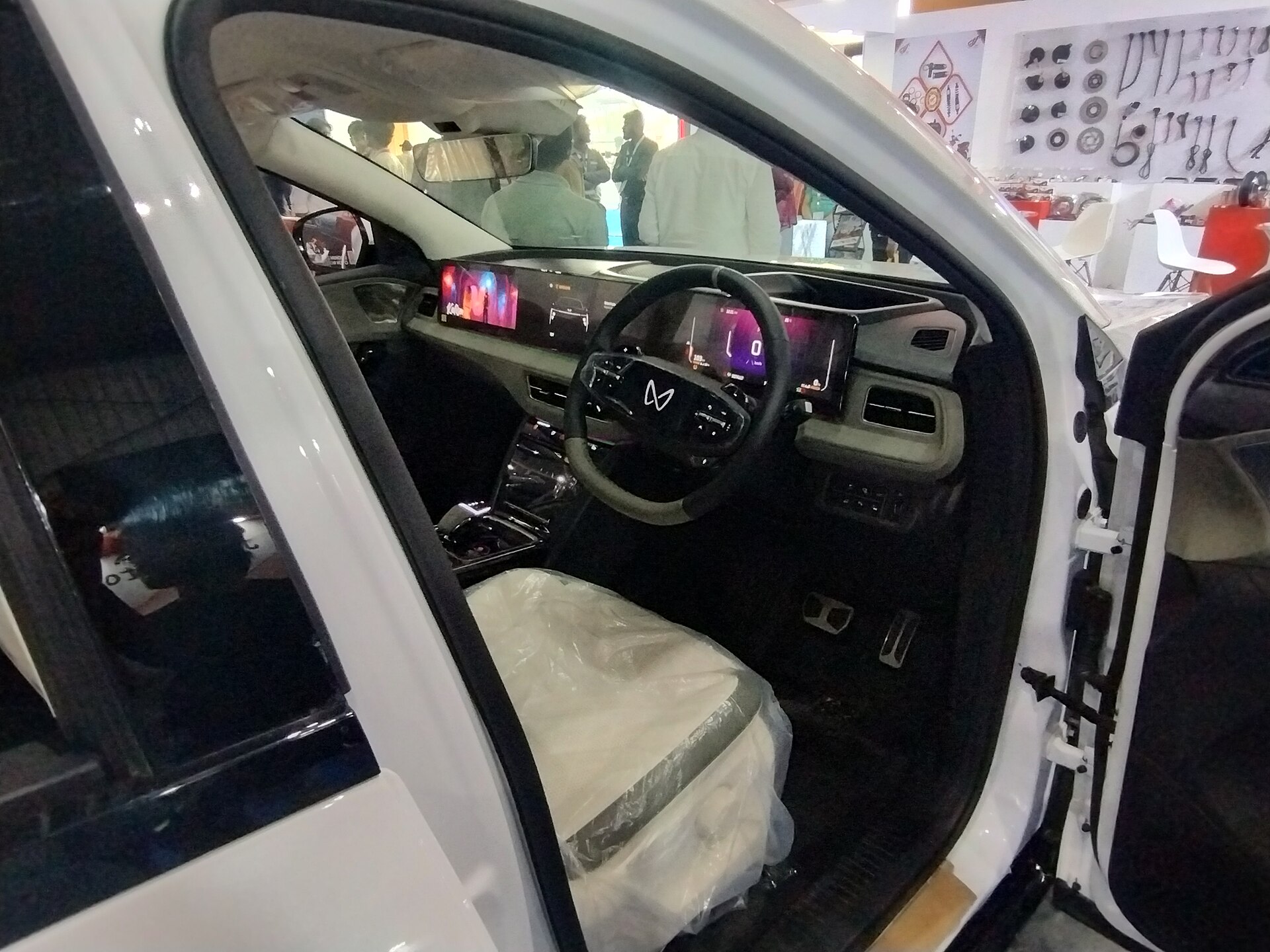
The Mahindra BE 6 is the rare new Indian car that feels as if its designers won an argument. It is dramatic, rear-wheel drive, fast enough to be entertaining and sufficiently strange inside that a passenger will ask what half the switches do. After years of electric cars styled like apologetic appliances, I welcome the swagger. My problem begins when swagger is converted into a trim ladder. The top version piles on screens, speakers, assisted-driving functions and party tricks until buyers start evaluating a vehicle like a wedding buffet: if an item exists, leaving it off the plate feels like defeat.
Mahindra’s own BE 6 product leaflet lays out the battery and equipment choices and, importantly, notes that charger and installation costs can be additional. That footnote matters more to ownership than several headline features. A home charger changes an EV from a scheduling exercise into a conveniently fuelled car. I would rather spend on a proper electrical survey, installation and the battery configuration suited to my driving than on technology demonstrated once by a salesperson.
The engineering is more convincing than the theatre
The BE 6’s strongest case is its born-electric platform. The packaging, low centre of gravity and rear-wheel-drive layout give Mahindra freedom unavailable in a converted petrol vehicle. Acceleration is immediate, but speed is not the only benefit. Electric response makes overtaking predictable and urban gaps easier to judge. A well-calibrated regeneration system can turn traffic from a sequence of brake applications into smoother one-pedal modulation.
The steering and firm ride reveal Mahindra’s sporty intention. Some buyers will love the planted feel; others will discover that a test drive on a smooth road concealed daily discomfort over broken surfaces and sharp expansion joints. This is why I distrust universal verdicts. A car can be dynamically accomplished and wrong for a family whose regular route includes damaged streets and elderly passengers. Drive it on your road, in the back seat, before admiring its acceleration number.
Visibility and dimensions also deserve mundane attention. The design’s high waist, angular body and thick structures create presence but can make tight parking less relaxed. Cameras and sensors help until rain, dust or software intervenes. A vehicle should remain intelligible through its glass. Buyers moving from a compact hatchback need to judge width in actual basement ramps, not an open dealership lot.
Choose energy and safety before entertainment
The battery decision should follow use. A city owner with home charging and predictable daily distance may not need the larger pack. A driver who regularly travels between cities will value the additional buffer, particularly because real range changes with speed, temperature, load, gradients and climate control. Do not buy based on the certification number alone. Build a worst-normal-day scenario: family, luggage, air conditioning, highway speed and an unavailable preferred charger. Range confidence comes from margin, not optimism.
Safety equipment should be prioritised, but buyers must distinguish structural protection from electronic assistance. Airbags, strong crash performance, stable braking and tyres are foundational. Driver-assistance systems can reduce fatigue and mitigate mistakes when calibrated well. They can also annoy or surprise drivers on Indian roads whose markings, traffic behaviour and obstacles exceed the assumptions of a clean demonstration route. I want these systems, but I also want clear controls, sensible defaults and the ability to disable intrusive interventions without navigating a tablet.
The top trim’s richer audio, panoramic glass, augmented displays and automated functions create desire. Desire is allowed; cars are emotional purchases. But value requires asking which features improve every drive. A comfortable seat, good headlights, effective climate control, reliable phone integration and a 360-degree camera earn their cost repeatedly. A self-parking demonstration may not. Neither does decorative illumination if the software controlling basic functions becomes slow or confused.
Software maturity is now a reliability issue
Older car advice focused on engines, gearboxes and suspension. An EV adds battery health, charging electronics and a complex software layer. Owners depend on screens for controls, connected applications for status and updates for fixes. A glitch is no longer merely an entertainment inconvenience if it affects charging, driver assistance or access to settings. Mahindra must treat software support with the seriousness once reserved for mechanical campaigns.
Autocar India’s one-year report on the BE 6 records the model’s launch and early market innings. The more valuable story will be years two through five: battery behaviour, parts supply, accident repair, update quality and resale. Early adopters accept some roughness, but mainstream buyers expect the service network to diagnose a digital fault without replacing expensive modules experimentally.
Mahindra’s conventional SUVs built loyalty through toughness and service reach, even when refinement was imperfect. The BE 6 asks the company to add software discipline and high-voltage competence to that identity. Dealer training must be consistent. Body shops need equipment and procedures for battery-equipped vehicles. Insurers need repair data. A minor collision should not become a month-long investigation because a sensor or connector is unavailable.
The trim I would buy
I would select the least expensive variant that combines the battery required for my routes, the core safety package, reliable cameras, comfortable seats and essential climate and connectivity features. I would then spend the saved money on the home charger, good insurance, suitable tyres when replacement time arrives and a contingency fund for the depreciation uncertainty attached to a new EV platform. That is less exciting than choosing the ambient-light colour, but ownership rewards boring priorities.
I would avoid stretching a loan merely to reach the top trim. Electric cars already front-load much of their running cost into purchase price. Fuel savings arrive gradually and depend on home-charging rates and annual distance. A more expensive version can consume years of theoretical savings. Buyers should calculate total outlay, including charger, financing, insurance and likely tyre cost, rather than comparing only ex-showroom prices.
The BE 6 deserves success because it shows Indian manufacturers need not build timid electric vehicles. It has identity, performance and engineering ambition. My criticism is directed at the purchasing ritual that treats maximum equipment as maximum wisdom. Cars become familiar very quickly. The dramatic roofline remains; the novelty of a menu animation does not.
Buy the BE 6 for the way its electric platform moves, the space it creates and the range that fits your life. Test its ride with your family. Verify service capability near you. Install charging properly. Then resist the salesperson’s suggestion that the car becomes complete only after every electronic ornament is added. Mahindra’s best achievement is the vehicle underneath the feature list. Choose the trim that lets you enjoy that vehicle without paying interest on toys.