I read Budget documents recreationally, which is not a sentence likely to improve my standing at dinner parties. Yet it has one advantage: I encounter the government’s actual arithmetic before television panels convert it into a morality play. That is why I remain struck by how casually commentators treated the income-tax reset announced in the 2025-26 Budget. The provision ensuring no tax on normal income up to ₹12 lakh under the new regime was routinely described as a sop, an election-minded concession or a belated response to middle-class anger. I think that interpretation misses the reform almost entirely.
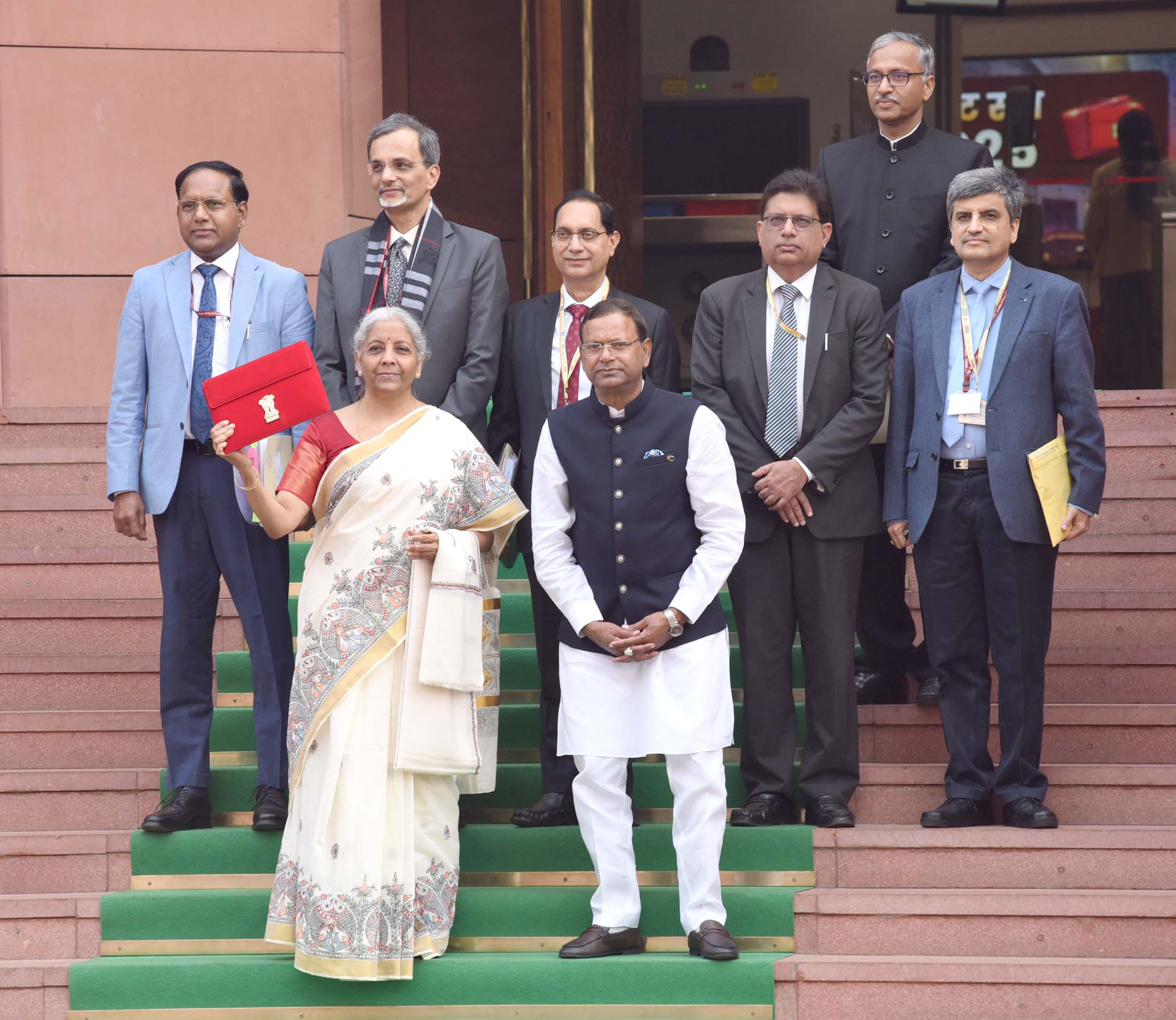
The Finance Minister’s Budget speech made the structure clear: revised slabs, a larger rebate and roughly ₹1 lakh crore of direct-tax revenue deliberately left with taxpayers. That is not loose change scattered from a campaign truck. It is a substantial policy choice to trust households with more of their own money while accelerating the migration toward a cleaner tax regime. I would have preferred an even more aggressive rationalisation of exemptions and capital-gains rules, but the direction is unmistakably sensible.
A reform disguised as relief
The standard political reading treats every tax reduction as either populism or generosity. Both descriptions are wrong. Tax belongs first to the citizen who earns the income; the state must justify taking it, not congratulate itself for leaving some behind. By widening the zero-tax zone through a rebate and stretching the slabs, the government recognised that nominal salaries had risen while urban costs—rent, schooling, insurance and transport—had climbed relentlessly. A ₹10 lakh salary no longer conveys the comfort that Delhi shorthand assumes.
The more consequential change is behavioural. For decades, Indian personal taxation trained salaried people to behave like amateur accountants: buy an unsuitable insurance policy in March, preserve every rent receipt, calculate which deduction bucket remained empty and then ask a payroll portal why a declaration had vanished. The old regime turned economic life into a scavenger hunt designed by committees. The new regime’s attraction is not merely a lower bill. It is the promise that ordinary earners need not distort their savings to satisfy the tax code.
The government’s own Budget highlights list the revised slabs and related changes to tax deduction limits. Read together, they show a consistent preference for simplification. That matters because compliance friction is itself a tax—paid in time, anxiety and fees to professionals. India’s formal economy will not deepen if every new taxpayer discovers that legality requires a weekend course in acronyms.
Congress’s instinct is to complain that the measure excludes people outside the income-tax net. This is arithmetically true and analytically lazy. A personal income-tax reform obviously benefits personal income-tax payers. Welfare expenditure, rural infrastructure, food support and agricultural policy address different constituencies through different instruments. Demanding that each line of a Budget independently serve every Indian is not equity; it is a method for preventing any line from being evaluated on its purpose.
The consumption argument is real, but incomplete
The immediate macroeconomic case is that higher disposable income supports consumption. I accept it, though I would not oversell it. Some households will spend the saving on a vehicle, appliance, holiday or overdue home repair. Others will pay down debt or build deposits. Television economists sometimes describe the latter as if citizens had failed an assignment. They have not. A family improving its balance sheet is also strengthening the economy, even if the effect does not arrive in a shopping bag that quarter.
The deeper benefit is confidence. A government that repeatedly changes rates, invents cesses and ambushes taxpayers creates defensive behaviour. A government that signals a stable, intelligible regime encourages longer-term planning. The salaried household deciding whether it can afford a home loan or a second child does not model fiscal multipliers. It asks whether next year’s post-tax income feels predictable. Policy credibility is built from that mundane confidence.
I will concede one opposition criticism: simplification remains unfinished. The coexistence of old and new regimes preserves comparison shopping, and India’s capital-gains architecture still looks as though several committees negotiated it during separate power cuts. The government should publish a multi-year roadmap toward fewer rates, fewer special categories and fewer surprises. It should also resist turning the new regime into a Christmas tree of fresh concessions. Once exemptions begin returning, complexity will creep back wearing the respectable clothes of sectoral encouragement.
There is also a fiscal question. Revenue forgone must be matched by expenditure discipline or stronger growth. Here the government deserves qualified credit rather than applause on demand. Its emphasis on capital expenditure has generally been preferable to the Congress-era habit of treating entitlement announcements as proof of compassion, but execution quality varies across ministries and states. Roads built twice and projects delayed by litigation do not become productive merely because they sit under the capital-expenditure heading.
Congress keeps arguing with a vanished economy
What irritates me about the Congress response is not criticism itself; governments need it. It is the party’s inability to imagine a taxpayer except as a convenient funding source for schemes bearing political surnames. Its rhetoric remains trapped between two old reflexes: claim that any relief is insufficient, then propose expenditure whose financing would require reclaiming that relief. The moral vocabulary is abundant. The ledger is mysteriously absent.
This nostalgia is often marketed as concern for the poor. Yet sustained poverty reduction requires growth, formal jobs, reliable infrastructure and a state capable of delivering targeted support—not a return to an economy where scarcity was administratively allocated and middle-class aspiration treated as faintly vulgar. The Modi government’s great political insight was that beneficiaries and aspirers are frequently the same people. A household can receive subsidised grain, use a public digital platform and still want its daughter’s first formal salary taxed reasonably.
The tax reset also corrects an imbalance in political attention. The salaried middle class is easy to tax because its income is visible and deductions occur before money reaches the bank. It lacks the bargaining power of organised industry and the electoral symbolism of agrarian blocs. Successive governments praised it in speeches while regarding it as a dependable cash machine. Leaving more money in its hands is therefore not indulgence. It is overdue recognition that compliance should produce some political consideration.
Critics counter that indirect taxes still burden everyone. Fair enough. GST rationalisation remains essential, especially where inverted duty structures and multiple slabs create needless disputes. But that is an argument for continuing reform, not for sneering at a completed piece of it. I have never understood the intellectual habit of rejecting a good change because it does not simultaneously solve every adjacent problem. By that standard, no bridge should open until the entire national highway network is perfect.
What the government must do next
The next step is stability. Taxpayers should not be made to wonder whether this architecture will be reworked annually for applause. The Centre should state a durable philosophy: broad bases, moderate rates, minimal exemptions, predictable treatment of investments and technology that helps rather than intimidates filers. Faceless assessment was a meaningful reform, but automated notices can reproduce bureaucratic absurdity at digital speed. Better data matching must come with quicker, humane correction mechanisms.
The government should also explain tax policy in the language of citizenship rather than benefaction. Ministers are sometimes too eager to present relief as a personal gift from the leadership. That weakens the reform’s philosophical case. Citizens are not petitioners receiving royal mercy. They finance the republic and deserve an efficient bargain in return. A confident right-of-centre government should be especially comfortable saying so.
Will the tax changes alone transform the economy? Of course not. Private investment, employment quality, export competitiveness and judicial speed matter more over time. But policy is cumulative. A simpler regime, lower burden on moderate incomes and stronger household balance sheets all improve the conditions in which larger reforms operate. The sensible response is to bank the gain and demand the next step.
I give the government credit because it made a choice previous administrations discussed but rarely embraced at this scale: it trusted millions of earners to allocate money better than the tax code could. Congress can call that a sop if it wishes. I call it a modest restoration of economic agency—and a useful reminder that reform need not arrive accompanied by a committee report thick enough to stop a door.