
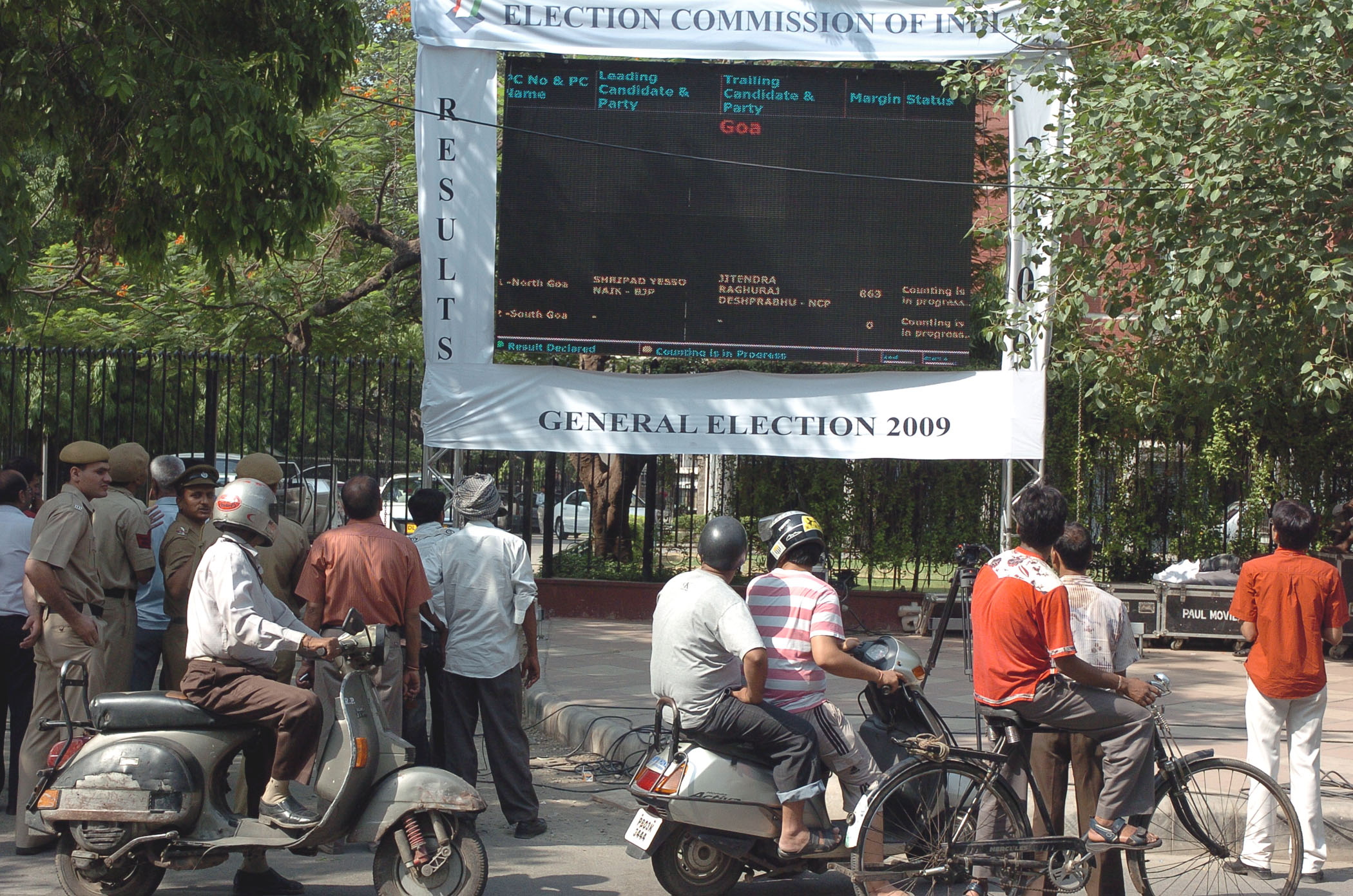
I have spent enough years watching Delhi outrage cycles to recognise the choreography. A report raises a serious procedural question. Congress schedules a committee meeting. The INDIA alliance discovers a grave constitutional emergency by teatime. Television panels recruit the usual retired worthies, and social media announces that democracy has died for approximately the forty-seventh time since breakfast. By the following week, the slogans have travelled much farther than the underlying evidence.
The present argument over voter-roll revision and reported disagreements within the Election Commission deserves better. India Today reported that two election commissioners had recorded objections concerning decisions and procedural gaps. Citizens are entitled to clarity about how consequential decisions were taken. The Commission should publish a precise response, explain the safeguards and disclose as much of the decision trail as law permits. Its own official portal should be the place where voters find that explanation without having to decode partisan clips.
That is my concession to the opposition, and it is not a small one. Election administration depends on trust. “Trust us” is not enough when electoral rolls determine who can exercise the franchise. Yet Congress appears unable to make a bounded institutional argument. It habitually converts a question—was procedure followed?—into a verdict: the entire exercise was designed to help the BJP. That leap may energise loyalists, but it is not proof.
A valid question is not a completed prosecution
Internal disagreement does not automatically demonstrate capture. Multi-member institutions contain dissent precisely because important decisions are contested. The existence of objections can show that commissioners were doing their jobs. What matters is whether objections were recorded, considered and answered; whether final decisions complied with law; whether implementation created systematic exclusions; and whether citizens had usable remedies. Those are factual questions. They require minutes, orders, roll data, claims-and-objections records and judicial scrutiny where appropriate.
Congress instead prefers the moral shortcut of declaring every adverse outcome contaminated. When it wins a state, voters have defended democracy. When it loses, institutions require forensic examination. That asymmetry is not subtle. Nor is it new. Parties understandably complain about referees, but a national opposition seeking public trust cannot behave like a club owner who accepts only victories as legitimate scorekeeping. If Congress possesses constituency-level evidence of wrongful deletion or discriminatory treatment, it should publish organised datasets and pursue specific remedies. A hashtag is not an electoral roll.
The government and BJP should resist an equally tempting shortcut: treating all scrutiny as partisan sabotage. That would be foolish. The Commission is independent, and it should defend itself, but political beneficiaries of a disputed process carry an extra burden to avoid triumphalist dismissal. BJP leaders gain nothing by sounding as though administrative errors are impossible. India’s electoral machinery is vast. Errors will occur. The correct pro-institution position is to demand quick correction, transparent audit and equal rules—not reflexive denial.
The missing voter matters more than the panelist
Delhi discourse makes every dispute about elite protagonists. I care more about the migrant worker whose name moves between constituencies, the elderly voter asked to produce a document she cannot readily retrieve, the newly eligible citizen attempting registration, and the family that discovers a deletion shortly before polling. A roll-revision system should be designed around those predictable frictions. Notice must be meaningful, appeal windows realistic, local officials accessible and documentation rules sensitive to how Indians actually live.
This is where opposition parties could perform useful democratic labour. They have workers, booths and local networks. They can help citizens verify entries, file claims and document recurring problems. That work is less glamorous than a press conference accusing the Prime Minister of institutional murder. It is also more likely to restore a voter’s name. The INDIA alliance often behaves as though moral intensity can substitute for organisation. Elections keep reminding it otherwise.
Technology can improve roll management, but databases are not oracles. Names vary across scripts, addresses change, people migrate and automated matching can produce false positives. Any digital deduplication tool must be accompanied by human review and an appeal mechanism. The Commission should state which tools are used, what thresholds trigger action and how an affected person can challenge a decision. Transparency here would protect both voters and the Commission from exaggerated allegations.
I can already hear one objection: disclosure might expose systems to manipulation. Some operational details may indeed require protection. But broad rules, audit methods, error rates and grievance outcomes can be published without giving bad actors a manual. Institutions build authority by explaining their standards, not by cultivating mystery. India’s election administrators have historically earned international respect. That inheritance should encourage openness, not defensiveness.
Congress’s credibility deficit is partly self-authored
Congress asks the public to accept that it alone has discovered the value of institutions. This is where Lutyens nostalgia becomes especially tiresome. The party’s own record in power includes centralisation, pliant appointments and the Emergency—the most explicit assault on democratic liberty in independent India. History does not invalidate every present complaint, but it does make sanctimony a poor strategy. A little humility would sharpen the case.
The party could say something both honest and effective: “We accept the Commission’s constitutional role, we are presenting these documented procedural failures, and we want defined corrections.” Instead, its ecosystem gravitates toward maximalist language because incremental reform generates fewer television invitations. The result is paradoxical. By claiming the entire system is fixed, Congress discourages careful attention to the very irregularities it wants investigated. If everything is proof, nothing is tested.
The commentariat contributes by treating suspicion as sophistication. A rumour hostile to the BJP is elevated as a brave question; a demand for evidence is portrayed as complicity. That is not accountability. It is a partisan mirror image of blind institutional worship. I do not want citizens to trust the Commission because the government says so. I want them to trust it because processes are visible, errors are acknowledged and remedies work.
There is also a danger in permanently telling voters that their country’s elections are fraudulent without establishing the charge. Public confidence, once destroyed, is not selectively restored when one’s preferred coalition wins. The opposition may believe institutional distrust hurts only the BJP. It eventually hurts every government, court, commission and peaceful transfer of power. Responsible criticism distinguishes a repairable procedural failure from a stolen election.
Publish, audit, correct—and stop performing
My prescription is straightforward. The Election Commission should answer the reported objections in detail, release relevant procedural orders, publish accessible data on additions and deletions, strengthen notice and appeal, and invite credible technical audits where digital matching is used. Opposition parties should submit verifiable constituency-level evidence and stop treating adjectives as exhibits. The government should give the Commission room to respond independently and avoid partisan taunts.
If an inquiry uncovers a serious violation, action must follow regardless of who benefits. A right-of-centre publication should be able to say that without trembling. Institutions matter more than one election. But Congress must also accept that asking a hard question does not entitle it to invent the answer. It has found a matter worthy of scrutiny. Now it should resist its favourite impulse: turning scrutiny into theatre before the documents have even reached the stage.
No comments yet -- be the first to weigh in.