
India’s electronics debate is trapped between two forms of laziness. Government cheerleaders point to every phone leaving an Indian factory as proof of technological self-reliance. Cynics describe all domestic production as screwdriver assembly and dismiss the growth as cosmetic. Both positions save their occupants from reading the supply chain.
The progress is substantial. The Ministry of Electronics and Information Technology’s 2025–26 annual report describes India as the world’s second-largest mobile-handset manufacturer by volume, with hundreds of manufacturing units and major increases in output and exports. Those factories employ people, build logistics capability and make India relevant to global production planning. I refuse to sneer at that.
Yet a finished phone is a layered product. Its value resides in chips, displays, camera modules, memory, radio components, operating systems, industrial design, tooling, intellectual property and the ability to coordinate suppliers at punishing tolerances. Final assembly is necessary, but it is not the summit. The next decade will be judged by how much of that difficult stack India learns to perform competitively.
PLI did what incentives are supposed to do
The production-linked incentive scheme altered corporate calculations by rewarding incremental output. MeitY’s scheme page sets out incentives for mobile phones and specified components. Critics are right to ask whether public money buys durable capability, but they should acknowledge the mechanism’s immediate logic: scale first, supplier depth next.
Factories do not arrive only because labour is cheaper. Firms compare logistics, policy stability, customs procedures, power quality, land, skills, supplier proximity and the cost of mistakes. India’s achievement is that it became credible enough to enter decisions once dominated by China and a small group of Asian manufacturing hubs.
The danger is turning a successful entry strategy into a permanent subsidy model. Incentives should decline as ecosystems mature. Future support must reward additionality—new component processes, engineering work, domestic tooling, export competitiveness and supplier development—not merely more units passing through established lines.
Policy evaluation should publish net outcomes. How much incentive was disbursed? What investment occurred beyond the minimum? How many stable jobs were created, at what skill levels? What percentage of inputs was sourced domestically, using a transparent value-added definition? Aggregate production numbers are useful, but they cannot answer whether learning is deepening.
Chinese brands still understand the Indian market
Political rhetoric sometimes assumes domestic manufacturing should automatically displace Chinese smartphone brands. Consumers do not purchase geopolitical theory; they purchase a screen, battery, camera, service network and price. Chinese brands built strength in India by moving quickly, segmenting products precisely, cultivating retail and responding to local preferences. That commercial capability does not disappear because a factory changes location.
Indian brands have a legitimate opportunity, especially where clean software, local service and procurement policy matter. But nationality is not a substitute for product discipline. A domestic logo on a generic device will not create loyalty. Companies need sustained investment in software, quality control, industrial design and after-sales support. Brand-building cannot be announced through one patriotic campaign.
Nor should policy aim to remove foreign firms. India benefits when global and Chinese companies manufacture locally, train workers, source components and compete. The state’s role is to enforce security, tax and investment rules consistently while using market access to encourage deeper localisation. Arbitrary treatment frightens every investor, not only the intended target.
Competition is also a technology-transfer mechanism when supplier relationships become local. Indian firms that learn to meet demanding quality and delivery standards can serve multiple customers and eventually export. The objective should be an Indian ecosystem, not merely a collection of Indian-owned brands.
Components are the harder climb
A component plant faces different economics from an assembly line. It may require specialised chemicals, precision equipment, clean rooms, reliable utilities and customers large enough to justify capacity. One missing link can make imported inputs more efficient. Policymakers must therefore think in clusters rather than isolated announcements.
The government’s own monthly reporting shows approved semiconductor and packaging projects and cumulative output under hardware schemes. MeitY’s March 2026 achievements document lists progress across semiconductor, IT-hardware and large-scale electronics programmes. I welcome the disclosure, but approvals are the beginning of risk, not the end. Plants must be built, qualified by customers and operated at competitive yields.
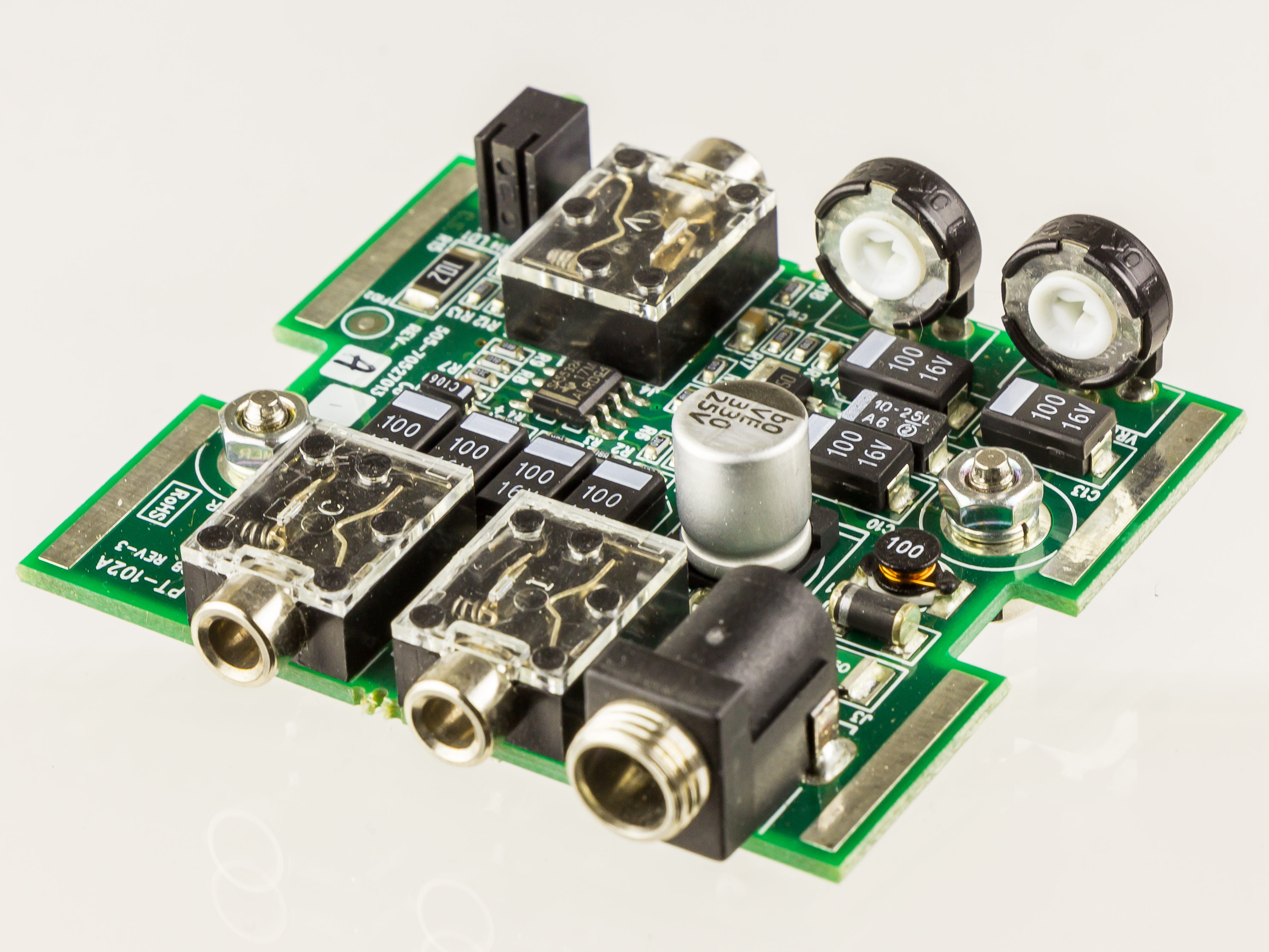
India should prioritise areas adjacent to existing strengths: enclosures, printed circuit boards, power electronics, battery management, chargers, mechanical parts, testing and packaging. Not every component must be made domestically. Autarky would raise costs and reduce competitiveness. The goal is strategic depth and greater local value, not a phone assembled entirely from nationalist symbolism.
Tooling deserves far more attention. Moulds, fixtures, testing equipment and production engineering determine how quickly factories change models and solve defects. These capabilities rarely receive launch events, yet they separate a flexible ecosystem from one dependent on imported instructions.
People are the real localisation metric
Employment counts alone do not tell us whether capability is accumulating. How many line workers advance into technician roles? How many Indian engineers lead process design, quality systems and supplier development? Are vocational institutes teaching equipment actually used in nearby plants? Do women workers receive safe transport, progression and stable contracts?
States offering land and incentives should negotiate training commitments and publish outcomes. Companies can partner with polytechnics on curricula, apprenticeships and instructor development. A factory that imports supervisors indefinitely has localised less than its shipment data suggests.
Research universities also need stronger links to manufacturing problems. Industry collaboration should not mean placing a corporate logo on a laboratory. It should produce materials research, radio design, power efficiency, machine vision and manufacturing software. Intellectual property emerges from repeated work on real constraints.
Labour standards are part of competitiveness, not an obstacle to it. High turnover destroys training investment and quality. Predictable shifts, grievance mechanisms, safe accommodation and career ladders improve output. India should reject the false choice between manufacturing growth and decent work.
Measure the second-order effects
The first phase asked whether India could manufacture phones at global scale. The answer is increasingly yes. The second asks whether that scale creates suppliers, engineers, tools, brands and intellectual property that survive changes in incentive policy and corporate strategy.
I want the government to publish a yearly electronics value-chain map. Show domestic capacity, import dependence, export performance, employment layers and bottlenecks. Let Parliament debate where incentives generated learning and where they merely shifted margins. Transparent measurement would strengthen the Make in India case by replacing slogans with evidence.
The opposition should criticise design flaws without pretending the policy achieved nothing. The government should accept scrutiny without classifying every reservation as hostility to manufacturing. India spent too long discussing industrialisation as an ideological identity. Factories operate through power, ports, process control and people, not speeches.
Mobile manufacturing is one of the Modi government’s clearer industrial-policy successes. Credit is due. But success raises the standard. The next phone exported from India should contain more Indian engineering, more locally made inputs and more knowledge retained by workers and suppliers. Assembly got us onto the field. The difficult parts will determine whether we control the game.