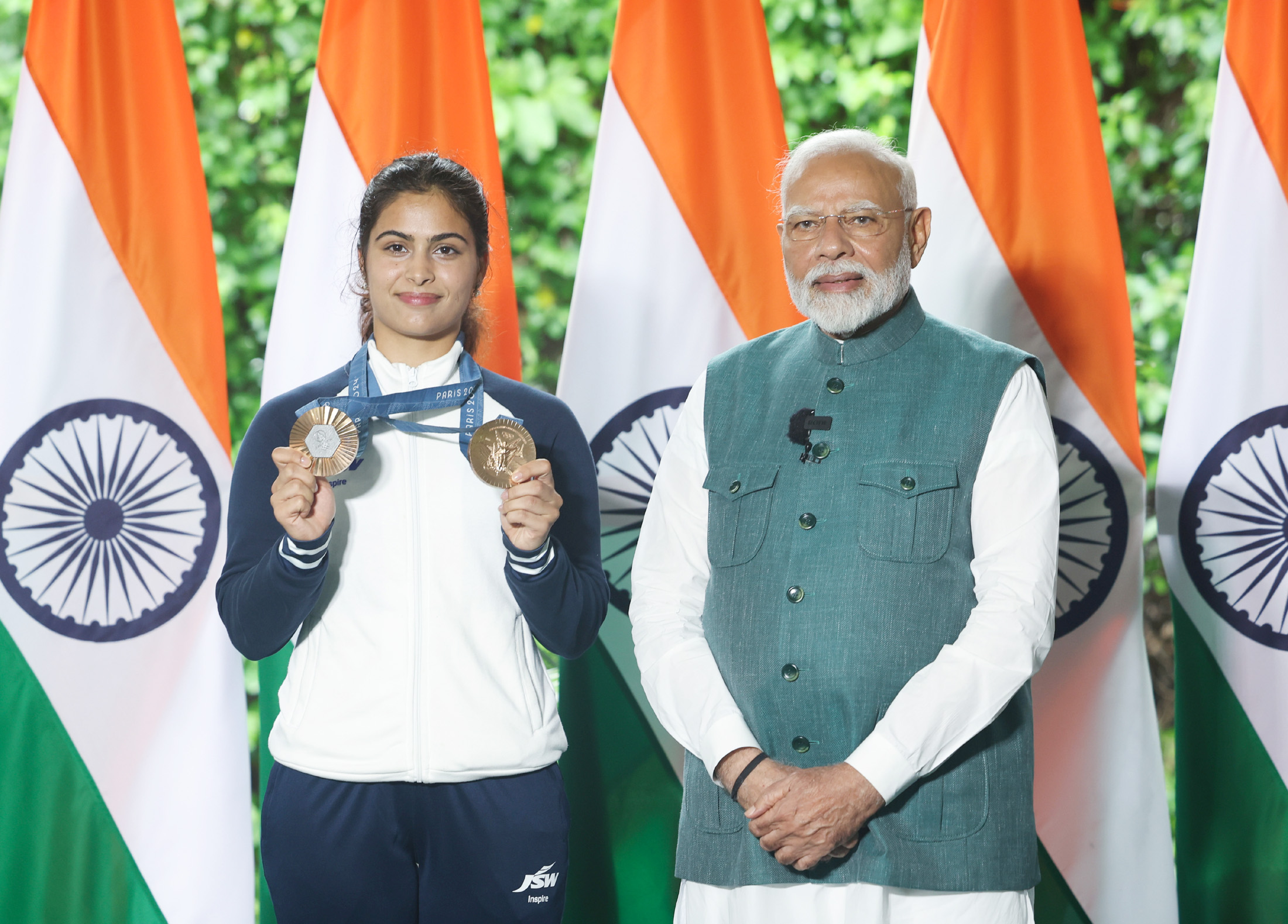
Manu Bhaker gave India one of those Olympic weeks that temporarily rearranges the national imagination. She won two medals in Paris, became the first Indian woman to win two medals at a single Games and made shooting look less like an obscure technical exercise and more like an intimate contest with nerves. For a few days, everyone became an expert on air pistols. Then the Olympic flame went out, cricket resumed its ordinary occupation of the country’s attention, and shooting returned to the margins.
The facts of Bhaker’s achievement are preserved in the official Paris 2024 shooting results material. The wider scale and records of those Games are summarised by the International Olympic Committee’s Paris review. But my argument is not about whether we remember the medal count correctly. It is about why the Indian sports economy requires non-cricket athletes to perform a historic miracle before it grants them a durable public life.
Olympic attention is a sugar rush
Every four years, television channels discover athletes they could have covered all along. Producers assemble emotional packages about sacrifice, parents, modest training facilities and national pride. Anchors pronounce names they learned that morning. Sponsors arrive after the podium. This attention is not worthless; athletes deserve celebration and money. Yet it is concentrated at the end of the sporting process, when the risk has already been carried by the athlete, family, coach and federation.
Sustainable attention must exist before the medal. It should cover selection trials, national championships, World Cups, injuries, technical changes and rivalries. A viewer who has followed a shooter through qualification experiences an Olympic final differently from someone handed a biography during the commercial break. Continuity creates knowledge, and knowledge creates attachment. Cricket does not dominate merely because Indians are genetically programmed to love it. It dominates because its stories are available every day.
Bhaker herself carried a story worth following between Games. Tokyo brought disappointment and public scrutiny; Paris brought a composed return. That arc should have been ordinary sports coverage, not a revelation reconstructed after success. Failure is part of elite sport, particularly in shooting, where tiny variations decide outcomes. If we see athletes only at the Olympics, we interpret every non-medal as collapse rather than one result in a long competitive life.
Visibility requires infrastructure
Editors often say non-cricket stories do not attract readers. That is partly true and partly an alibi. Audiences cannot develop interest in events that are difficult to watch, poorly scheduled and covered only when an Indian wins. Federations should provide reliable live streams, start lists, results, athlete profiles and mixed-zone interviews. They need not reproduce an IPL broadcast. A clear fixed-camera feed, competent commentary and timely data would already transform access.
Public broadcaster coverage matters too. Doordarshan and digital public platforms should treat national championships as part of a sporting archive. India spends public money developing athletes; citizens should be able to watch them compete. Rights agreements must preserve affordable access rather than locking minor events inside services that neither promote nor properly produce them.
Private media can do more without pretending every competition is a mass spectacle. A dedicated reporter can cover several Olympic disciplines, build sources and explain technique. Newsrooms routinely send large teams to speculative cricket press conferences. One correspondent at a shooting World Cup is not financial madness. It is an editorial choice to value breadth.
Women athletes endure a narrower story
Bhaker’s coverage also revealed the script imposed on Indian sportswomen. They are expected to be inspirational, graceful, grateful and conveniently non-political. Their clothes, expressions, marriages and social-media posts attract attention that male athletes escape. A study included in the Olympic library’s analysis of Paris 2024 media narratives discusses the contradictory mixture of celebration and sexism surrounding Indian women athletes. That contradiction is visible whenever public affection turns to hostility after one poor performance.
I want athletes to be allowed complexity. Bhaker can be disciplined and occasionally frustrated, patriotic and protective of her commercial interests, generous with fans and unwilling to answer foolish questions. A medal does not convert a young woman into public property. Nor should every profile force her family into a morality tale about sacrifice. Ask about technique, competition and policy. Treat her as an expert in her own profession.
This matters for participation. Girls watching sport notice who is considered serious. If coverage focuses on an athlete’s appearance or personal life while male cricketers receive tactical analysis, the hierarchy is obvious. Equal respect is not achieved by calling women “daughters of India” after a victory. It is achieved by examining their sport with the same depth afforded to a middle-order selection debate.
Build seasons, not isolated heroes
Shooting has advantages India should exploit. It has a substantial domestic talent pool, measurable competition, mixed events and athletes from different regions. A thoughtfully designed national circuit could be staged in several cities, streamed consistently and linked to qualification rankings. Events need predictable dates so supporters know when to return. Athletes need prize money and travel support. Sponsors need inventory beyond a photograph taken after an Olympic medal.
The answer is not necessarily a noisy franchise league with team names invented by consultants. Shooting’s concentration and precision are part of its appeal. Presentation should clarify the contest without smothering it. Explain scores, timing and elimination formats. Use microphones carefully. Introduce athletes with relevant history. Let viewers appreciate silence rather than assuming every second requires music.
Schools and local ranges could connect to these events through clinics and affordable spectator programmes. Safety and professional coaching are essential, but the sport should not appear accessible only to elite institutions. Bhaker’s visibility can attract new participants; administrators must convert curiosity into a pathway rather than a social-media campaign.
Cricket will continue to command the largest audience, and I am not asking for equality by decree. I am asking why its enormous share is treated as a law of nature while every other sport must repeatedly prove its right to airtime. Attention compounds. Coverage produces familiarity; familiarity produces fans; fans attract sponsors; sponsorship improves events; better events justify coverage. Non-cricket sport is too often denied entry to that cycle.
Manu Bhaker’s medals were not merely a feel-good interlude. They were evidence that Indian athletes can hold a national audience when the event is available and the stakes are understood. The failure lies in allowing that audience to evaporate. By the next Olympics, we will again meet “overnight sensations” who have trained in public competitions for years. I would prefer that we know them before they win. The most respectful legacy for Bhaker is not another inspirational advertisement. It is a sporting culture in which her next domestic final is considered worth watching even when no medal ceremony follows.