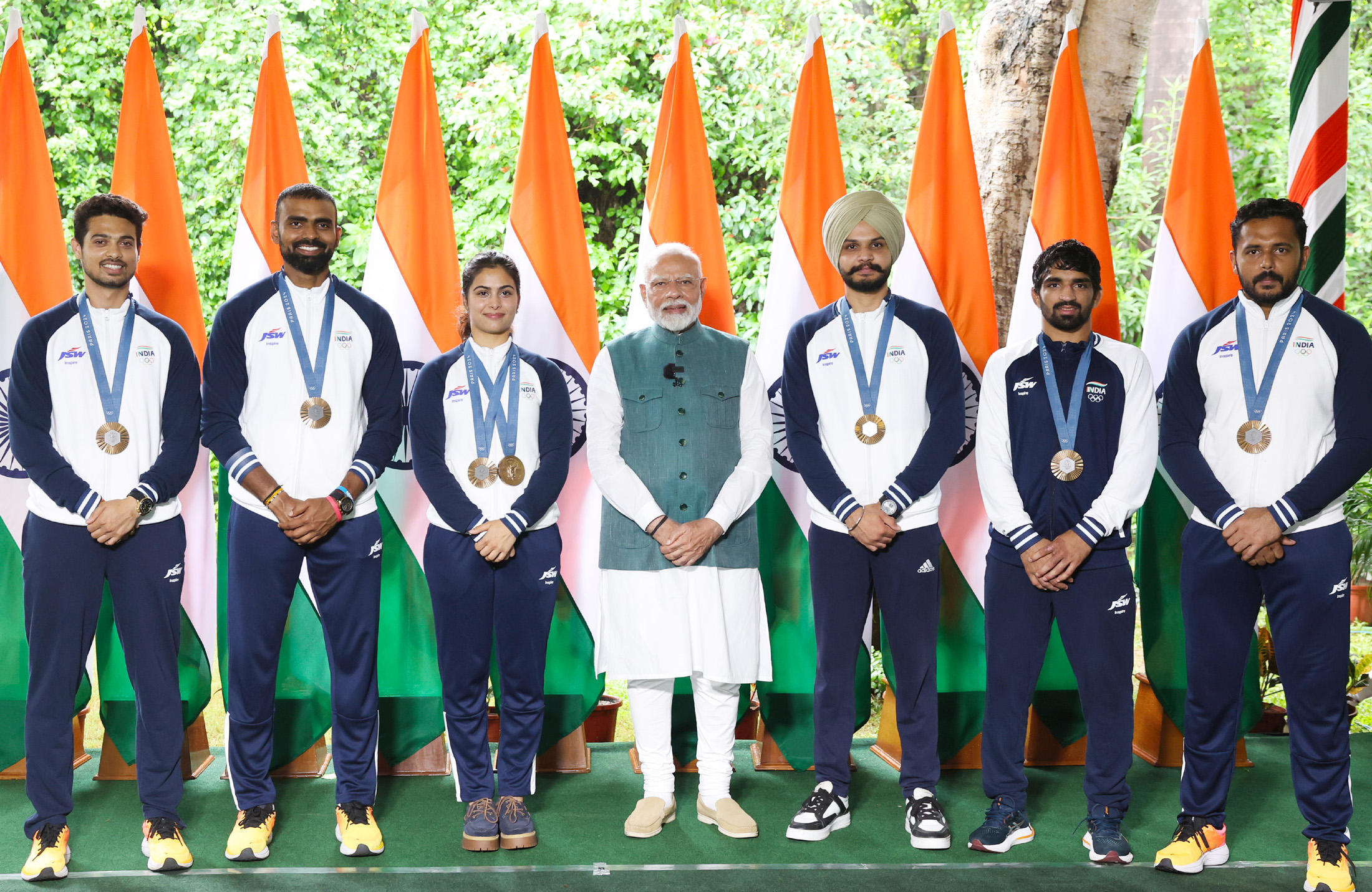
When Manu Bhaker won two bronze medals at the Paris Olympics, India rediscovered shooting with the emotional intensity of a relative who has forgotten your birthday but arrives at the wedding carrying an enormous bouquet. For several days, everybody knew the event, the score and the backstory. Then cricket resumed its ordinary weather-system status and shooting returned to the margins.
I do not resent cricket its audience. I resent the institutional laziness that treats attention as a natural resource rather than something federations, broadcasters and governments can cultivate. Bhaker became the first athlete from independent India to win two medals at one Olympics, as the Olympics’ profile of Indian sportswomen records. That achievement should be a bridge connecting thousands of young shooters to opportunity. Instead, our reflex is to convert it into endorsements and congratulatory ceremonies.
Medals are outcomes, not infrastructure. Behind a pistol final sit ammunition costs, range access, coaching, sports psychology, travel, recovery and years of administrative permissions. If we want another Bhaker, we cannot simply wait for another unusually determined family to assemble the system privately.
The equipment barrier is not a character test
Shooting is expensive. That obvious fact is often narrated as though expense filters for commitment: if an athlete truly wants it, the family will sacrifice. I dislike this romance of sacrifice. It turns unequal access into a motivational story and allows institutions to congratulate resilience instead of reducing the need for it.
District-level athletes need shared equipment banks, subsidised ammunition and safe ranges with qualified staff. Selection camps must be announced predictably so families can plan. Talent identification should reach government schools and smaller towns rather than orbiting established academies. Haryana has produced remarkable shooters, but a national programme cannot depend on a few regional cultures and private networks.
The government’s Target Olympic Podium Scheme and federation support have helped elite athletes. The missing layer is the route from curiosity to elite status. A teenager cannot enter a medal programme before she has fired enough rounds to demonstrate potential. The developmental system must carry the cost of discovery.
I would like every publicly funded range to publish usage hours, coaching availability, equipment inventory and subsidised slots. Infrastructure announcements are easy; access is the real metric. A locked range inaugurated by a minister is architecture, not sports development.
Tokyo should have changed how we discuss failure
Bhaker’s Paris medals became more meaningful because Tokyo had been painful. A pistol malfunction became part of a wider disappointing campaign, and the scrutiny placed on a young athlete was often cruel. The later triumph tempted everyone to rewrite the story as a neat redemption arc. Life is rarely so considerate.
The lesson should be that athletes need technical redundancy and psychological protection before a crisis, not inspirational applause after surviving one. Equipment protocols, spare components, travel planning and independent mental-health support are not luxuries. At Olympic level, a tiny preventable disruption can consume years of work.
We should also stop describing every non-medal as choking. Shooting contains brutal variance. A fraction separates finalists; one poor series can transform a campaign. Accountability matters, especially when public money is involved, but analysis must distinguish poor preparation from the ordinary uncertainty of elite competition.
Indian sports culture frequently praises athletes as warriors, then denies them the human allowance to be anxious, injured or temporarily out of form. Bhaker’s resilience is admirable. It should not become another stick used against the next athlete who needs time.
Coverage cannot begin at the medal match
Cricket commands attention partly because its audience is taught the narrative continuously. We know who is returning from injury, who has changed technique and which domestic player is rising. In shooting, many viewers meet an athlete when she enters an Olympic final. We then expect instant emotional investment and expert understanding.
Broadcasters should cover World Cups, national trials and junior events with accessible explanation. Shooting is highly televisual once viewers understand the scoring, timing and pressure. The quiet is not a disadvantage; it is the drama. A close-up of an athlete controlling breath before a decisive shot can be more gripping than manufactured studio noise.
Federations must help by providing reliable schedules, biographies, results and usable video. Sports journalism cannot build a beat from PDFs uploaded unpredictably. Media organisations also need to stop sending general reporters only when a medal seems possible. Expertise is accumulated in ordinary months.
Sponsors follow audiences, but they also create them. A company willing to place money into a league, junior circuit or documentary series can associate itself with athletes before the podium photograph becomes expensive. Indian corporate sport spending remains too comfortable with cricket because executives can defend it without imagination.
Federation governance is athlete welfare
Every Olympic discussion eventually reaches governance, usually after a controversy. I prefer treating governance as daily performance. Selection policies should be published early, ranking systems should be intelligible and appeals should be heard by people without conflicts of interest. Athletes should not learn life-changing decisions through rumour.
Coaches need evaluation too. The famous foreign expert is not automatically the right expert, and the familiar domestic coach is not automatically inadequate. Contracts should define objectives beyond medals: technical development, athlete feedback, injury prevention and knowledge transfer to Indian coaches.
There must also be a safe grievance system. Young athletes operate in steep hierarchies where a coach or official can influence selection, travel and funding. An athlete who raises a concern should not have to calculate whether speaking will end a career. Safeguarding is as fundamental as equipment maintenance.
Public funding figures should be accompanied by outcome reports that ordinary readers can understand. How many athletes received support? For what? Were funds delivered on time? Which facilities became available? Transparency protects good programmes from cynical attacks and exposes ceremonial schemes that exist mainly in speeches.
A medal can widen the imagination
Bhaker’s achievement matters beyond the medal count because it changes what young athletes can picture. A girl watching from a small town can see an Indian woman standing calmly under Olympic pressure. But imagination without a reachable range becomes frustration. Inspiration is an invitation; institutions must provide the address.
Schools could introduce safe, age-appropriate shooting simulations and identify hand-eye coordination without requiring families to purchase equipment. State associations could run mobile talent camps. Universities could offer genuine sporting scholarships with training time protected from arbitrary attendance rules.
Retired shooters should be integrated into coaching, administration and commentary. Too much experience leaves the system when an athlete’s competitive career ends. A mature sporting nation values accumulated knowledge instead of replacing one generation with the next and calling it renewal.
I want us to celebrate Manu Bhaker, but celebration should make demands. Ask whether the nearest public range works. Ask whether junior athletes receive ammunition. Ask whether coaches are paid on time and selection rules are stable. Those questions honour a champion more than another garland.
India does not suffer from a shortage of potential Olympic athletes. It suffers from narrow funnels through which only the unusually supported, unusually lucky and extraordinarily persistent can pass. Bhaker proved what excellence looks like when talent and preparation meet. The responsible response is to make that meeting less accidental.
The next Olympics will again produce a sudden national seminar on medal totals. We will compare ourselves with countries that invest systematically and wonder why population does not convert automatically into podiums. Population is not a sports policy. Manu Bhaker’s two medals gave Indian shooting a rare public opening. We should build through it before attention, once again, closes the door.