
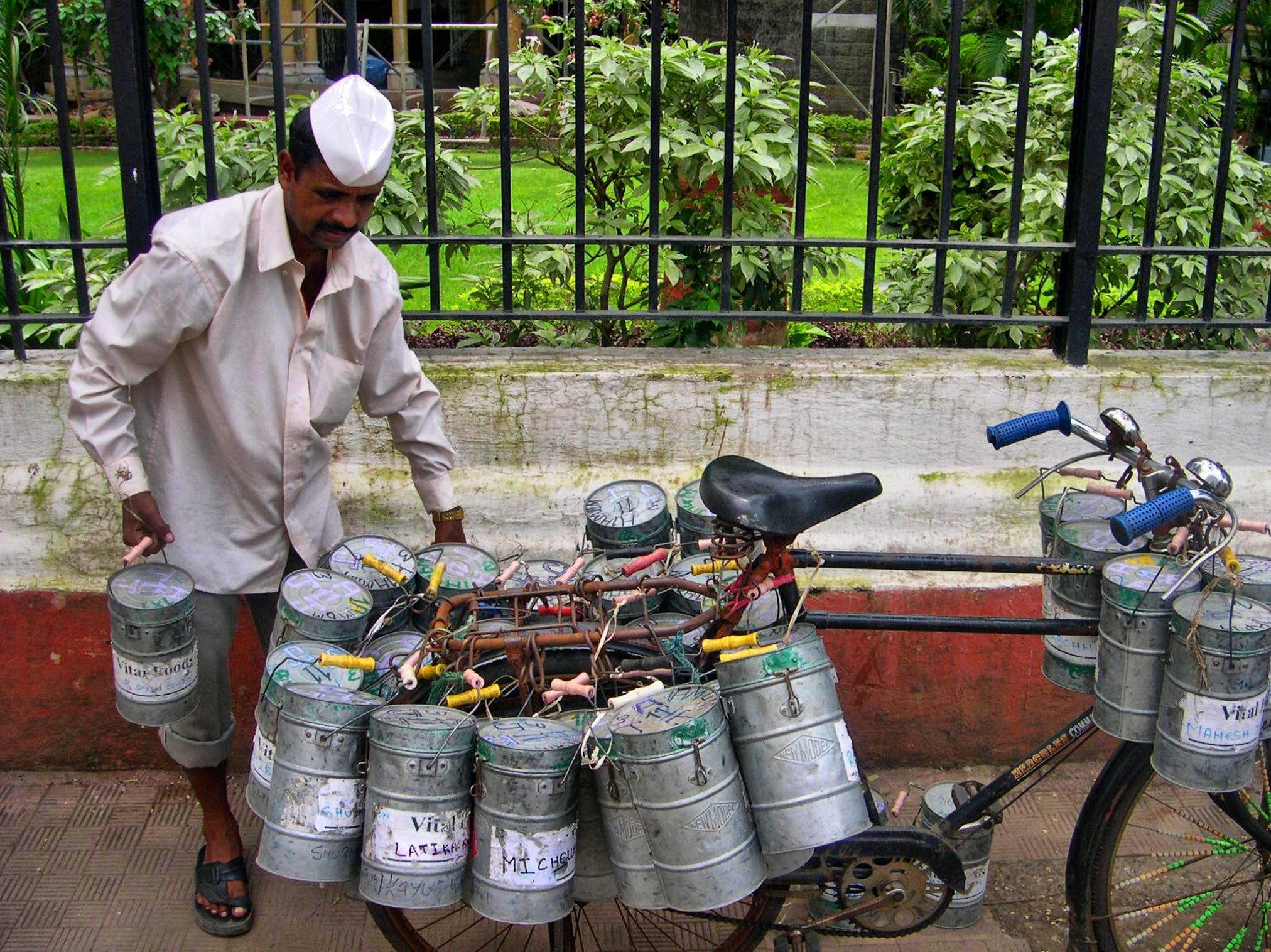
Mumbai’s dabbawalas have suffered the peculiar fate reserved for successful working people: consultants discovered them. Their lunch-delivery network became a case study, a conference anecdote and a PowerPoint slide about precision. Executives who could not begin a meeting on time applauded men moving thousands of tiffins through local trains, then returned to offices where lunch apps offered discount codes funded by venture capital.
The actual history is more human. An Indian Express account of the dabbawala story describes the coding, relay system, internal discipline and lives behind the famous operation. During the pandemic, when offices and trains shut, another report documented the economic devastation faced by workers. The celebrated “model” turned out to depend on bodies, commuters, affordable rail and daily office routines. Apparently the slide deck had omitted mortality and rent.
Efficiency was social before it was technical
The network’s genius is usually described as a coding system. Colours, letters and numbers route tiffins through collection, sorting, trains and final delivery. True, but paint does not cooperate by itself. Reliability arises from shared norms, repeated relationships and mutual accountability. Workers know that one person’s delay travels through the chain.
Management culture loves process because process can be purchased. It is less comfortable discussing trust because trust requires time, reciprocity and limits on individual extraction. The dabbawala system grew through community ties and a collective structure. One cannot reproduce it by printing labels and calling employees “associates.”
Nor should its celebrated accuracy become mythology. Any large human operation makes mistakes. Turning workers into supernatural efficiency mascots erases the effort required to correct errors and the conditions that make performance possible. Admiration should not demand perfection from people who cycle in rain carrying heavy loads.
The Mumbai suburban railway is the invisible machine inside the machine. Its frequency and geographic reach allow lunch to travel rapidly across a huge city. When urban planners praise dabbawalas without defending dependable public transport, they admire flowers while poisoning soil. Roads alone could not support the same model at comparable cost.
The pandemic revealed what applause was worth
When Covid emptied offices, the dabbawalas’ demand collapsed. Their expertise could not simply migrate online because the product was tied to commuting patterns and home-cooked food. Many workers faced severe hardship. The institutions that had invited them to motivational events were not necessarily designed to insure them against systemic shock.
This is the weakness of celebrating informal and cooperative labour as inspirational. Society enjoys the service’s affordability partly because workers absorb risk. Illness, disrupted trains, extreme weather and lost demand do not arrive with corporate severance packages. Resilience becomes a flattering word for surviving without protection.
I do not propose converting every dabbawala into a salaried employee of a giant platform. That could destroy autonomy and raise costs while transferring control. I do want social protection that follows the worker: health coverage, accident insurance, pension contributions and emergency income support designed for variable earnings. Informality should not mean administrative invisibility.
Digital tools can help without replacing the system. Simple customer management, UPI records, route communication and group insurance administration may reduce friction. The danger begins when an investor decides the brand requires an app, aggressive expansion and “professionalisation.” Venture capital has a special talent for discovering a functioning low-margin service and teaching it how to lose money.
The lunch itself matters
The tiffin is not merely freight. It carries domestic routines across the city: dietary needs, religious preferences, affection, obligation and occasionally marital disagreement sealed under stainless steel. A platform meal is interchangeable; a home lunch is addressed to a particular person.
This is why the system persisted despite restaurants and delivery apps. It solves a problem those services do not: transporting food already prepared by a household. For office workers with medical diets, limited budgets or strong food preferences, that distinction matters. It also reduces disposable packaging when containers circulate daily.
There is unpaid and gendered labour behind many of those meals. Romantic tributes to “food from home” can ignore the woman who woke early to prepare it. The dabbawala network connects paid male labour in public space with often unpaid female labour in the home. A complete account should acknowledge both rather than treating the filled tiffin as a natural occurrence.
Changing work patterns threaten the model in quieter ways than the pandemic. Hybrid offices reduce predictable daily volume. Long commutes shift, redevelopment changes neighbourhoods and younger households may cook differently. Survival will require flexible subscriptions, institutional clients and perhaps services beyond the classic home-to-office route.
What cities should learn
The lesson is not “achieve six sigma with coloured marks,” whatever seminar folklore says. It is that dense cities can support low-cost logistics when public transport is reliable, space is shared and workers coordinate rather than compete for every transaction. Mumbai’s railway platforms, sidewalks and station edges function as economic infrastructure even when planners regard them as clutter.
City authorities should provide safe sorting spaces near stations, bicycle access and weather protection. These are modest interventions compared with grand logistics parks. They respect an existing network rather than displacing it in favour of a technology vendor’s proposal.
Researchers should also document the system as it changes. Oral histories, route maps and organisational practices belong in archives, not because the dabbawalas are relics but because living knowledge disappears when economic conditions shift. The aim should be preservation of understanding, not freezing workers into a tourist performance.
Customers have a role. Pay fair rates, communicate schedule changes and resist treating punctuality as servitude. A service can be disciplined without its workers becoming background machinery. Corporate admirers might begin by applying that courtesy to their own contracted staff.
Keep the admiration, lose the fairy tale
I admire the dabbawalas enormously. I admire them enough to reject the sanitised legend. They are not proof that poor workers can overcome every deficiency through discipline. They are evidence that cooperation, transit and accumulated local knowledge can produce extraordinary service—and that such systems remain vulnerable when society enjoys their value without sharing their risk.
The management case study asks how they achieve accuracy. The political question asks who protects them when the trains stop. The urban question asks whether Mumbai will preserve the infrastructure and affordability on which their work depends. The cultural question asks whether home-delivered lunch remains meaningful as work and households change.
Those questions are less quotable than a miracle statistic, which is why conferences avoid them. But the dabbawalas’ real story deserves better than motivational garnish. It is a story about labour making a chaotic city function before most of its customers have finished their first meeting.