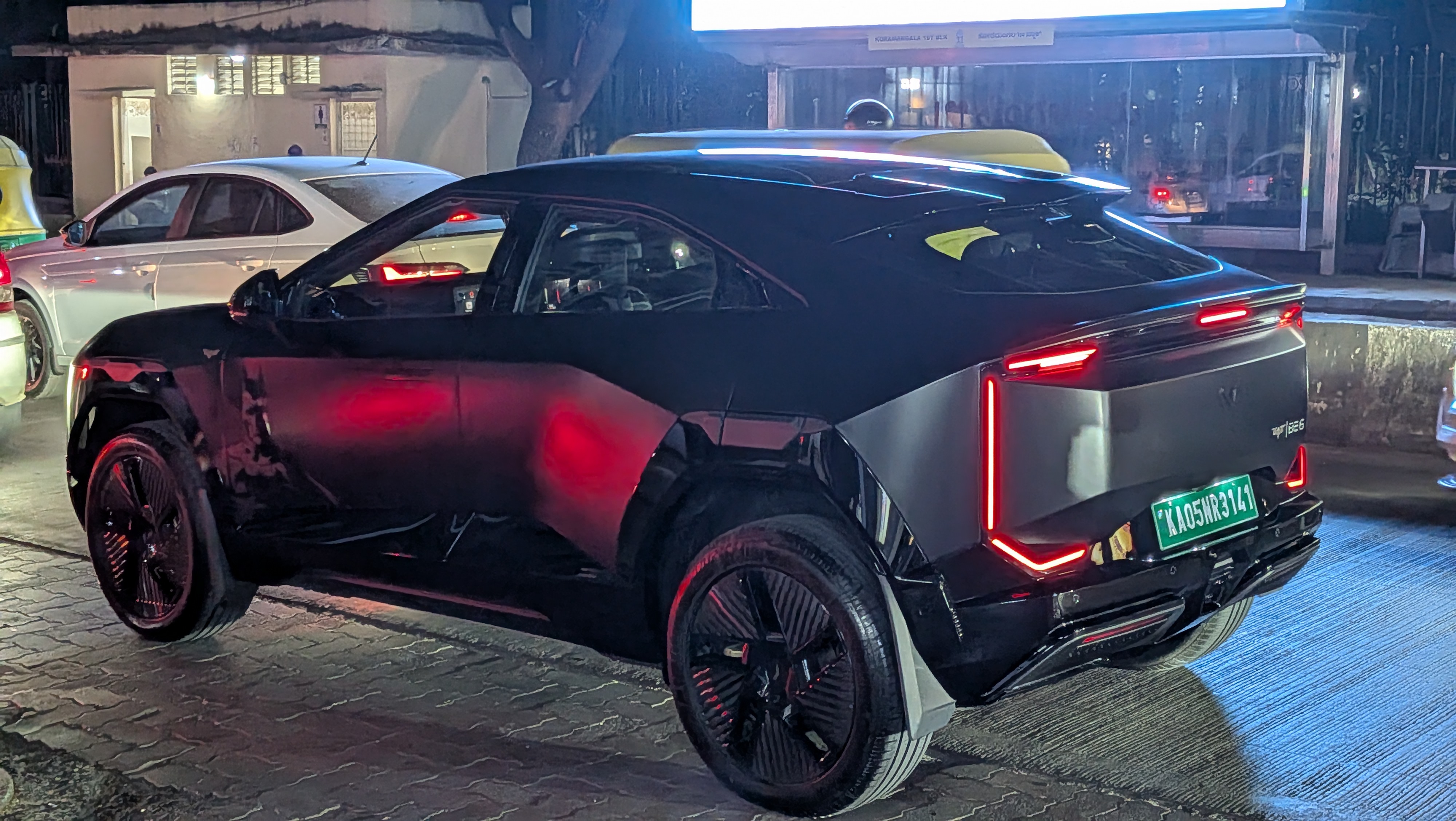
The Mahindra BE 6 looks as though a concept car escaped before the accountants could make it sensible. That is a compliment. Indian roads are full of SUVs whose personalities begin and end with a grille enlarged by PowerPoint. The BE 6 has stance, unusual proportions and enough visual nerve to divide opinion. I would rather dislike an honest design than forget another chrome rectangle.
More importantly, the engineering supports the theatre. In Autocar India’s road test, the 79kWh version delivered a combined real-world range of 449km, strong performance and an impressive ride-handling balance. Those are useful numbers because they come from driving, not a homologation poster. The BE 6’s appeal is not a dashboard animation. It is a rear-wheel-drive electric platform that feels properly developed.
My problem begins with the Indian habit of buying trims like wedding packages. Once a buyer has stretched to the car, the salesperson presents the missing features as threats to future happiness. Suddenly a larger battery is bundled mentally with illuminated trim, extra screens and electronic toys. I think most BE 6 buyers should identify the battery and safety equipment they need, then stop climbing.
Buy engineering, not showroom choreography
The BE 6’s strongest attributes are structural: platform, motor calibration, chassis, steering, ride and useful range. These do not become more meaningful because the cabin performs a light sequence. The top specification may be enjoyable, and buyers with abundant money need not apologise. But value disappears when people finance decorative complexity for seven years.
Mahindra offers battery and equipment combinations that require careful comparison. The larger battery makes sense for drivers with frequent intercity use, uncertain charging access or a desire to preserve a wider operating buffer. A primarily urban owner with dependable home charging may be better served by the smaller pack. Battery capacity changes how the vehicle fits your life. A powered convenience feature generally does not.
The published comparison of reasons to buy and avoid the BE 6 highlights both its performance and real-world compromises. That balance is essential. The cabin is dramatic but not magically spacious, rear visibility is limited, and style imposes packaging costs. A family should sit in every occupied seat before falling in love with the driver’s display.
I would prioritise six things: the battery appropriate to actual routes, a practical home-charging solution, complete safety equipment, comfortable wheels and tyres, a spare-wheel plan, and insurance that reflects expensive body and electronic components. Everything after that must justify itself against the EMI.
Large wheels are a recurring tax on common sense. They photograph beautifully and often worsen ride, replacement cost and damage risk. If a lower trim provides a smaller wheel with adequate tyre sidewall, I will usually choose it. Indian potholes do not award style points, and low-profile rubber becomes remarkably unattractive beside a road at night.
The road manners are the real luxury
Acceleration sells test drives, but calibration determines whether power remains pleasant. The BE 6’s output is delivered progressively enough to avoid turning every traffic gap into a physics demonstration. Rear-wheel drive gives the front axle freedom to steer, and the low battery placement supports composure. This is more sophisticated than merely attaching a large motor to an SUV silhouette.
Ride quality matters because an Indian performance car must survive broken surfaces without making passengers resent the driver. The BE 6’s suspension strikes an unusually capable balance. It feels substantial at speed and controlled in corners while retaining the toughness expected from a Mahindra. That achievement deserves more praise than another cabin game.
Regenerative braking provides useful levels and a one-pedal mode. Buyers should learn these gradually. Strong regeneration can improve efficiency and reduce brake use, but passengers may dislike a driver who treats accelerator release as a binary event. Smoothness remains the mark of competence, electric or otherwise.
Performance also changes tyre wear and insurance risk. Instant torque makes a heavy vehicle feel light during acceleration; it does not make mass disappear during emergency direction changes. Owners moving from a slower compact SUV should treat the BE 6’s pace with respect. Driver-assistance systems are backups, not an invitation to scroll.
Mahindra should keep software stable. Modern vehicles launch with enough computing power to host a small office and sometimes the reliability of its printer. Buyers should demand clear update notes, long-term support and a manual recovery process when screens misbehave. Climate control, charging and essential vehicle functions should not become inaccessible because an interface decides to contemplate existence.
The hidden ownership invoice
The ex-showroom price is merely the first line. Insurance on a powerful EV with complex lighting and sensors can be substantial. A minor impact may involve calibration and imported-looking components even if mechanical damage is small. Obtain multiple insurance quotes for the exact trim before booking, not after the dealer has converted anticipation into captivity.
Home charging may require wiring upgrades, permissions and cable routing. Apartment residents must speak to the association and distribution company before delivery. A salesperson saying “charger included” does not mean the building has agreed where electricity comes from. The right time to discover a parking bay cannot support safe installation is before paying the balance.
Tyre replacement cost should be written down. So should the availability of the unusual sizes in cities you visit. Ask about the auxiliary battery, roadside-assistance process, towing rules and service-centre EV capability. Electric cars need less routine powertrain maintenance, but they are not maintenance-free objects hovering above supply chains.
Depreciation remains uncertain because battery technology, incentives and new-model pricing move quickly. A top trim loaded with gadgets rarely returns its premium proportionately at resale. The market values condition, battery confidence and broad desirability. This is another reason to buy the core car rather than every option.
Mahindra must improve consistency in service communication. Buyers of a technologically ambitious vehicle should not depend on whether one workshop has an interested technician. Diagnostic capability, parts availability and escalation paths need standardisation across the network. A brilliant chassis cannot compensate for a car waiting weeks for a sensor.
My sensible BE 6
I would choose the battery based on routine range with a generous buffer, not the most heroic trip imagined once a year. I would select the lowest trim containing the safety kit, charging capability and comfort essentials I genuinely use. I would avoid paying extra solely for cosmetic lighting, oversized wheels or novelty software.
If the larger battery forces a higher equipment pack, I would compare the total with alternatives rather than rationalise the jump. Manufacturers are skilled at placing desirable hardware just above the trim buyers intended to purchase. The defence is a written requirement list created before entering the showroom.
I would insist on an extended test drive with rear passengers, use the parking space at home, check ramp clearance and reverse into a tight location. The BE 6’s design compromises rearward visibility; cameras help but can become dirty or fail. Physical sightlines still matter.
I would also test ride comfort on the exact wheel size being purchased. Showroom demonstrators are often top variants, which can conceal how a sensible lower trim behaves—or persuade buyers that the demonstration’s equipment is necessary. Compare rather than absorb.
The counterargument is that technology and drama are central to the BE 6’s character. Why buy a radical EV and then specify it modestly? Because character comes from design and engineering, not the number of animated surfaces. The car does not become timid when an illuminated roof or premium audio option is absent.
Mahindra deserves applause for building an Indian EV that can be discussed on dynamics and desirability rather than patriotic obligation. The BE 6 is fast, distinctive and impressively mature on the road. That is precisely why it does not need accessories to prove itself.
Buyers should reward the company’s engineering and decline its temptation ladder. Spend on the battery if your use justifies it. Spend on safe charging, good insurance and tyres. Keep a reserve for ownership surprises. Then drive the thing.
The highest trim exists partly to decorate advertisements and anchor aspiration. The best variant is the one that preserves the BE 6’s excellent fundamentals without converting your finances into a long-term tribute to ambient lighting. I have driven enough fully loaded cars to know the novelty fades. A well-judged chassis does not.