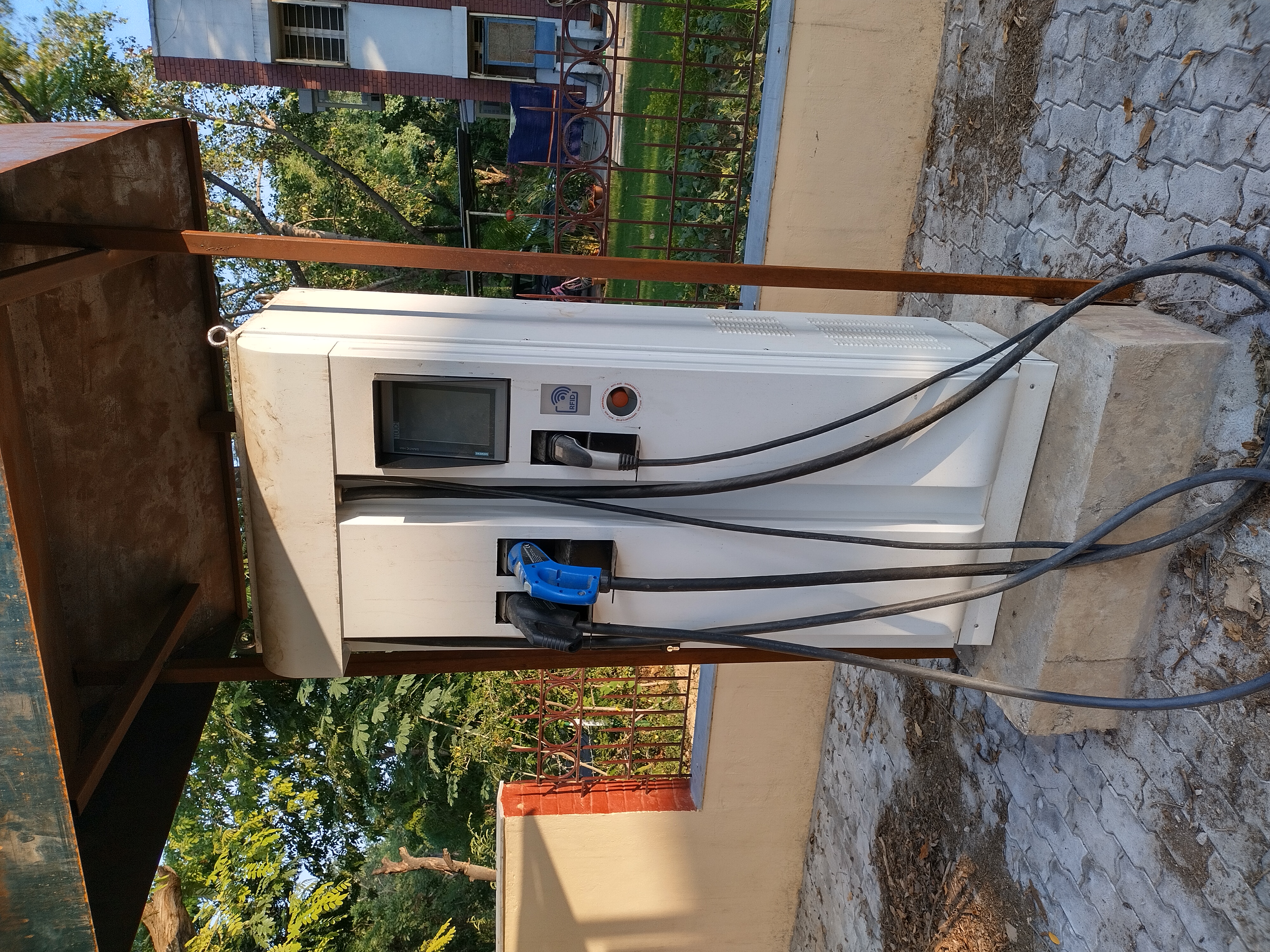

Electric-car conversations in Indian showrooms begin with range because range is a number a salesperson can point at. Public charging begins later, usually after delivery, when an owner reaches a mapped charger and finds a locked gate, occupied bay, failed payment screen or security guard who has never heard of the network whose logo stands behind him. The battery was the visible anxiety. Infrastructure is the operational one.
The Tata Nexon EV demonstrates how far the vehicle itself has progressed. Autocar India’s expert review reports useful real-world range from the larger-battery version while noting its charging limitations. For city users with dependable home charging, this is already enough car. The transition becomes difficult when the owner leaves that private socket and enters a public network that still behaves like a collection of pilot projects.
Home charging hides the gap
An EV with a reserved parking space and reliable electrical connection can be wonderfully convenient. Plug in overnight, begin each morning with useful range and avoid fuel-station detours. The running-cost advantage is real, the drivetrain is smooth and urban driving becomes quieter. Many satisfied owners are not imagining their satisfaction.
But this experience is not representative of urban India. Apartment residents may lack assigned parking, housing-society approval or sufficient electrical capacity. Tenants hesitate to pay for installation on property they do not own. Cars parked on streets cannot trail cables across pavements. The person best suited to an EV by daily mileage may be least able to charge one at home.
Policy discussions count public charging points, but owners need usable charging sessions. A charger may be installed yet inaccessible outside office hours. It may appear online while remaining broken. A single connector at a dealership is not equivalent to a multi-bay highway facility with lighting, toilets and support. Infrastructure statistics should distinguish these categories and publish uptime.
I would require networks receiving public support or concessions to expose real-time status through a common data standard: connector type, power, tariff, occupancy, operating hours and last successful session. Proprietary apps can still compete on experience. Basic truth should be interoperable.
A dot on the map is not infrastructure
Route planning fails when location data are optimistic. Drivers need to know whether a charger sits before or after a toll barrier, whether the premises admit vehicles at night and whether another car can queue safely. User comments often supply information the operator should have published. That is not community charm; it is institutional failure outsourced to customers.
Payment fragmentation adds needless anxiety. An owner may maintain balances across several apps, each demanding registration and location access. Imagine a petrol station refusing fuel until the driver downloaded the company’s software and prepaid a wallet. Chargers should accept common digital payments and cards without mandatory stored balances. India built UPI; an electric-car owner should not need a museum of proprietary wallets.
Maintenance response matters more than installation ceremonies. Electronics exposed to dust, heat, rain and careless use will fail. Operators need remote monitoring, spare parts, field technicians and service-level targets. A helpline that asks the stranded driver to restart the app is not roadside support.
The Nexon EV’s charging specifications and real-world range, summarised in Autocar India’s ownership FAQ, also show why vehicle and infrastructure must evolve together. A charger advertised at high power cannot force a car to accept that rate, and a capable car gains little from a weak or shared connection. Consumers need charging curves and expected session times, not only peak figures.
Highways need redundancy
A single fast charger at a highway stop is a promise contingent on one machine. If it fails or another vehicle occupies it, the journey changes from planned pause to uncertain delay. Serious corridors require multiple bays, compatible connectors and enough electrical capacity to deliver useful power simultaneously. Redundancy is the difference between infrastructure and a demonstration.
Placement should follow driving behaviour. Chargers belong where people can eat, use clean toilets and remain safely for thirty to sixty minutes. They also need clear signage from the road. A powerful unit hidden behind a warehouse may satisfy a map but not a family travelling after dark.
Queues will become more important as EV adoption grows. Networks should show estimated wait times and discourage cars from remaining connected after charging. Idle fees can help if grace periods are reasonable and status notifications reliable. Operators must also design bays so one badly parked vehicle cannot block two connectors—an embarrassingly common oversight.
Electricity reliability and demand charges shape tariffs. I do not expect every public session to match cheap domestic power. I do expect pricing to be displayed before charging, including taxes, parking and time fees. Surprise billing damages trust faster than a higher but transparent rate.
The transition must include people without driveways
Municipal charging is the missing layer. Cities should permit curbside and neighbourhood chargers where parking patterns support them, using safe cable management and enforceable bay rules. Public car parks, metro stations and markets can host slower chargers suited to vehicles parked for hours. Fast charging is not the answer to every use case.
Housing societies need model rules. Safety concerns are legitimate, but blanket refusals often arise from unfamiliarity. Clear standards for electrical audits, metering, fire safety and cost allocation would reduce conflict. Distribution companies should provide predictable connection processes and tariffs rather than sending residents between offices.
Workplace charging can serve drivers who lack home access, especially when daytime solar generation is available. Employers need not provide free energy; paid, fairly allocated charging is enough. Fleets can anchor demand and help charging sites become commercially viable, but operators must avoid making every useful bay permanently unavailable to private drivers.
Battery warranties and resale remain concerns, although evidence from growing fleets will improve confidence. Manufacturers should make battery-health reports portable and comprehensible. A used-EV buyer needs more than an odometer. Independent diagnostics would support residual values and prevent the entire battery from being treated as an unknowable black box.
What I would demand before buying
I would first confirm home or workplace charging in writing, including sanctioned load and parking rights. Then I would map common intercity routes across multiple networks, read recent user reports and identify backup sites. I would test at least one public charging session before depending on it. A test drive that excludes charging is incomplete.
I would choose battery size based on actual travel, climate and charging access, not the largest number affordable. A smaller battery can be cheaper, lighter and sufficient for predictable urban use. A larger one provides useful margin but cannot repair a nonexistent network. Buyers should understand that air-conditioning, speed, terrain and load change range.
Governments should measure successful sessions, uptime and geographic coverage rather than installed plugs. Operators should be penalised for persistently inaccurate status. Manufacturers selling cars should share responsibility for route support and interoperability instead of pointing at third-party apps after delivery.
The Nexon EV and its competitors prove that Indian electric cars are leaving the experimental stage. They can handle commuting and, with planning, longer travel. The remaining friction increasingly sits outside the vehicle. That is progress, but it also changes accountability.
I do not want another charging-station inauguration photograph. I want a boring network: available, correctly mapped, easy to pay, safe at night and repaired before users begin warning one another. Boring infrastructure is what allows exciting technology to become ordinary transport. The EV transition will be won not by the highest claimed range, but by the charger that works when nobody is filming.