Delhi’s political ecosystem has developed a remarkable renewable resource: outrage that replenishes itself before breakfast. A minister’s phrase, a parliamentary scheduling decision or an administrative circular is fed into the machine; by lunchtime it has become an assault on democracy; by evening familiar commentators are explaining that the republic has entered its final hour. The next morning the republic, inconsiderately, remains available for another funeral.
I am not arguing that institutions need no scrutiny. Parliamentary procedure matters, opposition MPs must be heard, and governments with large majorities require more—not less—discipline. The Lok Sabha’s official portal and Rajya Sabha’s records let citizens examine questions, debates and committee work rather than relying entirely on viral clips. My complaint is that the INDIA alliance and its sympathetic commentariat routinely treat scrutiny as branding. Every disagreement is inflated until language loses meaning.
This habit damages the opposition more than the BJP. If routine political defeat is “authoritarianism,” what vocabulary remains for a genuine constitutional breach? If every bill is declared the death of federalism before its clauses are read, why should citizens listen when a real encroachment occurs? Alarmism is not vigilance. It is the political equivalent of a car alarm that shrieks whenever a pigeon lands nearby.
Procedure deserves seriousness, not theatre
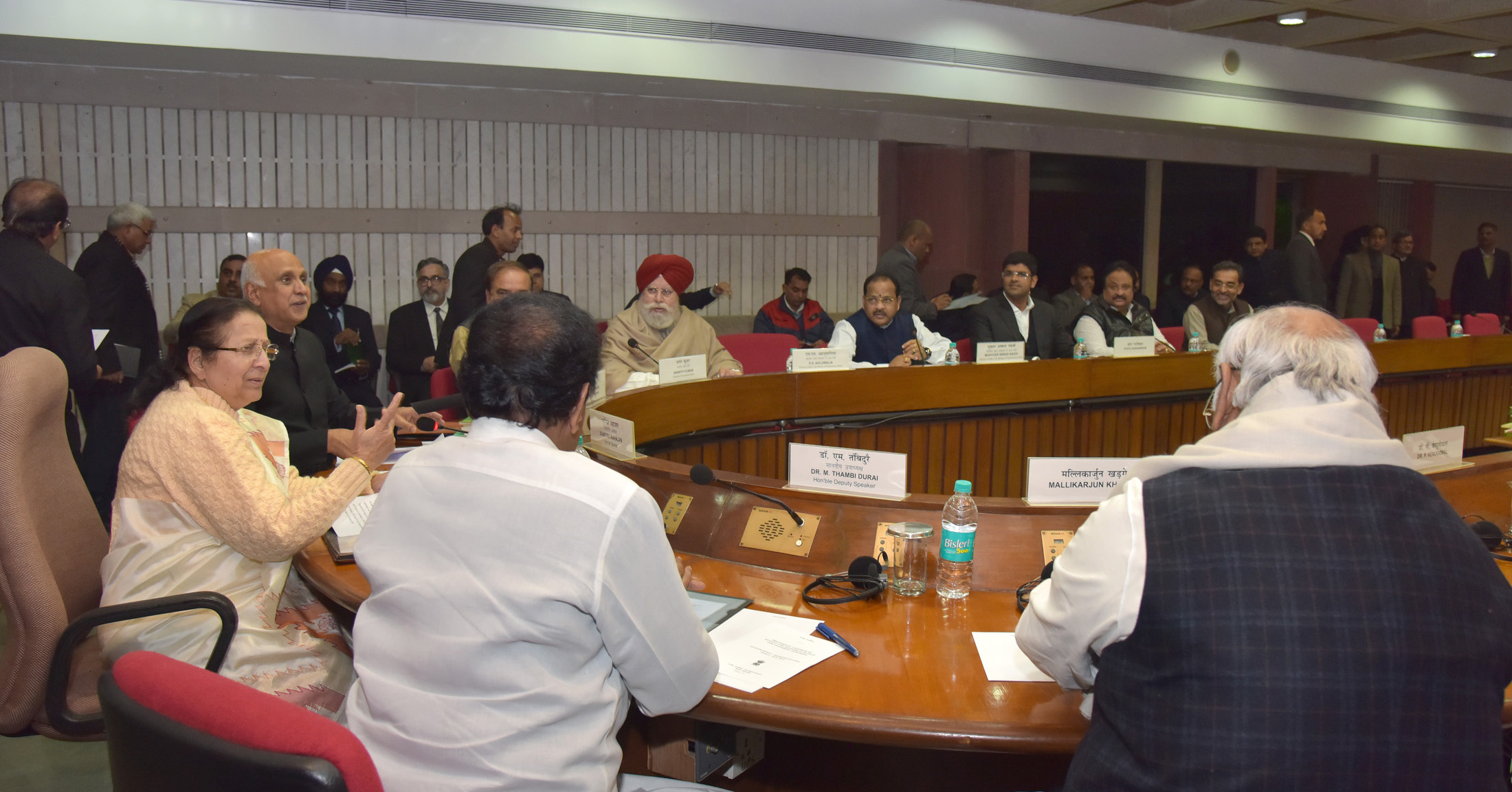
The opposition has legitimate complaints about hurried legislation and inadequate committee scrutiny. PRS has repeatedly documented Parliament’s working patterns through its parliamentary statistics. I would prefer more bills to receive detailed committee examination. Complex laws benefit when experts, states and affected groups can expose drafting defects before courts have to do the repair.
But that case is weakened when MPs choose disruption as their default instrument and then complain that Parliament did not deliberate. Protest has a place; paralysis cannot be the only tactic. The public is entitled to ask whether representatives used questions, amendments, committee submissions and sustained argument before staging the walkout designed for television.
The Modi government is not blameless. Ministers sometimes answer criticism with slogans, BJP speakers can use their numerical advantage too aggressively, and official communication too often treats a request for details as hostility. A confident government should tolerate sharper debate. It should release draft laws early and make consultation routine rather than discretionary. That would deprive the opposition’s outrage industry of oxygen while producing better law.
Yet context matters. The same Congress that now speaks as though parliamentary sanctity descended upon it in 2014 has a history of ordinances, centralising instincts and muscular use of power. This does not excuse present errors. It does make Congress-era nostalgia an especially flimsy moral platform. Institutions should be defended through consistent rules, not selective memory.
A coalition united by adjectives
The INDIA alliance’s central weakness is not excessive anger. It is the absence of a coherent governing proposition beneath the anger. Its parties disagree on economic policy, leadership, caste strategy, federal power and one another’s territorial ambitions. What unites them is a vocabulary: save, resist, defend, defeat. Those are campaign verbs, not a governing programme.
Ask what the alliance would do about land reform, electricity distribution, defence procurement, judicial vacancies, urban finance or manufacturing scale, and the answer dissolves into state-specific manifestos. Ask what the BJP has done wrong, and suddenly the choir finds perfect pitch. Opposition is a constitutional role, but opposition alone is not a philosophy of government.
The commentariat helps sustain the illusion by treating coalition contradictions as strategic breadth. When BJP allies disagree, it is described as a crisis. When INDIA partners attack each other, we are told this demonstrates vibrant internal democracy. I have no objection to interpretive generosity, but it should be rationed less obviously.
Voters are also more discerning than this ecosystem assumes. They can support the BJP nationally and another party in a state. They can approve of infrastructure while disliking unemployment. They can think an opposition leader raised a valid point without accepting that democracy has expired. The electorate’s split verdicts repeatedly demonstrate nuance that television discussions deny it.
Criticism works when it is specific
The opposition’s best moments arrive when it abandons apocalypse and becomes precise. Point to a clause that centralises power. Show how a rule harms a state. Produce a costed alternative. Use parliamentary questions to uncover implementation gaps. Defend civil liberties with the same consistency regardless of which party governs the state. Specificity forces the government to answer; melodrama merely invites a counter-slogan.
I would take Congress more seriously if it admitted that some Modi-era reforms addressed failures it helped create. Digital delivery reduced leakage. Infrastructure execution improved. Insolvency reform, despite its delays, confronted a culture in which politically connected borrowers could indefinitely avoid consequences. Acknowledging such gains would not turn Congress into the BJP. It would make its criticism sound like judgment rather than reflex.
The BJP, for its part, should not become addicted to an incompetent opposition. Democratic governments improve when challenged by opponents capable of mastering detail. Mocking every critic is tempting, but an ecosystem without credible scrutiny eventually makes a ruling party intellectually lazy.
What I reject is the Lutyens habit of presenting familiar political actors as neutral custodians of democracy whenever their preferred coalition loses. India is not a seminar room whose legitimacy depends on elite applause. Elections confer power; constitutional limits constrain it; institutions mediate it; citizens judge the result. That process is noisier and sturdier than the daily obituary suggests.
So yes, scrutinise the government. Demand debate, consultation and institutional restraint. But retire the theatrical emergency siren. A republic cannot conduct serious self-criticism when every disagreement is marketed as its final breath.