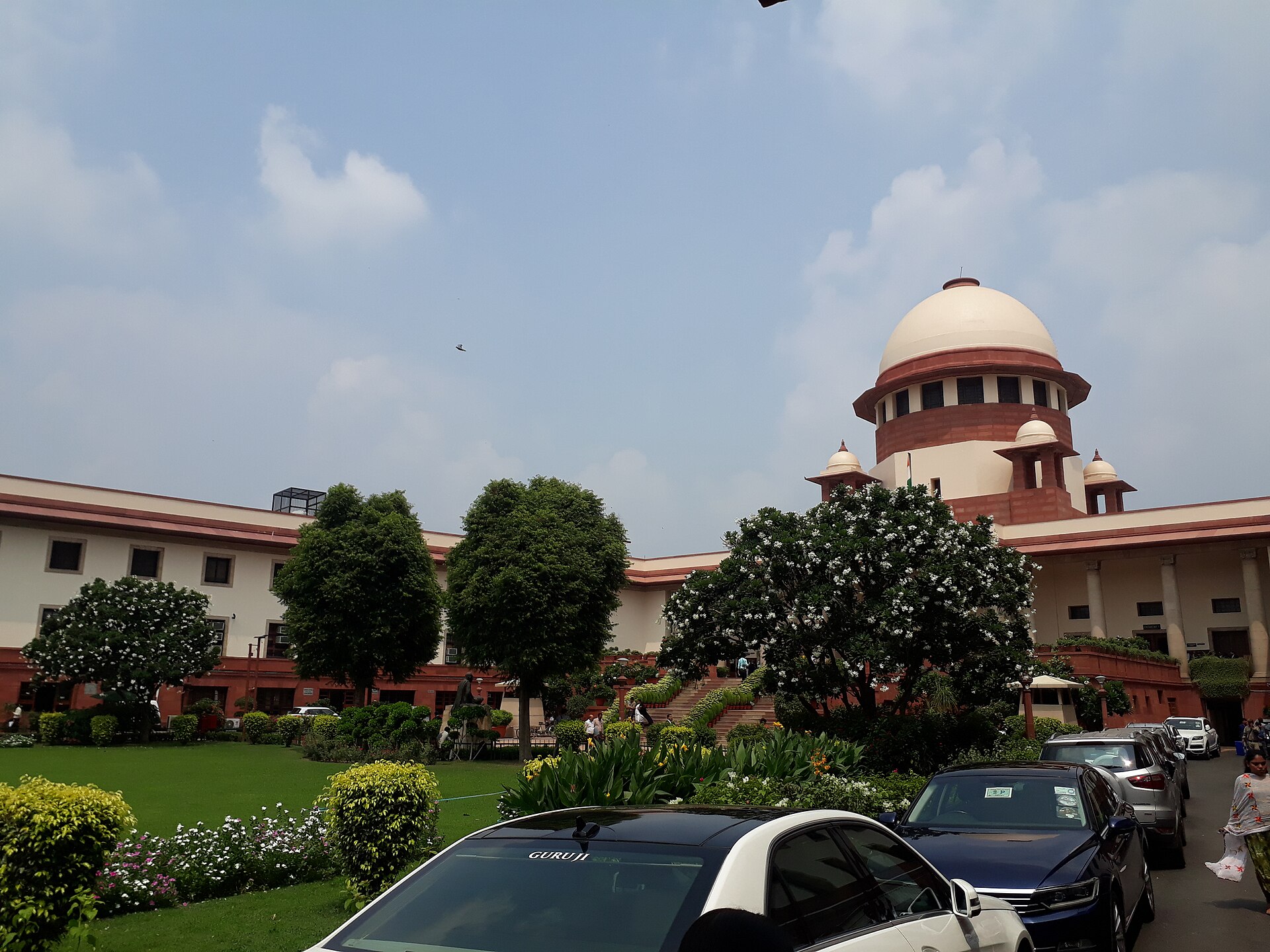
The most revealing feature of the waqf-law argument was not that the Narendra Modi government drafted a contentious statute. Governments do that, and courts test them. It was the speed with which the INDIA alliance and its preferred commentariat converted a complicated property-administration reform into a morality play: one villainous government, one uniformly victimised community and no history of disputed titles, opaque records or badly governed boards. The Supreme Court’s interim treatment was far more discriminating. It did not suspend the entire amended law. It placed guardrails around particular provisions, including the collector’s role and the five-year religious-practice condition, while leaving other changes in operation. That outcome should have embarrassed everyone who insisted there was no reformable middle ground. It did not, because manufactured alarm is now an industry with no returns policy.
A secular state may regulate secular administration
I begin from a proposition the opposition often blurs: religious freedom and property administration are related, but they are not identical. A community must be free to manage genuine religious affairs. It does not follow that every land-title dispute involving a religious endowment should operate under exceptional evidentiary assumptions forever. Waqf institutions administer an enormous and varied body of property, much of it serving mosques, graveyards, schools and charitable purposes. Protecting those purposes requires credible records, competent boards and legal processes that ordinary citizens can understand. Reform is not intrinsically hostile to Muslims. Poor governance can harm intended beneficiaries just as surely as hostile government action can.
The Centre’s argument, reported during the litigation, was that the amendments regulate secular administrative aspects while leaving worship and essential religious practice untouched. One need not accept every clause to recognise that distinction. The government’s affidavit, as reported by The Indian Express, also defended wider legal avenues through which Muslims could create charitable trusts. That is a policy claim open to challenge, not evidence of a secret plan to erase a faith. Yet many television discussions began at the most incendiary possible conclusion and worked backwards.
I understand why Muslim organisations were wary. Property records in India are often messy, local administration can be arbitrary, and a statute that enlarges executive power deserves suspicion. The answer, however, is to identify the dangerous mechanism precisely. When the amended law allowed a collector’s determination to alter the operative status of disputed property before a court settled title, it mixed executive interest with adjudicatory consequence. The Supreme Court was right to intervene. According to the detailed account of its interim order, the Court restrained that arrangement while declining to impose the blanket stay demanded by petitioners. That is constitutional calibration, a concept our political debate increasingly treats as cowardice.
The government’s overreach was specific
I give the government the benefit of the doubt on the purpose of modernising records and addressing contested claims. I do not give any government the benefit of the doubt when an interested administrative officer is placed too close to deciding title. District collectors perform vital work, but they represent the state; they are not substitutes for independent adjudication. If government land and waqf land are in dispute, the process must preserve the property’s status while an impartial forum decides. Otherwise, an administrative conclusion risks becoming a practical dispossession before the legal contest has properly begun.
The five-year requirement for demonstrating the practice of Islam before creating a waqf was also poorly designed without a clear, objective mechanism. How exactly does an official measure religious practice? Attendance records? Testimony? A certificate from clergy? The question itself should make a liberal state uncomfortable. The concern that people might use a legal form to defeat creditors can be addressed through fraudulent-transfer law, registration, disclosure and judicial scrutiny. Asking the bureaucracy to authenticate the depth or duration of faith invites inconsistency and humiliation. The Court’s pause was sensible, and the government should replace the clause rather than defend its drafting pride.
Those concessions do not validate the opposition’s entire narrative. The Court did not accept that every change was prima facie intolerable. It did not restore every feature of the old regime merely because political speakers described the amendment as an attack on identity. In particular, the prospective removal of the doctrine commonly described as “waqf by user” remained a central point of argument. Longstanding use can be powerful evidence, especially where ancient institutions lack modern documents. But an unlimited ability to assert a special property status without reliable registration can create uncertainty for neighbours, public bodies and the endowment itself. A transition that protects genuinely ancient religious sites while demanding modern registration for future claims is hardly an outrageous objective.
Representation became a slogan instead of a design question
The inclusion of non-Muslims on waqf bodies produced some of the loudest rhetoric. I find two extreme positions equally unhelpful. A religious community should retain meaningful control over bodies dedicated to its endowments; packing such boards with outsiders would violate the institution’s character and public confidence. But limited outside representation for expertise, oversight or coordination is not automatically an act of capture. Indian public law contains many mixed bodies. The right question is proportion and function. The Court’s numerical caps supplied clarity where the statute and the government’s defence had allowed suspicion to grow.
The INDIA alliance preferred a simpler message because proportion does not trend on social media. It cast any non-Muslim presence as an invasion while rarely discussing whether boards need better audit, professional property management or beneficiary representation. That omission matters. The ordinary Muslim citizen who expects a charitable endowment to fund education or welfare has an interest in transparent administration. So does the person whose private or public land is subject to a disputed claim. A serious opposition would have proposed an alternative governance model. Instead, we received speeches about survival, as though asking for digitised records were equivalent to closing a shrine.
The BJP also has a communications problem of its own making. When party supporters celebrate a regulatory law as a civilisational victory over a community, they confirm the opposition’s worst framing and make moderate defence harder. The government cannot ask to be judged by the text while its loudest allies advertise triumphal motives. Reform should be explained in the language of beneficiaries, title certainty and equal legal standards. A minister should be able to say plainly that genuine waqf property deserves protection from encroachment, including government encroachment. That sentence would do more for public confidence than a hundred combative studio appearances.
Courts are not scoreboards
Both camps treated the interim order as a sports result. Government supporters highlighted the refusal of a blanket stay; opponents highlighted the provisions paused. The better reading is that the judiciary separated a legitimate legislative field from questionable mechanisms. That is what constitutional review is meant to do. Parliament legislates, petitioners challenge, the government defends and courts draw provisional lines before final adjudication. Not every partial stay is the collapse of reform, and not every surviving clause is an endorsement on the merits.
I would like the government to use the interval constructively. It should narrow the collector’s role to evidence-gathering, place title decisions with an independent judicial body, replace the faith-duration test with neutral anti-fraud safeguards and publish clear rules for registration. It should guarantee due process before any change in a property’s recorded status. It should also improve the technical capacity of waqf boards rather than merely policing them. Such changes would strengthen the law’s reformist case and deprive the opposition of its most credible objections.
Congress and its allies, meanwhile, should admit that the old system was not beyond criticism. Their instinct to defend any institution touched by the Modi government is not pluralism; it is political Pavlovianism. The same leaders who demand state accountability in every other domain suddenly discover that oversight itself is oppression when the government proposes it. This approach leaves them unable to distinguish a correct safeguard from a convenient scare. It also assumes minority citizens want only symbolic defence, not competent administration and reliable property rights.
My conclusion is less dramatic than the televised debate and therefore, I suspect, more durable. The government was right to reform waqf administration and wrong to give an executive officer quasi-adjudicatory leverage over disputed title. The Supreme Court was right to impose selective restraints rather than freeze the statute wholesale. The opposition was right to challenge concrete due-process defects and wrong to sell the entire exercise as communal expropriation. If that sounds too nuanced for our present politics, the problem is not nuance. It is a political marketplace in which outrage is manufactured faster than legislation can be read.