Delhi’s political class can detect an offensive adjective at five hundred metres, yet a major alteration to India’s electricity system can pass almost noiselessly under its nose. The Union Cabinet has approved ₹14,500 crore in viability-gap support for 92 GWh of grid-scale storage. The published Cabinet decision divides the planned capacity among battery systems, pumped hydro and emerging technologies, and couples the support with competitive bidding and a domestic-content requirement for battery projects. This is not a glamorous announcement. No household will wake tomorrow to a storage unit garlanded outside its door. Yet in my view it is among the government’s more consequential energy decisions, because it addresses the fact that solar panels do not negotiate with the evening peak and wind turbines do not read demand forecasts. India has spent years adding renewable generation. Storage is the infrastructure that converts intermittent electricity into dependable electricity. Oddly, the commentariat that demands climate action has shown less excitement than it reserves for a parliamentary adjective.
The difficult hour after sunset
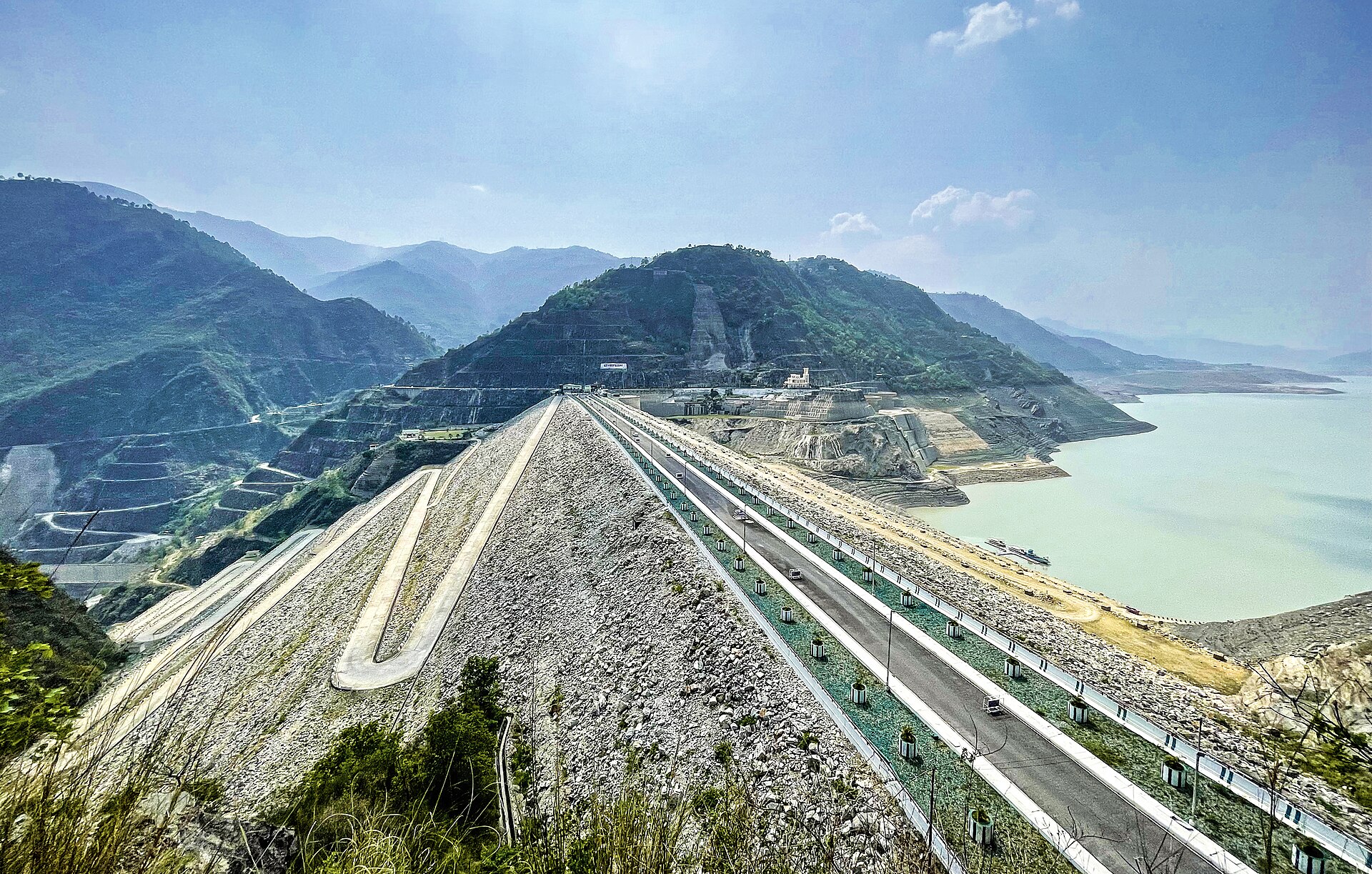
The core problem is easy to explain and difficult to solve. Solar generation rises during daylight, while residential demand often surges after people return home. If clean electricity cannot be shifted across hours, the system must retain other generators for balancing and reliability. Storage absorbs surplus energy and releases it later. Batteries can respond rapidly; pumped-storage plants move water between reservoirs and can provide longer-duration flexibility. A recent government backgrounder on pumped storage sets out the operational, construction and identified project pipeline. Official optimism should always be read alongside environmental, financial and execution risks, but the scale of the task is undeniable. India cannot simply install record quantities of solar modules and congratulate itself. A grid is a continuous balancing machine. If generation and consumption diverge, slogans do not keep frequency stable. Wires, reserves, storage and competent dispatch do.
This is why I find some left-leaning climate rhetoric so unserious. It is comfortable with targets, declarations and denunciations of fossil-fuel companies. It becomes noticeably less animated when confronted with transmission corridors, tariffs, land acquisition, reservoir design, mineral supply chains and payment discipline at distribution companies. Those are the places where decarbonisation either happens or does not. The Modi government’s storage support deserves credit precisely because it enters that machinery. Viability-gap funding recognises that socially valuable infrastructure may not become financeable at the required speed through market revenue alone. It does not require the state to own every asset. Instead, it can use competitive procurement to discover prices and bridge the portion that prevents projects from proceeding. That is a pragmatic combination of public purpose and private execution, which perhaps explains why ideological purists on both sides find it insufficiently theatrical.
Credit, with conditions attached
I am not proposing that a Cabinet approval be mistaken for delivered capacity. India’s infrastructure history contains enough delayed projects to furnish several museums. Pumped hydro can face complex geological surprises, forest and land questions, water-use conflicts and long construction schedules. Batteries carry questions about cell sourcing, degradation, recycling and fire safety. Emerging storage technologies are called emerging for a reason: some will succeed and others will consume patient capital before disappearing. The government must publish project-level milestones, bid prices, commissioning dates and reasons for delay. It must also prevent support from becoming a comfortable cushion for firms that underbid and later seek renegotiation. Competitive bidding is useful only when contracts remain credible. I give the government the benefit of the doubt on intent; I do not offer any developer a blank cheque.
The 40 percent domestic-content requirement for supported battery projects is defensible, but it needs precision. “Domestic” can mean deep value addition or little more than assembling imported cells into packs. India should measure the origin of critical components, engineering capability, software, power electronics and eventual recycling. A crude rule can raise costs without building technological depth. A well-designed rule can provide manufacturers with predictable demand while forcing steady localisation. The Congress ecosystem will likely call this protectionism when the government does it and strategic autonomy when a foreign centre-left government does the same thing. I am less interested in labels. India is a vast energy market exposed to imported fuel and technology chains. It should use public support to develop local capability, but it must publish enough information to show taxpayers what capability they purchased.
Federalism occurs below the television studio
Storage will also expose the quality of state governance. Electricity distribution, land permissions and local execution do not occur in an abstract Union government. States run by BJP and opposition parties alike will have to make timely decisions, maintain payment discipline and resist the temptation to promise power at prices that conceal its cost. This is where political rhetoric meets the balance sheet. An INDIA-alliance chief minister can denounce Delhi in the afternoon and still require a central scheme, interstate transmission and private capital by evening. That is not hypocrisy by itself; it is federal India. The hypocrisy begins when state failures are automatically described as central neglect while every successful project is claimed as local genius. I would like the storage programme to publish state-wise progress so voters can see which administrations clear projects, protect legitimate community interests and pay their bills.
The environmental case for pumped storage must be made project by project, not asserted by category. A system that supports renewable power can still damage a specific landscape or mishandle rehabilitation. The government should require transparent environmental assessments, cumulative river-basin analysis where relevant and credible compensation. Dismissing every objection as obstruction would be foolish. Equally foolish is the activist habit of treating any alteration of land as proof that clean-energy policy is fraudulent. Every energy system occupies space and uses materials. Coal mines do; transmission lines do; solar parks do; reservoirs do. The honest question is which configuration delivers reliable power with the lowest manageable social and ecological cost. Adults compare alternatives. Campaigners often compare a real project with an imaginary world in which electricity appears without infrastructure.
Storage is also industrial policy
The most interesting implication is that storage policy can create an ecosystem beyond battery cells. India needs grid-control software, thermal-management systems, inverters, transformers, safety engineering, forecasting tools, recycling capacity and skilled maintenance. A predictable procurement pipeline lets firms invest in these capabilities. Universities and technical institutes can build specialised programmes when they see sustained demand. The government should reserve a small, transparent portion of support for technologically diverse pilots, with published performance data. It should not protect failing technologies indefinitely, but neither should it allow the cheapest immediate lithium-based bid to extinguish experimentation in long-duration storage. A grid dominated by renewables will need different response times: seconds, hours and potentially days. Technology neutrality should mean competition across clearly defined services, not pretending every device performs the same job.
Consumers should care because poor grid flexibility eventually appears in their bills or in the reliability of supply. If renewable energy is curtailed because the system cannot absorb it, an asset is wasted. If expensive generation must be started for a short evening peak, somebody pays. If distribution companies sign unsuitable contracts, the burden migrates through subsidies, delayed payments or tariff hikes. Storage is not free power; it adds capital cost and loses some energy in the charge-discharge cycle. Its value lies in avoiding greater costs elsewhere. The government should therefore publish system-level analyses showing how storage procurement affects curtailment, peak prices and grid services. This is technical material, but it should not remain the private language of consultants. Public money is involved, and intelligent citizens can understand trade-offs when officials resist advertising copy.
A reform too substantial for manufactured outrage
What strikes me is the contrast between the policy’s seriousness and Delhi’s attention economy. A minister’s stray phrase can produce panels, statements, walkouts and stern columns before dinner. A ₹14,500-crore attempt to reshape the electrical grid produces a few business reports and vanishes. That imbalance is not accidental. Outrage is cheap to manufacture and easy for opposition parties to distribute. Infrastructure policy forces them to choose: support a useful government decision, identify a technical flaw or reveal that they have not done the reading. The first option gives Narendra Modi credit, the second requires work and the third is embarrassing. Silence becomes convenient.
I will give the government credit now and reserve the right to be difficult later. The scheme identifies the correct bottleneck, uses a sensible mixture of technologies and tries to leverage investment rather than nationalise the entire undertaking. Its success will depend on procurement design, state capacity, environmental care, domestic value addition and ruthless transparency about delays. Those are substantial qualifications, not ceremonial caveats. But they do not erase the central judgment: India cannot build a modern low-carbon economy on generation capacity alone. Someone has finally placed storage near the centre of policy. The opposition may continue auditioning for the evening debate. The grid, thankfully, is being designed for the evening peak.