I have driven enough cars with panoramic sunroofs to know that most Indian owners close the shade after the first week and spend the next five years worrying about rattles. The showroom, however, remains a theatre of feature escalation. A salesperson taps a giant screen, demonstrates mood lighting and points upward as though a hole in the roof has solved transportation.
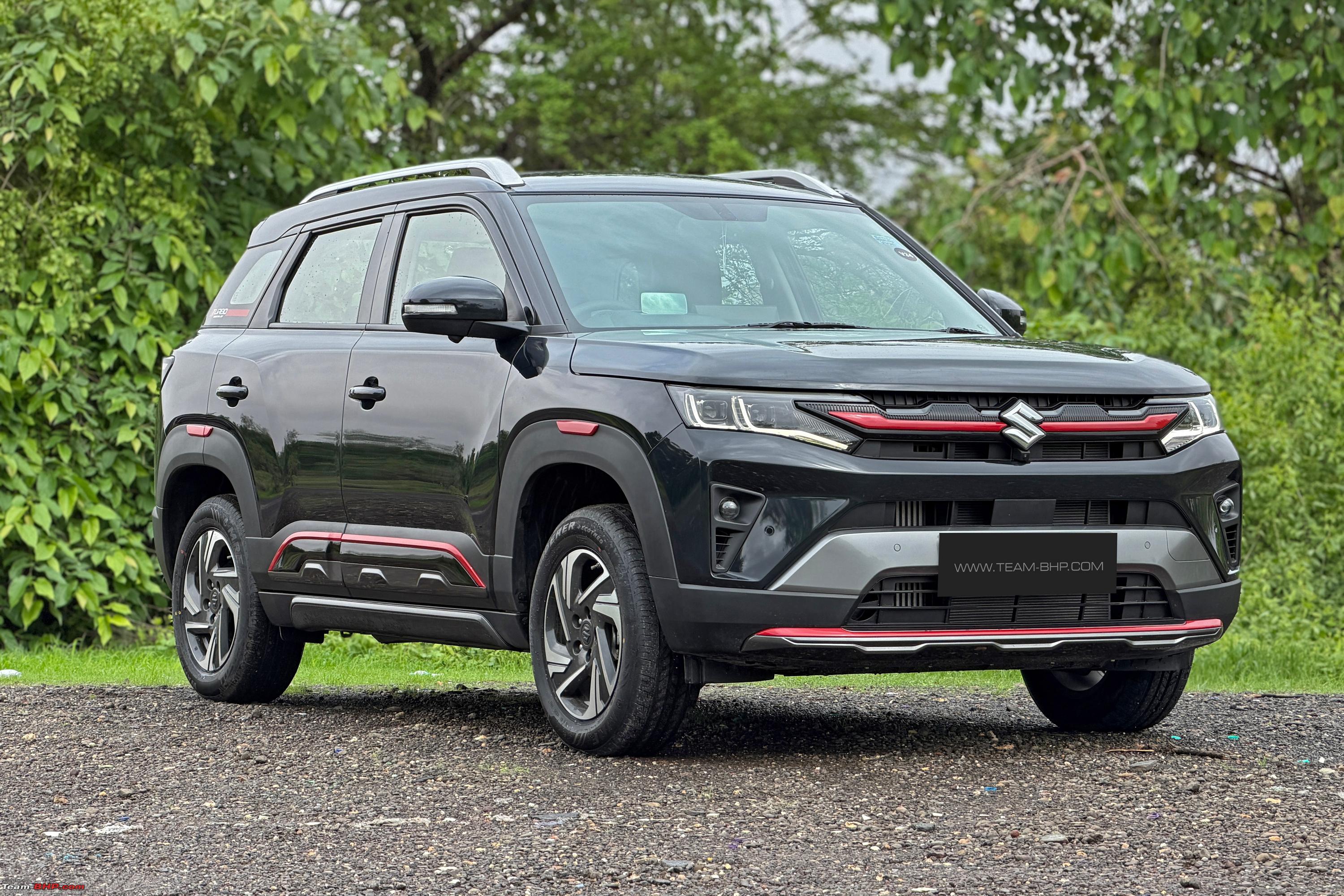
The Maruti Suzuki Brezza is an antidote to that theatre. It is not the quickest compact SUV, the plushest or the most adventurous. It is a square, readable, broadly dependable car with an engine and service network that make sense to a household intending to keep it. That sounds faintly insulting only because the industry has taught us to confuse novelty with quality.
The current Brezza brochure lays out the variant equipment and familiar 1.5-litre petrol powertrain. For broader market context, Autocar’s powertrain sales survey shows how mainstream buyers continue balancing petrol, CNG and hybrid choices. My argument is simple: buy the Brezza only if you buy the sensible version. Loading it with every accessory defeats its point.
What feels ordinary on a test drive feels valuable in year four
The Brezza’s driving position is easy, visibility is good and controls require little ceremony. On a fifteen-minute test drive, that can feel underwhelming beside a rival with turbocharged punch and a dashboard performing an electronic welcome dance. After four years, familiarity becomes an asset.
A naturally aspirated engine and conventional automatic are not technologically romantic, but they suit stop-start ownership. Power delivery is predictable, low-speed behaviour is smooth and a broad service network reduces the drama surrounding routine maintenance. I would prefer stronger highway performance when fully loaded, and the engine can sound strained when hurried. Those are honest compromises, not hidden character.
Ride quality matters more than acceleration figures for most buyers. Indian roads punish excessively large wheels and low-profile tyres, yet top variants advertise both as visual upgrades. A smaller wheel with more sidewall often rides better, costs less to replace and survives potholes with greater dignity. The mid trim may therefore be the superior mechanical specification even when the brochure gives it fewer stars.
The same logic applies to manual versus automatic. Buy the automatic if your daily route involves dense traffic and the additional price fits comfortably. Do not buy it because a salesperson calls it premium. A manual remains perfectly rational for smaller towns, mixed driving and buyers who prefer lower acquisition cost. There is no morally advanced transmission.
Feature lists conceal ownership costs
A connected-car module sounds useful until the subscription expires or network support changes. A large touchscreen seems impressive until glare, lag or a failed digitiser makes basic audio controls irritating. Electronic features are not inherently bad; poorly integrated ones are future repair bills.
I judge equipment by frequency of use. Automatic climate control, a reversing camera, rear defogger, adjustable driver’s seat, steering controls and effective lamps matter regularly. Wireless charging that cooks a phone, animated indicators and a panoramic roof rank lower. Safety equipment should never be treated as decoration or restricted to vanity variants.
Buyers should also ask the on-road price, not allow discussion to remain at ex-showroom level. Insurance add-ons, accessories, extended warranties and service packages can transform a reasonable variant into a bloated invoice. Dealers bundle items because excitement weakens arithmetic.
I recommend taking a printed quotation home and removing accessories one by one. Mud flaps and floor mats are not strategic investments. Compare insurance independently. Ask for the manufacturing month, tyre brand and warranty exclusions. The salesperson’s deadline is not a law of physics.
The Brezza is not automatically the best choice
Rivals offer stronger engines, richer cabins, better infotainment and more expressive design. Some buyers will correctly prioritise those strengths. If you drive extensively on highways, want effortless overtaking or care deeply about cabin finish, test alternatives with the family and luggage aboard.
The Brezza’s interior can feel plain for the money, and Maruti’s cost discipline is visible in plastics and details. The car’s popularity also makes it anonymous. Nobody turns around after parking one, unless they forgot where it is. For some buyers, emotional appeal matters. Cars are not refrigerators, despite my best efforts to assess them like appliances.
But emotion should be purchased consciously. Do not finance a top trim for seven years because ambient lighting looked wonderful under showroom lamps. If the premium over a mid variant could fund fuel, insurance and maintenance for years, ask which benefit you will notice more.
The used market rewards sensible specifications and familiar mechanicals. A well-maintained mid-spec Brezza will attract buyers who understand ownership costs. Exotic features rarely recover their original premium. Reliability history, condition and service records do.
Reliability is not invincibility
Maruti’s reputation can make owners careless. Every car needs correct oil, coolant, tyres and scheduled inspections. A vast service network does not guarantee every workshop is equally competent. Read the job card, retain invoices and reject unnecessary treatments sold under impressive names.
Inspect tyre pressure yourself. Rotate tyres, align the car when symptoms appear and replace aged rubber even if tread remains. Many owners debate crash ratings online while driving on overinflated tyres selected for fuel economy. Safety begins with contact patches, brakes and attention.
I would also insist on a pre-delivery inspection before registration. Check paint, glass, electronics, fluid levels, tyre dates and warning lights. A popular model can still arrive with transport damage or a weak battery. Brand reputation is not a substitute for looking.
The counterargument to my praise is that cautious choices produce a boring market. Perhaps. I enjoy powerful and eccentric cars; I simply do not confuse my professional entertainment with a family’s financial interest. A household with one vehicle needs availability more than character. It needs the car to start on Monday after a weekend trip.
The Brezza’s sensible trim succeeds because it concentrates on the unglamorous fundamentals: accessible performance, manageable dimensions, straightforward controls, decent space and widespread support. It is not cheap once fully loaded, which is why I would refuse the fully loaded version.
Buy the trim that includes the safety and convenience equipment you will use. Skip decorative escalation. Choose tyres and transmission for your roads. Keep cash aside for insurance and maintenance. The best value is rarely parked under the brightest showroom spotlight.
I do not love the Brezza. I trust what it is trying to be. In an industry determined to sell unnecessary complexity as aspiration, that clarity is worth more than another screen.